Uttarakhand CMO: Schools in US Nagar prep students for competitive exams
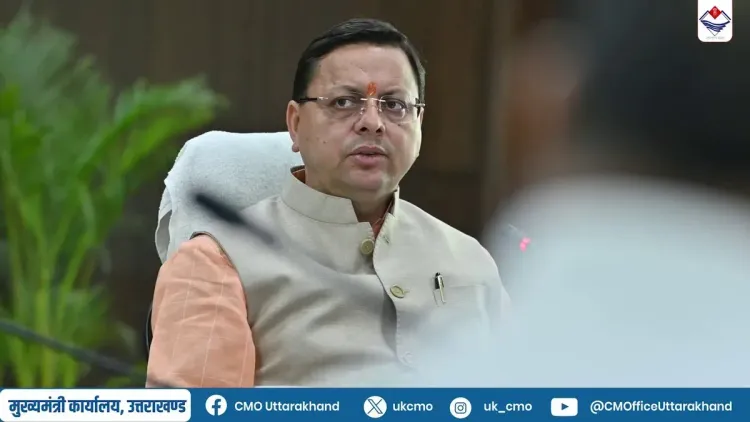
Synopsis
The Chief Minister's Office of Uttarakhand announced on 10 July 2026 that school students in Udham Singh Nagar are being prepared for competitive examinations, reflecting a state push to provide in-school coaching to rural and semi-urban aspirants who lack access to private coaching resources.
Key Takeaways
The Uttarakhand Chief Minister's Office announced on 10 July 2026 that school students are being prepared for competitive examinations.
The initiative is currently highlighted in Udham Singh Nagar , a Terai-belt district bordering Uttar Pradesh.
The programme targets students who lack access to private coaching, aiming to level the playing field for civil services, engineering, and medical entrance exams.
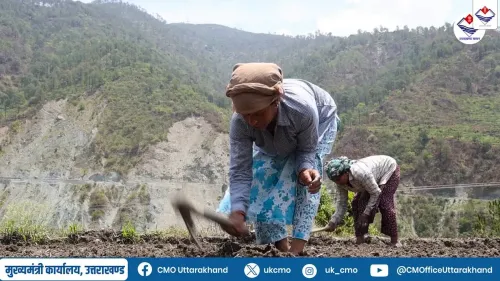
An official video was shared alongside the announcement, indicating active on-ground implementation.
If successful in US Nagar , the model could be extended to other districts across Uttarakhand .
The Chief Minister's Office of Uttarakhand announced on Friday, 10 July 2026 that school students in Udham Singh Nagar district are being actively prepared for competitive examinations, signalling a state-backed push to equip government school pupils with the skills needed for civil services, engineering, and medical entrance tests.
Context
The post, shared on the official CMO account, states in Hindi: 'Uttarakhand mein skooli bacchon ko pratiyogi parikshaaon ke liye kiya ja raha taiyaar' — ('School children in Uttarakhand are being prepared for competitive examinations'). The hashtags #USNagar and #Uttarakhand place the immediate focus on Udham Singh Nagar, a Terai-belt district that borders Uttar Pradesh and carries a large population of rural and semi-urban students who have historically had limited access to quality coaching.
An accompanying video was posted alongside the announcement, though specific programme details visible in the video could not be independently verified at the time of publication.
Policy Backdrop
Across India, several state governments have moved to embed structured competitive exam coaching within government school curricula, aiming to bridge the gap between students who can afford private coaching and those who cannot. Uttarakhand has in recent years emphasised educational equity as part of its broader development agenda, with particular attention to districts that lag in state and national examination outcomes.
Udham Singh Nagar has been identified in state planning discussions as a priority zone for educational intervention given its demographic density and the aspirational profile of its student population. Programmes of this nature typically target students from Class 9 onwards, covering aptitude-building, subject fundamentals, and mock-test practice aligned to exams such as UPSC, UKPSC, JEE, and NEET.
Stakeholders and Impact
The primary beneficiaries are school-going students — particularly those from low- and middle-income households in Udham Singh Nagar — who would otherwise rely on underfunded school instruction alone. Teachers, school administrators, and district education officers are the key implementing actors in such state-run coaching drives.
For families in the Terai region, access to in-school competitive preparation can meaningfully alter career trajectories, reducing dependence on expensive private coaching centres concentrated in larger cities such as Dehradun or Haldwani. If the model proves effective in US Nagar, it could serve as a template for replication across other Uttarakhand districts with similar socio-economic profiles.
What's Next
Observers will watch whether the Uttarakhand government formalises this initiative into a named scheme with dedicated budgetary allocation and measurable targets — such as the number of students enrolled or selection results in state and national examinations. The rollout of comparable coaching modules in other districts, particularly hill districts where educational infrastructure is thinner, will be a key indicator of the programme's ambition and reach.
Publication of student performance data in upcoming competitive examination cycles will be the clearest measure of whether in-school coaching in Udham Singh Nagar translates into tangible outcomes for Uttarakhand's young aspirants.
Point of View
Fee-paying students. By anchoring this announcement to a specific district rather than making a generic state-wide claim, the government signals a ground-up, district-level execution strategy — a sign of political attentiveness to the Terai region's aspirational electorate. The initiative's long-term credibility, however, will hinge on whether it moves beyond optics to produce verifiable selection outcomes. How the government tracks and publicises results will determine whether this becomes a replicable model or remains a one-cycle announcement.
NationPress
8 Oct 2026
Frequently Asked Questions
What is the Uttarakhand government doing for school students' competitive exam preparation?
The Uttarakhand Chief Minister's Office announced on 10 July 2026 that school students, particularly in Udham Singh Nagar district, are being prepared for competitive examinations through a state-backed initiative aimed at providing coaching within the government school system.
Which district in Uttarakhand is the focus of this competitive exam coaching programme?
Udham Singh Nagar, a Terai-belt district in Uttarakhand bordering Uttar Pradesh, is the district highlighted in the CMO's announcement for in-school competitive exam preparation.
Which competitive exams are Uttarakhand school students being prepared for?
While the post does not specify individual exams, such state-run programmes typically cover civil services exams like UPSC and UKPSC, as well as engineering and medical entrance tests such as JEE and NEET.
Why is Udham Singh Nagar chosen for this education initiative?
Udham Singh Nagar has a large population of rural and semi-urban students with limited access to private coaching. The state has identified it as a priority zone for educational intervention to address regional disparities in exam performance.
Will this competitive exam coaching be extended to other districts in Uttarakhand?
No formal announcement of district-wide expansion has been made yet, but observers expect the government to roll out similar modules in other Uttarakhand districts if the Udham Singh Nagar initiative shows positive results.