Uttarakhand ends madrasa laws, passes Minority Education Act 2025
Synopsis
Uttarakhand has become the first Indian state to repeal its madrasa education laws, replacing them with a unified Minority Educational Institutions Act that covers all six constitutionally recognised minority communities and mandates affiliation with the state school board. The old framework lapses on 1 July 2026 — and the move signals how far Uttarakhand is willing to push its reform agenda beyond the Uniform Civil Code.
Key Takeaways
The Uttarakhand Legislative Assembly passed the Minority Educational Institutions Act, 2025 , on 20 August 2025 .
The Uttarakhand Madrasa Education Board Act, 2016 , and related 2019 regulations will stand repealed from 1 July 2026 .
Only 2 to 4 per cent of school-going Muslim students in Uttarakhand were enrolled in madrasas, according to the committee's study.
The new Act covers all six notified minority communities — Muslims, Christians, Sikhs, Buddhists, Parsis, and Jains.
Recognised institutions must affiliate with the Uttarakhand Board of School Education and may offer supplementary religious instruction alongside the standard curriculum.
A new oversight body, the Uttarakhand State Minority Education Authority , has been constituted for implementation.
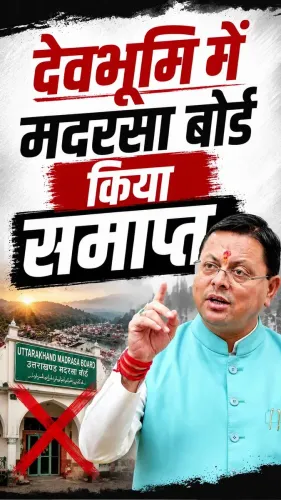
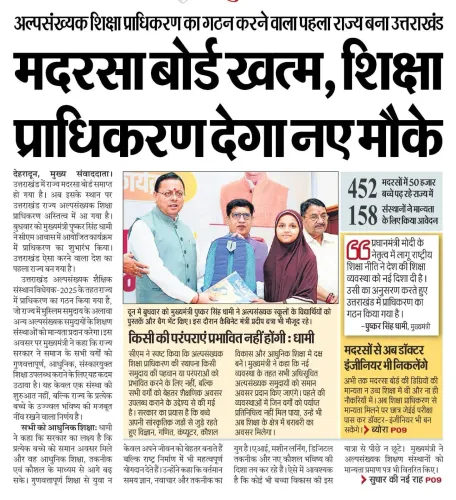
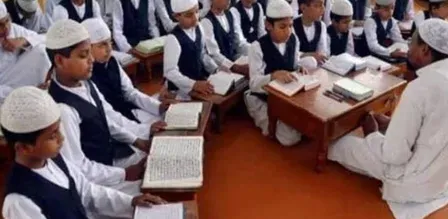
Uttarakhand became the first Indian state to formally repeal its madrasa education legislation when the Uttarakhand Minority Educational Institutions Act, 2025, was passed by the state's Legislative Assembly on 20 August 2025. The new law replaces the Uttarakhand Madrasa Education Board Act, 2016, and the Uttarakhand Non-Government Arabic and Persian Madrasa Recognition Regulations, 2019, with the older framework set to stand repealed from 1 July 2026, following the completion of the current academic session.
Background: From UCC to Education Reform
The legislative shift follows Uttarakhand's broader reform trajectory. On 27 January 2025, the state became the first in India to implement the Uttarakhand Uniform Civil Code Act, 2024, discontinuing religion-based personal civil laws and addressing practices including child marriage, polygamy, triple talaq, halala, and iddat. Building on that momentum, the state government on 5 June 2025 constituted a Strategic Advisory Committee under Chief Minister Pushkar Singh Dhami to deliberate on policy matters, including minority education standards.
The committee included Chief Secretary Anand Vardhan, former Chief Secretary Indu Kumar Pandey, former Chief Secretary and IAS officer Shatrughna Singh (serving as Member Secretary), former IAS officer Rakesh Kumar, and Principal Secretary Planning Meenakshi Sundaram. Input was also drawn from IPS officer Abhinav Kumar, based on his field experience with the Border Security Force (BSF) and Indo-Tibetan Border Police (ITBP) in Jammu and Kashmir.
What the Study Found
A detailed review of the existing madrasa framework, conducted with inputs from Uttarakhand Madrasa Board Chairman Mufti Shamoon Qasmi and Special Secretary Parag Madhukar Dhakate of the Department of Minority Welfare, found that a substantial number of madrasas were operating without formal recognition from the State Madrasa Board. Even among recognised institutions, teaching personnel reportedly did not meet minimum prescribed qualifications in many cases.
According to the committee's findings, only approximately 2 to 4 per cent of school-going Muslim students in Uttarakhand were enrolled in madrasas — a figure that nonetheless informed the policy rationale for reform, given the committee's view that madrasa-educated students go on to hold community leadership roles.
Constitutional Framework and Judicial Guidance
The drafting process drew on Articles 29 and 30 of the Constitution, which protect the rights of religious and linguistic minorities to establish and administer educational institutions. The committee also studied key Supreme Court rulings — the eleven-judge Constitution Bench verdict in T.M.A. Pai Foundation vs State of Karnataka and the subsequent ruling in P.A. Inamdar vs State of Maharashtra — which affirmed minority institutions' fundamental right to self-governance while permitting reasonable state regulation to maintain academic standards.
Notably, the National Commission for Minorities Act, 1992, recognises six minority communities — Muslims, Christians, Sikhs, Buddhists, Parsis, and Jains (added in 2014). The new Act is framed to extend its protections uniformly to all six, rather than exclusively to madrasa-based Muslim education.
What the New Act Provides
The Uttarakhand Minority Educational Institutions Act, 2025, defines a 'Minority Educational Institution' as one established and administered by a notified minority community. Key conditions for recognition include: mandatory affiliation with the Uttarakhand Board of School Education; governance by a registered Society, Trust, or Section 8 Company; institution-owned or legally leased land; financial transactions through formal banking channels; and teaching staff meeting prescribed qualifications.
The Act explicitly prohibits compelling any student or employee to participate in religious activities against their will, and bars institutions from taking actions that obstruct communal or social harmony. Recognised institutions may offer supplementary religious education alongside the standard academic curriculum, and may issue certificates for such supplementary subjects in addition to those from the Uttarakhand Board.
For oversight, a new body — the Uttarakhand State Minority Education Authority — has been constituted. The Cabinet approved the Bill on 17 August 2025, and the Assembly passed it three days later.
What Happens Next
The existing madrasa legislative framework will remain operative until 1 July 2026 to allow institutions to complete the ongoing academic session. Institutions seeking recognition under the new Act will need to meet the prescribed affiliation and governance conditions before that date. The reform is being watched closely by other states, given Uttarakhand's precedent-setting role on the Uniform Civil Code, and could inform national-level debate on minority education policy.
Point of View
The state sidesteps the charge of targeting one community — yet the reform's genesis, as described by its architects, is explicitly about reshaping Muslim community leadership. The 2–4 per cent enrolment figure cited by the committee actually weakens the urgency argument: if so few Muslim students attend madrasas, the systemic impact of this reform on educational outcomes will be limited. The more consequential question — whether the new Act's affiliation mandate will be resourced and enforced, or whether it becomes a compliance hurdle that shuts institutions rather than upgrades them — remains unanswered. Uttarakhand is again setting national precedent; whether that precedent holds up to judicial scrutiny is the next test.
NationPress
8 Oct 2026
Frequently Asked Questions
What is the Uttarakhand Minority Educational Institutions Act, 2025?
It is a state law passed by the Uttarakhand Legislative Assembly on 20 August 2025 that replaces the earlier madrasa-specific education framework with a unified structure covering all six constitutionally recognised minority communities. Recognised institutions must affiliate with the Uttarakhand Board of School Education and meet prescribed governance and staffing standards.
When will the old madrasa laws in Uttarakhand be repealed?
The Uttarakhand Madrasa Education Board Act, 2016, and the Uttarakhand Non-Government Arabic and Persian Madrasa Recognition Regulations, 2019, will stand repealed from 1 July 2026, after the current academic session concludes.
Which minority communities are covered under the new Act?
All six communities notified under the National Commission for Minorities Act, 1992 — Muslims, Christians, Sikhs, Buddhists, Parsis, and Jains — are covered. The law is explicitly framed to extend minority education protections uniformly, rather than exclusively to madrasas.
Can minority institutions still provide religious education under the new law?
Yes. Recognised institutions may offer supplementary religious education alongside the standard academic curriculum, subject to standards set by the Uttarakhand State Minority Education Authority. They may also issue certificates for such supplementary subjects in addition to those from the state board.
How does this relate to Uttarakhand's Uniform Civil Code?
The education reform follows directly from Uttarakhand's implementation of the Uniform Civil Code on 27 January 2025 — the first such implementation by any Indian state. The Strategic Advisory Committee constituted on 5 June 2025 to advance state policy priorities identified minority education reform as a key next step, leading to the drafting and passage of the new Act.