Uttarkashi's Urmila Kanswal blooms with floriculture shift
Synopsis
The Chief Minister's Office of Uttarakhand has highlighted Urmila Kanswal of Uttarkashi district, who moved from traditional subsistence farming to flower cultivation — a story that reflects the state's broader push to diversify hill agriculture, raise rural incomes, and slow outmigration through high-value crops.
Key Takeaways
The Chief Minister's Office of Uttarakhand spotlighted Urmila Kanswal of Uttarkashi on 9 August 2026 for shifting to floriculture.
Uttarkashi's high-altitude, cool climate makes it naturally suited to flower cultivation, which commands higher market value than traditional cereals.
Uttarakhand's horticulture department has promoted floriculture in hill districts since the 2000s , backed by national horticulture development schemes.
Women farmers are the primary agricultural workforce in Uttarakhand's hills due to sustained male outmigration, making them central to crop diversification efforts.
Floriculture's high per-kilogram value on limited land directly addresses the economic calculus that drives rural-to-urban migration in hill districts.
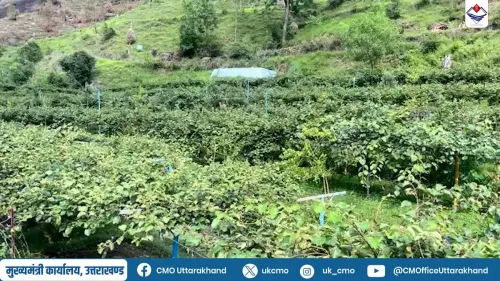
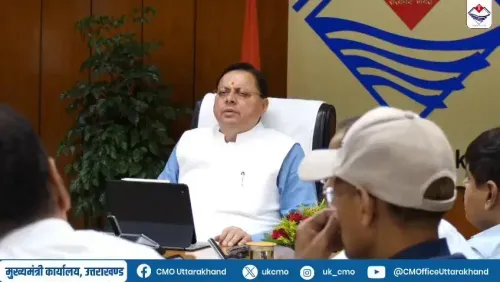
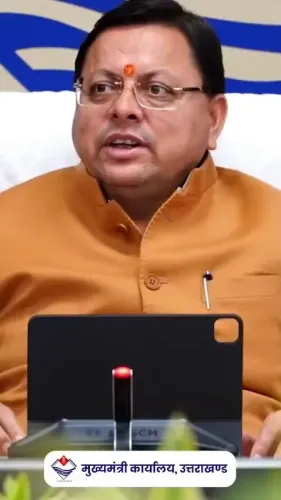
A woman farmer from the hills of Uttarkashi is rewriting what self-reliance looks like — one flower at a time. The Chief Minister's Office of Uttarakhand spotlighted Urmila Kanswal on Sunday, 9 August 2026, celebrating her transition from conventional subsistence farming to floriculture as a model of rural economic independence.
The post, shared in Hindi, captures the spirit of the shift: 'पारंपरिक खेती से आगे बढ़कर फूलों की खेती से आत्मनिर्भरता की नई खुशबू बिखेर रहीं' — 'Moving beyond traditional farming, spreading the new fragrance of self-reliance through flower cultivation.' It is a small sentence carrying a large idea in Uttarakhand's hill economy.
Why Uttarkashi's terrain makes floriculture a smart bet
Uttarkashi district sits in the upper Himalayan belt, where arable land is scarce and traditional cereal farming yields thin returns. The district's cool climate and altitude, however, are well-suited to high-value flowers — marigolds, gladioli, and Himalayan wildflower varieties that command premium prices in urban markets and religious supply chains across northern India. Uttarakhand's horticulture department has, since the 2000s, actively promoted floriculture in hill districts as an alternative income stream. National horticulture development schemes have provided a broader financial scaffold, while state-level training and subsidy programmes have tried to bring that opportunity to individual farm households — particularly women cultivators who manage much of the agricultural labour in hill villages.Women farmers at the centre of Uttarakhand's crop-shift story
Urmila Kanswal's story is part of a recognisable pattern across Uttarakhand's hills. Decades of outmigration by working-age men have left women as the primary stewards of farmland. That demographic reality has quietly made women the frontline of crop diversification — and, increasingly, the faces of whatever economic revival the hills can claim. The state's push toward flowers, medicinal plants, and organic produce is explicitly tied to slowing migration. When a hill farmer earns more from two bighas of gladioli than from five bighas of wheat, the calculation to leave the village changes. Floriculture, with its relatively low land requirement and higher per-kilogram value, fits that logic cleanly. The Chief Minister's Office amplifying Urmila Kanswal's example signals that the government views individual success stories as both proof of concept and outreach — showing other hill farmers that the shift is viable, not just aspirational.Frequently Asked Questions
Who is Urmila Kanswal from Uttarkashi?
Urmila Kanswal is a farmer from Uttarkashi district in Uttarakhand who has transitioned from traditional subsistence crops to flower cultivation, and was highlighted by the Chief Minister's Office of Uttarakhand as a model of rural self-reliance.
Why is floriculture promoted in Uttarakhand's hill districts?
Uttarakhand's hilly terrain limits arable land, making high-value crops like flowers more profitable per unit area than traditional cereals. The state has promoted floriculture since the 2000s to raise farmer incomes and reduce outmigration from hill districts.
What schemes support flower farming in Uttarakhand?
Uttarakhand's horticulture department runs state-level training and subsidy programmes for floriculture, supported by national horticulture development frameworks that provide financial scaffolding for hill farmers.
How does floriculture help reduce migration from Uttarakhand villages?
When flower cultivation generates higher income from smaller plots than traditional farming, the economic incentive to migrate to cities weakens. Floriculture's strong price-per-kilogram ratio is central to Uttarakhand's strategy to retain its rural population.
What flowers are grown in Uttarkashi district?
Uttarkashi's altitude and cool climate are suited to flowers such as marigolds, gladioli, and Himalayan varieties that supply religious markets and urban florists across northern India, though specific crops vary by village and elevation.