India Water Week 2026: V-P Radhakrishnan calls for river interlinking, sustainable water action
Synopsis
At the 9th India International Water Week in New Delhi, Vice President Radhakrishnan called river interlinking essential to national water security and cited Jharkhand's jump from 7% to 37% rural tap coverage under Jal Jeevan Mission as proof of what targeted policy can achieve. With the Netherlands and Germany as partner nations, IIWW 2026 is also India's most visible push to globalise its water governance agenda ahead of Water Vision@2047.
Key Takeaways
Radhakrishnan inaugurated the 9th India International Water Week (IIWW) 2026 at Bharat Mandapam, New Delhi on 22 September 2026 .
He underscored the role of river interlinking in addressing spatial and temporal gaps in water availability across India.
Rural tap water coverage in Jharkhand rose from 7% to 37% under the Jal Jeevan Mission , per the Vice President's remarks.
Jal Shakti Minister C.
Patil outlined India's Water Vision@2047 and highlighted schemes including the Ken-Betwa Link Project and Namami Gange .
Two publications launched: 'Sustainable Urban River Management Framework' and 'AI and ML Driven Integrated Reservoir Sediment Management.' The Netherlands and Germany are partner countries; 14 states and two central ministries are participating as partners.
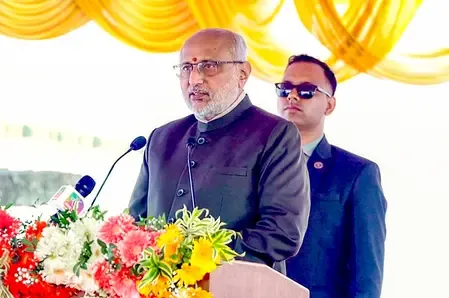
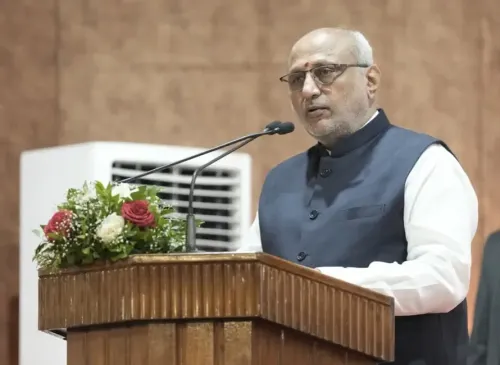
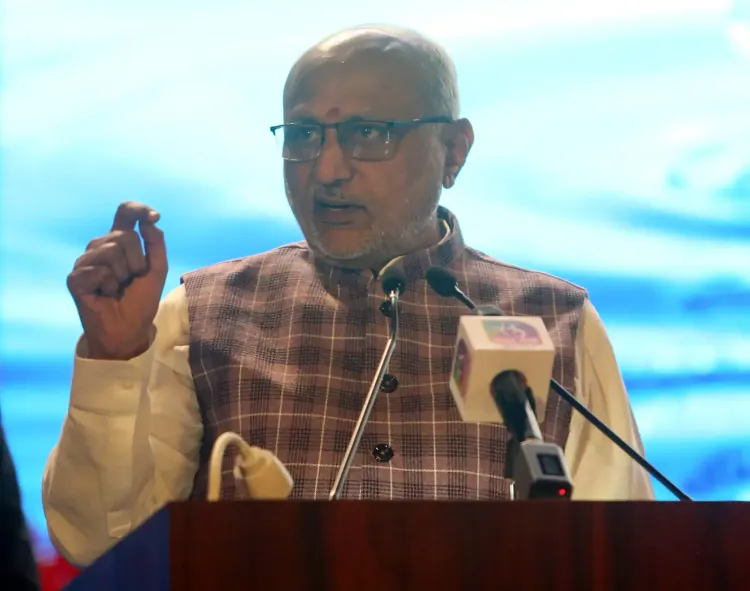
Vice President C. P. Radhakrishnan on Tuesday, 22 September 2026, called for integrated and sustainable water management through innovation, efficiency and collective action at the inauguration of the 9th India International Water Week (IIWW) 2026 at Bharat Mandapam, New Delhi. Addressing the gathering in the presence of Union Minister of Jal Shakti C. R. Patil, Radhakrishnan underscored the critical role of river interlinking in resolving spatial and temporal disparities in water availability across the country.
Key Highlights from the Vice President's Address
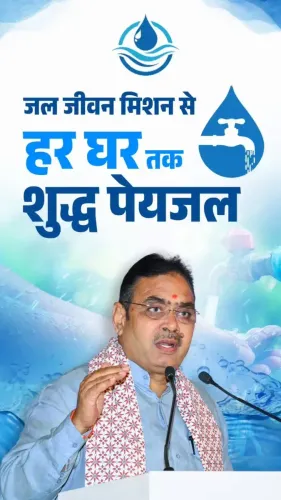
Radhakrishnan drew on his own tenure as Governor of Jharkhand to illustrate the scale of transformation possible through targeted intervention. He noted that rural tap water coverage in Jharkhand rose from approximately 7 per cent to 37 per cent under the Jal Jeevan Mission, describing it as a 'transformative programme' that has significantly expanded access to potable drinking water in rural households across the state.
He also stressed the importance of cooperative arrangements among states for sharing and managing inter-state river waters — a politically sensitive but operationally critical dimension of India's water security challenge. Radhakrishnan urged participants to leverage IIWW 2026 as a platform to exchange knowledge, forge partnerships and convert deliberations into concrete, measurable action.
Two Key Publications Launched
The Vice President launched two significant publications at the event: the 'Sustainable Urban River Management Framework' and 'AI and ML Driven Integrated Reservoir Sediment Management.' Both documents are aimed at providing actionable guidance on deploying technology and governance frameworks in water resource management — signalling the government's intent to move beyond conventional approaches toward data-driven and AI-assisted solutions.
What the Jal Shakti Minister Said
Jal Shakti Minister C. R. Patil emphasised that water security and climate resilience must advance together, noting that the most visible impacts of climate change are increasingly being experienced through water. He outlined India's Water Vision@2047 and highlighted a broad slate of central interventions including Pradhan Mantri Krishi Sinchayee Yojana, Jal Jeevan Mission, Jal Sanchay Jan Bhagidari, Namami Gange, Atal Bhujal Yojana, NAQUIM, the Ken-Betwa Link Project, the Dam Rehabilitation and Improvement Project, and the National Hydrology Project.
Patil described Jan Bhagidari — people's participation — as India's 'biggest strength' in advancing water management, citing the value of shared learning across communities and institutions.
Global and Multi-Stakeholder Platform
Archana Verma, Secretary of the Department of Water Resources, River Development and Ganga Rejuvenation, described IIWW as having evolved into an important multidisciplinary global platform for policy dialogue, technology demonstration, knowledge sharing and partnerships. This year's edition sees the Netherlands and Germany participating as partner countries, alongside 14 states as partner states and two central ministries as partner ministries.
The event brings together governments, international and multilateral organisations, research and academic institutions, industry, civil society, start-ups, innovators and young professionals — making it one of the largest structured forums on water governance in the region. As India confronts accelerating climate pressures and a growing urban-rural water divide, the outcomes of IIWW 2026 could shape the policy agenda ahead of the country's 2047 centenary development goals.
Point of View
Yet progress has been fitful — the Ken-Betwa Link Project, the first to break ground, took years to move from blueprint to execution. Radhakrishnan's endorsement of the concept at a high-profile international forum is significant, but the harder question is whether IIWW 2026 will produce binding inter-state water-sharing commitments or remain a platform of intent. The Jal Jeevan Mission numbers are genuinely impressive, but urban water stress — deepening in Bengaluru, Chennai and Delhi — remains inadequately addressed by rural-first schemes. India's Water Vision@2047 needs an equally bold urban water roadmap, not just rural tap targets.
NationPress
22 Sept 2026
Frequently Asked Questions
What is India International Water Week 2026?
India International Water Week (IIWW) 2026 is the 9th edition of a major multidisciplinary global forum on water governance, held at Bharat Mandapam, New Delhi, from 22 September 2026. It brings together governments, multilateral organisations, academia, industry, start-ups and civil society to discuss policy, technology and partnerships in water management.
What did Vice President Radhakrishnan say about river interlinking?
Radhakrishnan underscored the critical role of river interlinking in resolving spatial and temporal disparities in water availability across India. He called for integrated and sustainable water management through innovation, efficiency and collective action to address challenges posed by climate change and urbanisation.
What progress has India made under Jal Jeevan Mission?
According to Vice President Radhakrishnan, rural tap water coverage in Jharkhand alone rose from approximately 7% to 37% under the Jal Jeevan Mission. He described the Mission as a transformative programme that has significantly expanded potable drinking water access in rural households.
Which countries and states are participating in IIWW 2026?
The Netherlands and Germany are participating as partner countries in IIWW 2026. Additionally, 14 Indian states have joined as partner states and two central ministries as partner ministries, reflecting the event's broad multi-stakeholder character.
What publications were launched at IIWW 2026?
Vice President Radhakrishnan launched two publications at IIWW 2026: the 'Sustainable Urban River Management Framework' and 'AI and ML Driven Integrated Reservoir Sediment Management.' Both are aimed at advancing technology-driven and governance-based solutions to water resource challenges.