Jal Shakti Minister Paatil Signs MoUs With Dutch Institutions at IIWW 2026

Synopsis
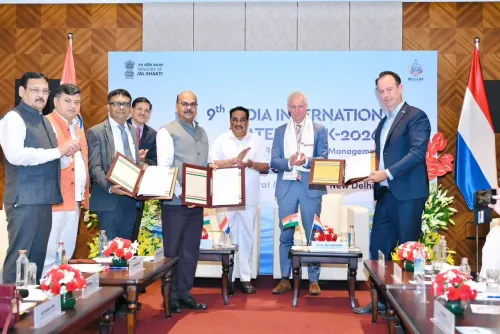
At India International Water Week 2026, MoUs were signed between Dutch institutions Deltares and TU Delft and India's Central Water Commission, Jal Shakti Ministry, and Gujarat Government to advance the Kalpasar Project, capacity building, and technical water-sector knowledge-sharing.
Key Takeaways
MoUs were signed on 24 September 2026 during India International Water Week 2026 between Indian and Dutch water institutions.
Dutch signatories include Deltares and TU Delft ; Indian signatories are the Central Water Commission , the Ministry of Jal Shakti , and the Gujarat Government .
The agreements specifically target the Kalpasar Project — a proposed freshwater reservoir and tidal-power scheme in the Gulf of Khambhat, Gujarat — alongside capacity building and technical knowledge-sharing.
The Kalpasar concept dates to the 1980s , with formal feasibility work advanced by Gujarat in the 2000s ; Dutch expertise in delta management is seen as critical to unlocking the project.
This deepens an India–Netherlands water-sector engagement that has included joint working groups since the mid-2010s , upgrading from dialogue to binding institutional agreements.
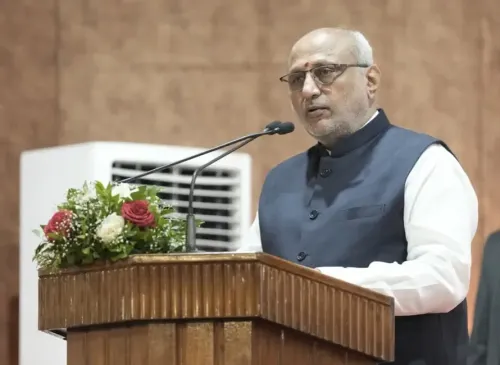
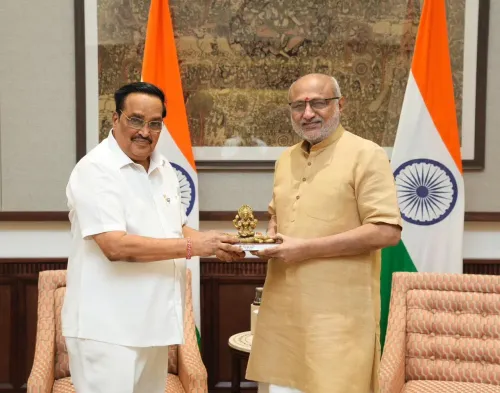
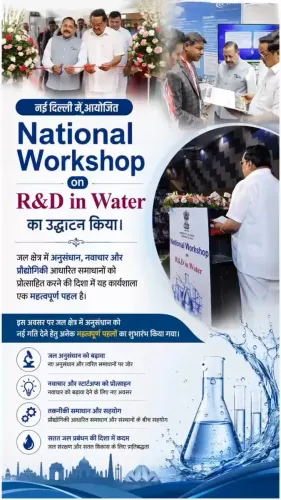
At the India International Water Week 2026, a set of landmark memoranda of understanding brought Dutch water science to bear on one of India's most ambitious coastal engineering dreams — and signalled just how seriously New Delhi is treating its water-security agenda. Union Jal Shakti Minister C. R. Paatil announced on Thursday, 24 September 2026 that agreements had been signed between Dutch institutions and Indian government bodies to accelerate cooperation on the long-proposed Kalpasar Project, capacity building, and technical knowledge-sharing.
Posting on X, Minister Paatil wrote: 'भारत–नीदरलैंड्स जल सहयोग को और मजबूत करते हुए आज इंडिया इंटरनेशनल वाटर वीक 2026 के दौरान महत्वपूर्ण समझौता ज्ञापनों पर हस्ताक्षर हुए' — ['Strengthening India–Netherlands water cooperation, important MoUs were signed today during India International Water Week 2026.'] The agreements, he said, mark 'an important step towards a water-secure and climate-resilient future' under Prime Minister Narendra Modi's leadership.Who Signed What — and Why It Matters
On the Dutch side, Deltares — a world-renowned research institute specialising in delta management, flood control, and subsurface infrastructure — and TU Delft, whose hydraulic engineering faculty ranks among the globe's strongest, put their names to the agreements. India brought its three biggest water-sector players to the table: the Central Water Commission, the Ministry of Jal Shakti, and the Gujarat Government. That triangular Indian signatory list is deliberate — it links central policy, national technical authority, and the state that would actually build and operate the infrastructure.
The Kalpasar Question: A Decades-Old Dream Gets Dutch Backing
The centrepiece of the new partnerships is the Kalpasar Project, a proposed freshwater reservoir and tidal-power scheme in the Gulf of Khambhat, Gujarat. The concept surfaced in the 1980s; Gujarat's government pushed feasibility work in the 2000s; but the sheer complexity of building a dam across an active tidal gulf has kept the project in the study phase for decades. Enter Deltares and TU Delft — institutions with direct experience managing the Netherlands' own vulnerable delta system, the Rhine-Meuse-Scheldt delta. Their involvement injects the kind of field-tested hydrological and coastal engineering expertise that Kalpasar needs to move from blueprint to bankable project.
India–Netherlands Water Ties: From Joint Working Groups to Binding MoUs
The two countries have cultivated water-sector dialogue since the mid-2010s, running joint working groups and knowledge-exchange frameworks. Today's MoUs represent a step-change — from informal dialogue to structured, institution-to-institution commitments. The Jal Shakti Ministry has consistently pursued such bilateral technical partnerships, tapping European research institutions to support state-level infrastructure under the central water-security agenda. The Netherlands, a nation that has literally engineered its own survival against the sea, is arguably the most credible partner India could pick for a project that does exactly the same thing.
What follows next will reveal whether these agreements translate into the detailed technical studies, capacity-building programmes, and knowledge transfers that could finally give Kalpasar a credible construction timeline — and Gujarat's coastal communities a guaranteed freshwater future.
Point of View
The Jal Shakti Ministry is systematically importing European technical expertise to de-risk transformative but long-stalled projects like Kalpasar. Bringing in Deltares and TU Delft — institutions whose credibility is inseparable from the Netherlands' own survival as a low-lying delta nation — adds technical legitimacy that could help Kalpasar clear the feasibility hurdles that have blocked it for decades. For the BJP government, any progress on Kalpasar also carries significant political weight in Gujarat, Prime Minister Modi's home state. The central question is whether these MoUs convert into actionable study outputs and a funded project timeline, or become another layer of institutional paperwork around a perpetually-deferred scheme.
NationPress
24 Sept 2026
Frequently Asked Questions
What is the Kalpasar Project?
The Kalpasar Project is a proposed large-scale scheme to create a freshwater reservoir and harness tidal power in the Gulf of Khambhat off the coast of Gujarat . The concept originated in the 1980s and has been under feasibility study by the Gujarat government since the 2000s.
What MoUs were signed at India International Water Week 2026?
MoUs were signed between Deltares and TU Delft from the Netherlands and India's Central Water Commission , Ministry of Jal Shakti , and the Gujarat Government , covering cooperation on the Kalpasar Project, capacity building, and technical knowledge-sharing.
Who is CR Paatil and what ministry does he head?
C. R. Paatil is the Union Minister of Jal Shakti (water resources), a senior BJP leader, and former BJP Gujarat state president. His ministry oversees national water resource management, irrigation, and related infrastructure.
What is Deltares and why is it partnering with India?
Deltares is a Dutch independent research institute with globally recognised expertise in water management, delta engineering, flood control, and subsurface infrastructure. It is partnering with India to provide technical knowledge relevant to the Kalpasar Project and broader water-sector challenges.
What is India International Water Week?
India International Water Week (IIWW) is a major national event organised to bring together water-sector stakeholders, policymakers, and international partners to discuss innovations, sign cooperation agreements, and advance India's water security goals.