Vaishnaw Signals 'Made in Bharat' Chips for Indian Rockets

Synopsis
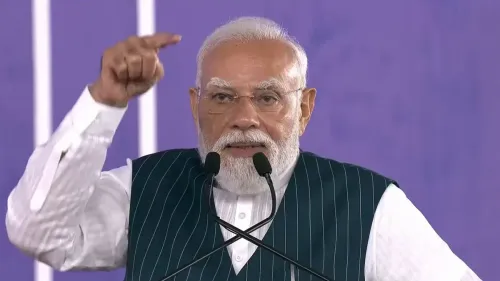
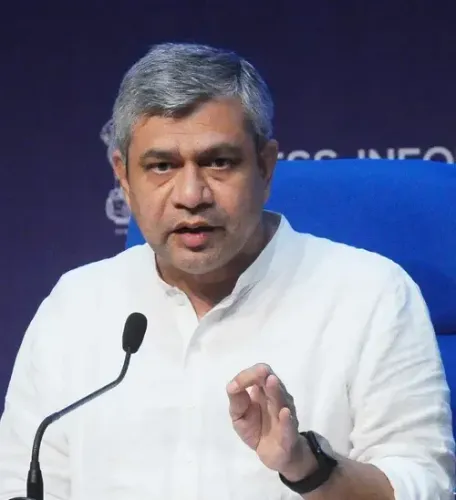
Union Minister Ashwini Vaishnaw has signalled that 'Made in Bharat' semiconductor chips will soon power Indian rockets, tagging private space startup Skyroot Aerospace in a post that links India's chip self-reliance drive directly to its growing private launch sector.
Key Takeaways
Union Minister Ashwini Vaishnaw posted on 27 July 2026 that 'Made in Bharat' chips will soon be used in Indian rockets, tagging Skyroot Aerospace .
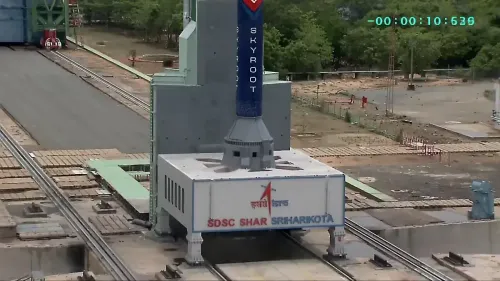
Skyroot Aerospace is a Hyderabad -based private rocket company founded in 2018 , developing the Vikram series of small satellite launch vehicles.
The India Semiconductor Mission , approved in 2021 , provides incentives for domestic chip design, fabrication, and packaging — including for strategic sectors like space.
Space sector liberalisation via IN-SPACe in 2020 opened the door for private firms to build and operate launch vehicles, creating new demand for indigenous components.
No specific timeline, chip specifications, or formal agreements have been announced; the minister's post signals intent rather than a concluded programme.
The development, if realised, would reduce India's import dependence on foreign semiconductors for aerospace-grade applications.
Union Minister Ashwini Vaishnaw on Monday, 27 July 2026, signalled that domestically manufactured semiconductor chips will soon power Indian rockets, tagging Hyderabad-based private space startup Skyroot Aerospace in a post on X that has drawn attention from the space and electronics sectors.
Context
The minister's post — 'Made in Bharat' chips for our rockets… soon! — is brief but pointed. Vaishnaw holds the portfolio of Electronics and Information Technology, making him the political custodian of India's semiconductor ambitions. By tagging Skyroot Aerospace, the country's first private rocket company to reach space with its Vikram-S suborbital launch in 2022, he is explicitly linking the domestic chip drive to the private space sector.
The remark stops short of announcing a formal programme or contract, but the ministerial signal carries weight: it suggests that aerospace-grade chips developed or packaged under India's semiconductor push are moving closer to integration in launch vehicles built by private firms.
Policy Backdrop
The post sits at the intersection of two landmark policy shifts. In 2020, the government liberalised the space sector through the IN-SPACe framework, allowing private companies to design, build, and operate launch vehicles — a move that enabled startups like Skyroot to emerge. A year later, in 2021, the India Semiconductor Mission (ISM) was approved with financial incentives to build domestic capacity in chip design, fabrication, and packaging.
Together, these policies form the backbone of the Atmanirbhar Bharat campaign's push into strategic technologies. Semiconductors have historically been a critical import dependency for India's space and defence hardware. Reducing that dependency — particularly for components that go into guidance systems, onboard computers, and communication modules on rockets — has been a stated priority of the current government.
ISRO, the Indian Space Research Organisation, has long developed some indigenous electronics for its missions, but the scale and speed required by a growing private launch industry demands a broader, commercially oriented supply chain — precisely what the ISM is designed to catalyse.
Stakeholders and Impact
Skyroot Aerospace, founded in 2018 and headquartered in Hyderabad, is developing the Vikram series of small satellite launch vehicles aimed at the global small-sat market. The company has been working toward an orbital launch attempt with Vikram-1. Access to domestically produced chips would reduce procurement timelines, lower costs, and insulate the programme from global semiconductor supply chain disruptions — a vulnerability exposed sharply during the 2020–2022 global chip shortage.
For India's broader semiconductor ecosystem, a high-visibility use case like rocketry provides both a credibility signal and a demand anchor. Chip manufacturers and packaging units seeking customers under the ISM would gain a strategic buyer, while private space firms would gain a reliable, India-sourced component supply chain less vulnerable to export controls or geopolitical friction.
What's Next
The specific timeline, chip specifications, and any formal agreements between semiconductor manufacturers and Skyroot remain unannounced. Vaishnaw's post uses the word 'soon,' suggesting proximity without committing to a date. Observers will watch for formal programme announcements from the Ministry of Electronics and Information Technology, updates from IN-SPACe on private launch clearances, and any new fabrication or packaging facility approvals under the India Semiconductor Mission that specifically target aerospace-grade components.
If realised, 'Made in Bharat' chips in Indian rockets would mark a tangible convergence of two of the government's most ambitious self-reliance drives — and a concrete proof point for India's strategic technology independence.
Point of View
Not a casual remark — linking his Electronics and IT portfolio directly to the private space sector telegraphs that the government sees rocketry as a near-term showcase for the India Semiconductor Mission. The choice to tag Skyroot rather than ISRO is telling: it frames the chip-to-rocket pipeline as a private-sector story, consistent with the government's broader effort to build commercial credibility for both its semiconductor and space liberalisation policies. For Skyroot, the ministerial attention is a double-edged opportunity — validation that raises expectations alongside a public timeline pressure. The broader arc here is India attempting to close the loop between two parallel Atmanirbhar drives, converting policy ambition into a tangible, high-visibility end product: a domestically chipped Indian rocket.
NationPress
26 Oct 2026
Frequently Asked Questions
What did Ashwini Vaishnaw say about 'Made in Bharat' chips for rockets?
Union Minister Ashwini Vaishnaw posted on X on 27 July 2026 that 'Made in Bharat' chips for Indian rockets are coming 'soon,' tagging private space company Skyroot Aerospace. No specific timeline or chip details were announced.
What is Skyroot Aerospace and what rockets does it make?
Skyroot Aerospace is a Hyderabad-based private Indian space company founded in 2018. It is developing the Vikram series of small satellite launch vehicles and became the first Indian private company to reach space with its Vikram-S suborbital launch in 2022.
What is the India Semiconductor Mission?
The India Semiconductor Mission is a central government programme approved in 2021 that provides financial incentives to build domestic capacity in semiconductor design, fabrication, and packaging, with the aim of reducing India's dependence on imported chips.
How does IN-SPACe relate to private rocket companies in India?
IN-SPACe, established in 2020, is the government body that liberalised India's space sector, allowing private companies to design, build, and launch rockets. It enabled startups like Skyroot Aerospace to enter the launch vehicle business.
Why does it matter if Indian rockets use domestically made chips?
Using domestically produced chips in rockets reduces dependence on foreign suppliers, lowers vulnerability to global supply chain disruptions and export controls, and provides a high-profile use case that can anchor demand for India's emerging semiconductor manufacturing industry.