Vaishnaw flags floating solar push under PM Surya Sarovar Yojana

Synopsis
Union Minister Ashwini Vaishnaw announced on 1 August 2026 that floating solar projects under the PM Surya Sarovar Yojana will convert India's water bodies into clean energy hubs, advancing the country's self-reliant renewable energy goals and its 500 GW non-fossil fuel target by 2030.
Key Takeaways
Union Minister Ashwini Vaishnaw announced floating solar projects under the PM Surya Sarovar Yojana on 1 August 2026 .
The scheme aims to transform water bodies — reservoirs, lakes, irrigation tanks — into clean energy generation hubs.
Floating solar avoids land acquisition delays and reduces reservoir evaporation while improving panel efficiency.
India has pledged 500 GW of non-fossil fuel capacity by 2030 , a target the scheme is designed to support.
The Aatmanirbhar Bharat framing signals likely domestic content requirements for solar equipment under the programme.
State water departments and renewable energy developers are the key stakeholders for implementation and tender rollout.
India's water bodies may soon double as power plants. Union Minister Ashwini Vaishnaw announced on Saturday, 1 August 2026 that floating solar projects under the PM Surya Sarovar Yojana will convert reservoirs and water bodies into clean energy hubs — framing the push as a key step in India's aatmanirbhar (self-reliant) renewable energy journey.
The minister's post, shared with the caption 'Floating solar projects will transform water bodies into clean energy hubs, advancing India's aatmanirbhar renewable energy journey,' signals the government's intent to scale an infrastructure model that has been quietly gaining ground across Indian states.
Why water bodies, not land?
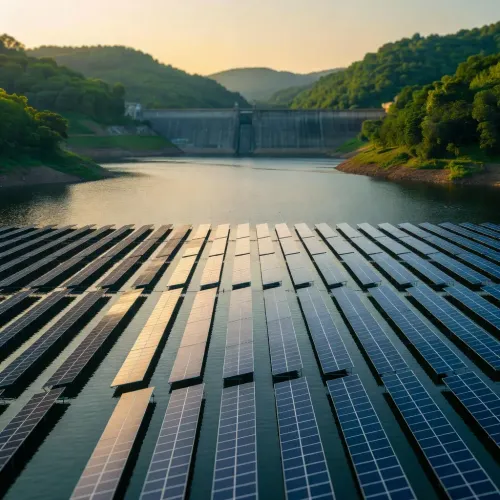
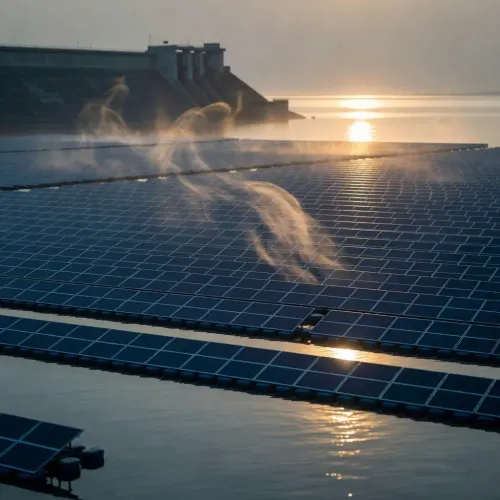
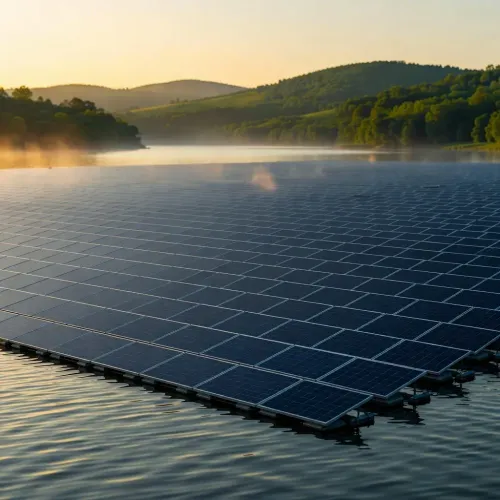
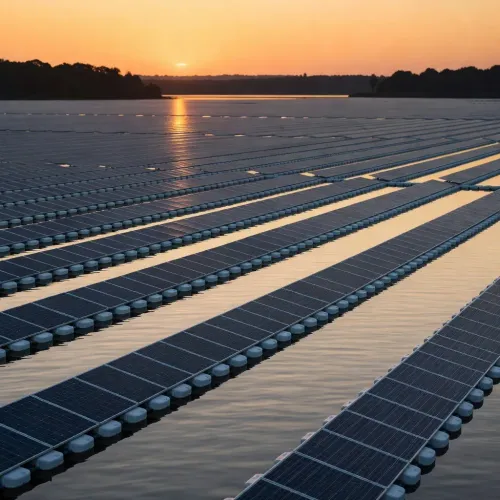
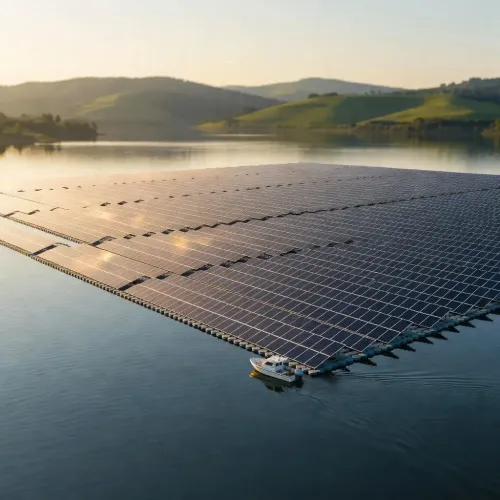
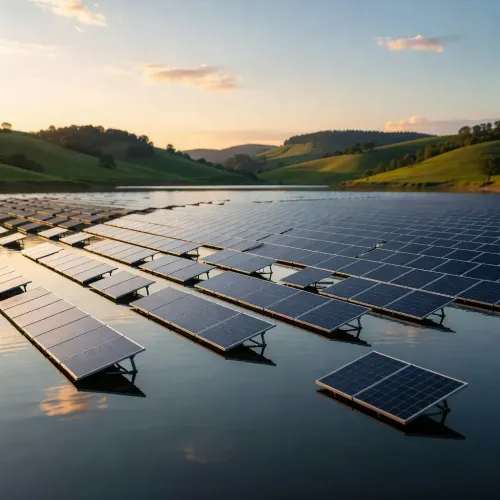
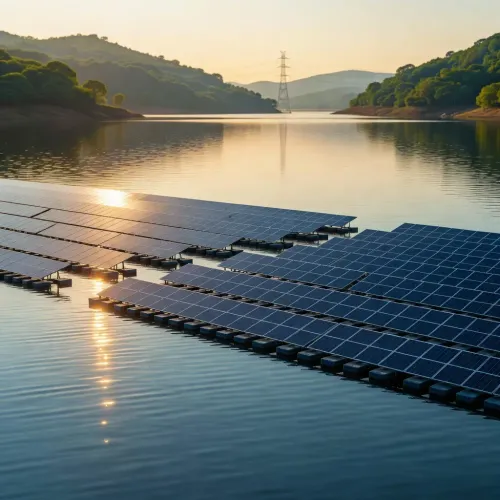
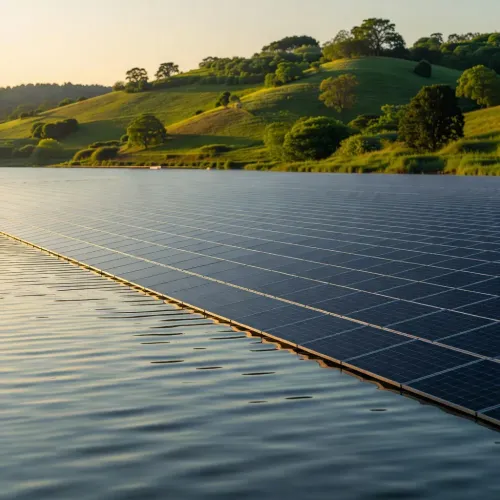
Floating solar — panels mounted on pontoons anchored to reservoirs, irrigation tanks, or lakes — solves two problems at once. It sidesteps the land acquisition bottlenecks that have slowed ground-mounted solar projects, and the water beneath the panels reduces heat buildup, improving generation efficiency. As a bonus, the shade cuts evaporation losses from reservoirs, a meaningful gain in water-stressed regions. India has piloted floating solar installations in several states, but scaling them into a dedicated national scheme marks a sharper policy commitment. The PM Surya Sarovar Yojana — as named in the minister's post — frames this as a structured programme rather than scattered pilots.Fitting into India's 500 GW ambition
The backdrop is India's pledge at COP26 in 2021 to reach 500 GW of non-fossil fuel energy capacity by 2030. With that deadline less than four years away, every viable deployment channel matters. Floating solar over existing water infrastructure offers a route to add capacity without the delays of fresh land acquisition or grid extension into greenfield sites. The Aatmanirbhar Bharat framing — the self-reliance campaign launched by the government in 2020 — also carries a procurement signal: domestic content requirements in solar equipment have been a consistent policy lever, and a new central scheme would likely reinforce those norms, giving Indian solar manufacturers a protected demand pipeline.State water departments and developers in focus
The scheme's success will hinge on coordination between central renewable energy planners and state water departments, which control most reservoir and irrigation infrastructure. Tender structures, revenue-sharing between power utilities and irrigation bodies, and grid connectivity in rural water-body locations are the operational knots that will need untying. Renewable energy developers and equipment suppliers will be watching early tender releases closely for project scale and domestic sourcing conditions. If the government moves from announcement to allocation swiftly, PM Surya Sarovar Yojana could become one of the more elegant infrastructure plays in India's clean energy toolkit — turning existing assets into generating ones, without breaking new ground.Point of View
Vaishnaw is also signalling continuity with the domestic manufacturing push — a political economy choice as much as an energy one. With the 2030 deadline for 500 GW now within a single electoral cycle, the government has strong incentive to move from scheme announcement to visible on-water capacity quickly. The real test will be whether state water departments, which control the reservoirs, can be brought into a functional revenue-sharing architecture fast enough to matter.
NationPress
15 Sept 2026
Frequently Asked Questions
What is PM Surya Sarovar Yojana?
PM Surya Sarovar Yojana is a government scheme announced by Union Minister Ashwini Vaishnaw to deploy floating solar panels on India's water bodies, turning reservoirs and lakes into clean energy generation hubs as part of India's renewable energy expansion.
What is floating solar and how does it work in India?
Floating solar involves mounting photovoltaic panels on pontoons anchored to water bodies such as reservoirs and irrigation tanks. India has piloted this technology across several states; the water cools the panels for better efficiency while the shade reduces evaporation losses from the reservoir.
How does this scheme connect to India's 500 GW renewable energy target?
India committed at COP26 in 2021 to achieve 500 GW of non-fossil fuel energy capacity by 2030. Floating solar over existing water infrastructure offers a way to add capacity without fresh land acquisition, helping close the gap to that target.
What does Aatmanirbhar mean in the context of solar energy?
Aatmanirbhar means self-reliant. In solar energy, the Aatmanirbhar Bharat campaign — launched in 2020 — has translated into domestic content requirements for solar equipment, encouraging Indian manufacturers and reducing dependence on imports.
Who are the key stakeholders for implementing floating solar projects in India?
State water departments, which control most reservoirs and irrigation infrastructure, are central to implementation. Renewable energy developers and solar equipment manufacturers are also key, as they will respond to tenders and supply the technology under the scheme.