Vande Bharat staff to get advanced training at IIT Kharagpur under 5-year MoU
Synopsis
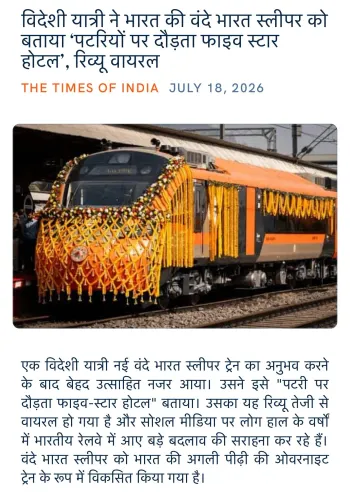
IIT Kharagpur is set to train the men and women who operate India's fastest passenger trains — a quiet but significant upgrade. With 260 Vande Bharat sleeper trainsets on order and a freight prototype in trials, the Railways is betting that world-class infrastructure needs world-class operators, and has turned to one of India's top engineering institutions to deliver them.
Key Takeaways
IIT Kharagpur and IRIMEE, Jamalpur signed a five-year MoU to train Vande Bharat operational staff in advanced railway technologies.
Training will cover TCMS , traction systems, regenerative braking, rolling stock diagnostics, and electrical safety.
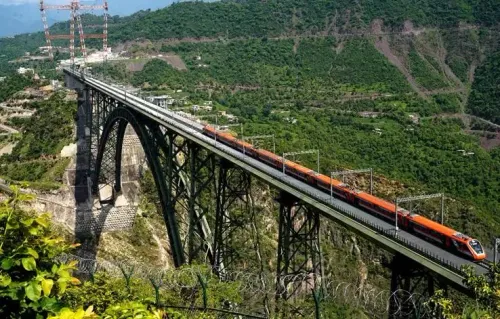
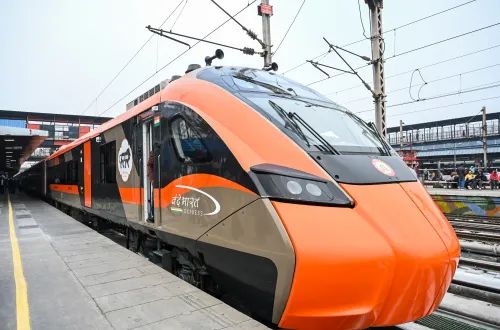
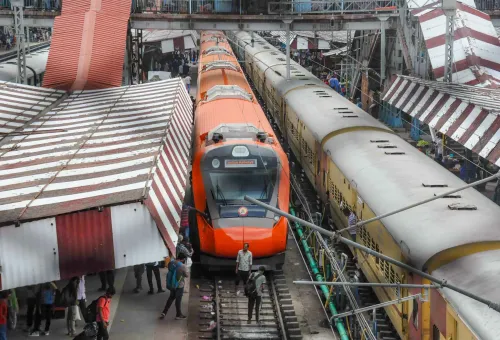
Indian Railways currently runs 79 Vande Bharat trains , with plans to acquire 260 Vande Bharat sleeper trainsets ; 60 are under construction.
A prototype Vande Bharat freight train is separately undergoing trials.
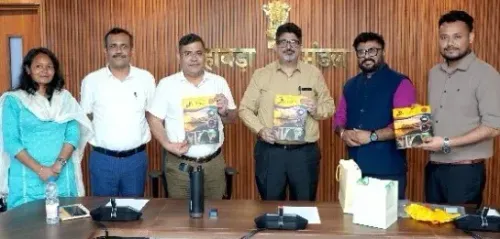
The MoU was signed by Prof Swagata Dasgupta (IIT Kharagpur) and Prem Prakash (IRIMEE).
Operational staff of Vande Bharat trains will soon undergo specialised advanced training at the Indian Institute of Technology (IIT) Kharagpur, following a landmark five-year Memorandum of Understanding (MoU) signed between the institute and the Indian Railways Institute of Mechanical and Electrical Engineering (IRIMEE), Jamalpur. The agreement aims to build deep technical capacity in advanced rolling stock technologies across Indian Railways (IR).
What the MoU Covers
The tie-up is coordinated through IIT Kharagpur's Centre for Railway Research (CRR) and will deliver specialised residential training for IR officials working on semi-high-speed train systems. Modules are designed to cover a broad technical spectrum, including advanced traction and propulsion systems, electrical safety, Train Control and Management Systems (TCMS), rolling stock diagnostics, condition monitoring, reliability engineering, and regenerative braking.
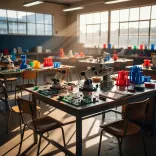
The training programme will combine classroom instruction, laboratory experiments, hands-on exposure, and field visits. The initiative, according to the institute, is aimed at contributing to safer, smarter, more reliable, and increasingly indigenous railway technologies.
Who Signed and Who Leads
The MoU was signed by Prof Swagata Dasgupta, Dean of Outreach, IIT Kharagpur, and Prem Prakash, Dean, IRIMEE. Prof Vikranth Racherla of IIT Kharagpur and Siddharth Shankar of IRIMEE have been designated as nodal officers for the programme.
Scale of the Vande Bharat Network
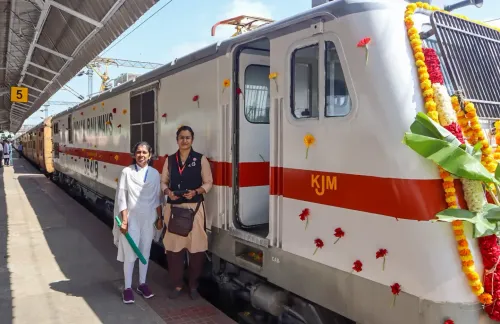
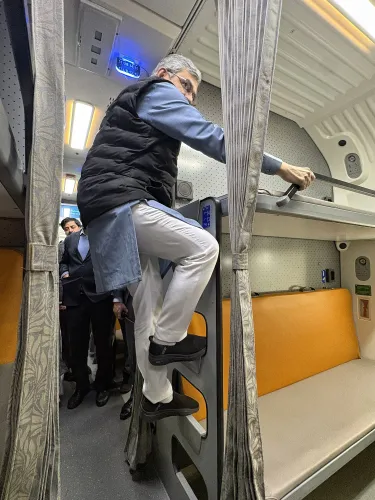
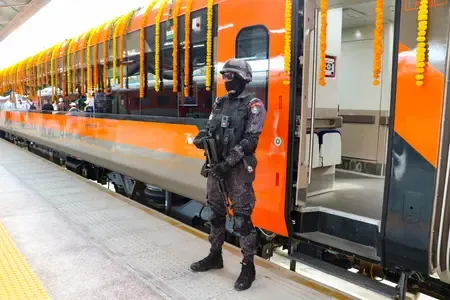
Indian Railways currently operates 79 Vande Bharat trains across various routes, with plans to expand the fleet further. The railways also run a Vande Bharat sleeper train between Howrah and Kamakhya in Assam. Looking ahead, IR has plans to acquire 260 Vande Bharat sleeper trainsets, of which 60 are already under construction. A prototype Vande Bharat freight train is separately undergoing trials.
Why Advanced Training Is Critical
Unlike conventional rakes that rely on separate locomotives, Vande Bharat trainsets are composed of multiple carriages each fitted with electric traction motors. Each powered carriage can drive itself and two unpowered coaches, resulting in a technically complex distributed-traction setup. High-end control technology underpins the entire system, making it fundamentally different from older rolling stock that IR staff have historically operated.
Officials noted that on-board staff — particularly for sleeper trains operating on longer routes — must be equipped to both identify faults in advanced systems and rectify them swiftly. As more sleeper trainsets enter service, demand for such technically trained personnel will rise sharply.
Broader Significance
This collaboration marks a notable step in institutionalising railway skill development through premier academic institutions. It comes at a time when IR is simultaneously scaling up its semi-high-speed fleet, developing freight variants, and pushing for greater indigenisation. The five-year tenure of the MoU suggests a sustained, structured approach rather than a one-off training intervention, signalling long-term commitment from both sides.
Point of View
260 sleeper sets on order — but the human infrastructure to maintain and operate them has not kept pace with the hardware ambition. Distributed electric traction and TCMS are qualitatively different from anything most IR field staff have worked with. Outsourcing that knowledge-building to IIT Kharagpur is pragmatic, but a five-year residential programme will reach only a fraction of the workforce IR ultimately needs. The real question is whether this pilot scales into a national curriculum embedded in every railway training centre — or remains a prestige collaboration for a select cohort.
NationPress
25 Sept 2026
Frequently Asked Questions
What is the IIT Kharagpur-IRIMEE MoU for Vande Bharat training?
It is a five-year agreement between IIT Kharagpur and the Indian Railways Institute of Mechanical and Electrical Engineering (IRIMEE), Jamalpur, to deliver specialised residential training for Indian Railways staff operating Vande Bharat semi-high-speed trains. The programme covers advanced traction systems, TCMS, rolling stock diagnostics, and regenerative braking, among other topics.
How many Vande Bharat trains does Indian Railways currently operate?
Indian Railways currently operates 79 Vande Bharat trains across various routes. It also runs a Vande Bharat sleeper service between Howrah and Kamakhya in Assam, and has plans to acquire 260 Vande Bharat sleeper trainsets, with 60 already under construction.
Why do Vande Bharat trains require specialised operator training?
Unlike conventional trains that use a separate locomotive, Vande Bharat trainsets use distributed electric traction — each powered carriage drives itself and two unpowered coaches — alongside high-end Train Control and Management Systems (TCMS). This complexity means staff must be trained to diagnose and rectify faults in systems that differ fundamentally from older rolling stock.
Who are the key officials involved in the MoU?
The MoU was signed by Prof Swagata Dasgupta, Dean of Outreach at IIT Kharagpur, and Prem Prakash, Dean of IRIMEE. Prof Vikranth Racherla from IIT Kharagpur and Siddharth Shankar from IRIMEE have been appointed as nodal officers for the collaboration.
Is there a Vande Bharat freight train in development?
Yes, a prototype Vande Bharat freight train is currently undergoing trials, extending the Vande Bharat platform beyond its existing passenger and sleeper configurations.