Twisha Sharma case: Family alleges VIP treatment for Samarth Singh in Jabalpur court
Synopsis
A day after his arrest, Samarth Singh — husband of late actress Twisha Sharma — faces fresh allegations of preferential treatment: access to a Jabalpur judge's chamber after court hours, a midnight Paneer Thali at a police station, and a court-rejected bid to claim his wife's body. The Bar Council of India has now suspended his law licence.
Key Takeaways
Samarth Singh was allegedly seated inside Courtroom No.
32 of the Jabalpur District and Sessions Judge after court hours before his surrender.
Family lawyer Anurag Srivastava alleged the courtroom doors were shut while Singh was inside, indicating undue favour.
Singh reportedly requested and was served a Paneer Thali at Katara Hills Police Station , Bhopal , around 2 am after his transfer.
A lookout notice and a ₹30,000 reward had been issued for Singh's arrest prior to his surrender.
Singh's bid to claim Twisha Sharma's body citing Hindu customs was rejected by the court .
The Bar Council of India has suspended Singh's licence to practise law.
Fresh allegations of preferential treatment have surfaced in the Twisha Sharma dowry death case, with the late actress's family claiming that her husband, Samarth Singh, received undue favour inside the Jabalpur district court premises on Friday evening — hours before he was formally taken into police custody and transported to Bhopal. The claims have deepened scrutiny over how the case has been handled since Sharma's death.
Allegations Inside Courtroom No. 32
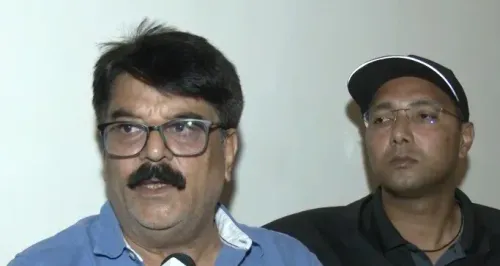
Anurag Srivastava, counsel for Twisha Sharma's father Navnidhi Sharma, alleged that Samarth Singh was seated inside Courtroom No. 32 — the chamber of the District and Sessions Judge — shortly before he appeared before the media. Srivastava questioned how Singh gained access to the courtroom after court hours, alleging that the doors were shut while he was inside. According to the lawyer, Singh had reportedly arrived to surrender after the judges had already left for the day.
'When questions were raised regarding his presence inside the chamber, he allegedly moved to the Bar Association's chamber,' Srivastava claimed. The family's legal team has characterised this as an instance of undue favour, pointing to Singh's familial connection to the judiciary — his mother, Giribala Singh, is a retired judge.
Late-Night Paneer Thali and Custody Transfer
The allegations extend beyond the courtroom. According to sources, after Singh was brought to Bhopal late on Friday night and lodged at the Katara Hills Police Station, he reportedly requested a Paneer Thali around 2 am, citing hunger. Sources claim the meal was arranged at the police station and that Singh consumed it around 2:30 am. Critics of the investigation have cited this as another example of what the family describes as differential treatment for a wanted accused.
High Drama at Jabalpur Court
The scene at the Jabalpur district court on Friday evening was marked by high drama. Eyewitnesses reported that Singh arrived wearing a mask, sunglasses, and a cap, visibly avoiding media interaction. Individuals accompanying him allegedly created a commotion when journalists attempted to approach him. He was subsequently taken into custody by Bhopal Police and transported overnight to the state capital.
Notably, a lookout notice had already been issued against Singh, and police had announced a reward of ₹30,000 for information leading to his arrest. Twisha Sharma's family has alleged that despite this, Singh was moving around freely and was not treated as a wanted accused.
Key Legal Developments
In a significant courtroom development, Singh's legal team reportedly sought custody of Twisha Sharma's body, arguing on the grounds of Hindu customs and rituals and contending that it should be handed over to her husband. The court rejected the plea.
Separately, the Bar Council of India has suspended Singh's licence to practise law. During the suspension period, he is barred from using the prefix 'Advocate' before his name. Singh was expected to be produced before a Bhopal court later on Saturday in connection with the ongoing investigation into the alleged dowry death of Twisha Sharma.
Pattern of Influence Allegations
The fresh claims add to a series of allegations made by Twisha Sharma's family that Samarth Singh and his mother used their influence to delay action in the case. This is not the first time the family has raised concerns about the pace and fairness of the investigation. The combination of a lookout notice, a cash reward for arrest information, and the accused's reported freedom of movement prior to surrender has drawn sharp public attention to the case.
With Singh now in custody and a court appearance imminent, the focus shifts to whether investigators will pursue the influence allegations alongside the primary dowry death case.
Point of View
A meal on demand at 2 am — may appear incidental, but they feed a larger narrative that has dogged this case from the start: that institutional proximity shielded a suspect. Samarth Singh's mother being a retired judge is not evidence of wrongdoing, but it is context the public and the court cannot ignore. The Bar Council's swift suspension of his law licence signals that professional bodies are reading the room even if the police timeline raises questions. The real accountability test is not whether Singh is now in custody, but whether investigators pursue the alleged delays and access with the same rigour they would apply to an accused without connections.
NationPress
15 Sept 2026
Frequently Asked Questions
What VIP treatment is Samarth Singh accused of receiving?
Twisha Sharma's family alleges that Singh was allowed inside Courtroom No. 32 of the Jabalpur District and Sessions Judge after court hours, with the doors shut, before his surrender to police. He was also reportedly served a Paneer Thali at Katara Hills Police Station in Bhopal around 2 am after his arrest.
Who is Samarth Singh and why was he arrested?
Samarth Singh is the husband of late actress Twisha Sharma and is under investigation in connection with her alleged dowry death. A lookout notice had been issued against him and police had announced a ₹30,000 reward for information leading to his arrest before he surrendered at Jabalpur court on Friday.
What action has the Bar Council of India taken against Samarth Singh?
The Bar Council of India has suspended Singh's licence to practise law. During the suspension period, he is prohibited from using the prefix 'Advocate' before his name.
What happened to Singh's plea to claim Twisha Sharma's body?
Singh's legal team sought custody of Twisha Sharma's body, citing Hindu customs and arguing it should be handed over to her husband. The court rejected the plea.
Why does the family believe Singh received undue influence?
The family has repeatedly alleged that Singh and his mother, retired judge Giribala Singh, used their influence to delay action in the case. They point to the fact that Singh was reportedly moving freely despite a lookout notice and a reward for his arrest, and that he allegedly accessed a judge's chamber after hours before surrendering.