Virendra Kumar reviews NCSK meet on sanitation worker safety, rehabilitation
Synopsis
Union Minister Virendra Kumar's NCSK review on 22 October signals a sharper push to move the NAMASTE Scheme and the decade-old Manual Scavengers Act from policy intent to ground-level impact — with mechanisation, PPE distribution, and strict law enforcement all on the agenda for India's most vulnerable sanitation workforce.
Key Takeaways
Union Minister Virendra Kumar chaired a National Commission for Safai Karamcharis (NCSK) meeting in New Delhi on 22 October 2026 .
The Centre reaffirmed its commitment to dignified working conditions, mechanisation , and socio-economic empowerment of sanitation workers.
The Minister called for wider awareness of the NAMASTE Scheme to ensure all eligible beneficiaries can access its benefits.
Supply of mechanised equipment and PPE kits was stressed, along with proper use, maintenance, and monitoring.
Strict enforcement of the Prohibition of Employment as Manual Scavengers and their Rehabilitation Act, 2013 was directed.
NCSK Chairperson Bhagwat Prasad Makwana and three members attended alongside Ministry Joint Secretaries.
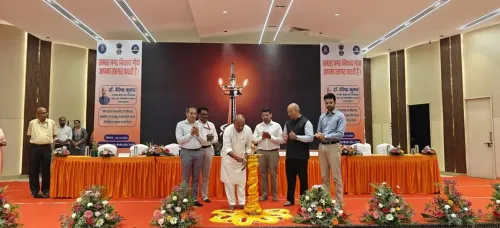
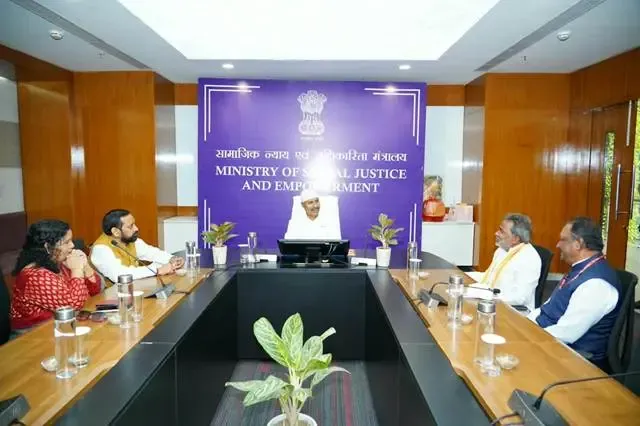
Union Minister for Social Justice and Empowerment Virendra Kumar on Thursday, 22 October 2026, chaired a high-level meeting of the National Commission for Safai Karamcharis (NCSK) in New Delhi, focusing on the welfare, occupational safety, and socio-economic empowerment of sanitation workers across India. The meeting reaffirmed the Centre's commitment to ensuring dignified working conditions, mechanisation of sanitation work, and effective delivery of welfare schemes to eligible beneficiaries.
Key Discussions at the NCSK Meeting
Minister Virendra Kumar emphasised the urgent need to impart appropriate skills training to sanitation workers, enabling them to perform their duties safely and with dignity. He called for structured awareness campaigns around the National Action for Mechanised Sanitation Ecosystem (NAMASTE) Scheme, so that eligible workers across the country are not left out of its benefits.
The Minister also underscored the importance of supplying suitable mechanised equipment and Personal Protective Equipment (PPE) kits to minimise occupational hazards. Critically, he stressed that merely providing equipment is insufficient — proper usage, regular maintenance, and periodic monitoring must accompany every distribution effort to ensure lasting effectiveness.
Strict Implementation of the MS Act Demanded
A significant highlight of the meeting was the Minister's call for the strict enforcement of the Prohibition of Employment as Manual Scavengers and their Rehabilitation Act, 2013 (MS Act, 2013), along with the associated MS Rules, 2013. Despite the law being over a decade old, enforcement gaps have persisted in several states, and the NCSK was directed to coordinate with concerned authorities to bridge these gaps.
Virendra Kumar urged the Commission to continue protecting the rights and dignity of sanitation workers, and to actively ensure that government welfare schemes reach all eligible beneficiaries without leakage or delay.
Who Attended the Meeting
The meeting was attended by Bhagwat Prasad Makwana, Chairperson of NCSK; members Manoj Kumar Balmiki, Ravi Ramu Kalose, and Sushma Gaudiyal; along with the concerned Joint Secretaries of the Ministry of Social Justice and Empowerment.
Why This Matters
Sanitation workers — particularly those involved in manual scavenging and sewer cleaning — remain among India's most vulnerable occupational groups, facing disproportionate health risks and social marginalisation. The NAMASTE Scheme and the MS Act represent the Centre's primary legislative and programmatic tools to address these inequities. Renewed ministerial attention to mechanisation and enforcement signals a push to move beyond policy on paper to measurable outcomes on the ground. How effectively the NCSK translates these directives into field-level change will be closely watched by welfare advocates and state governments alike.
Point of View
But the explicit focus on enforcement of the MS Act — now more than a decade old — points to an uncomfortable reality: the law has not translated into elimination of manual scavenging on the ground. The NAMASTE Scheme's mechanisation push is sound policy in principle, but recurring concerns about equipment remaining unused or poorly maintained suggest an implementation gap that awareness campaigns alone cannot fix. The real accountability test lies in whether the NCSK's coordination with state authorities produces verifiable outcomes — reduced occupational deaths, documented rehabilitations, and enforceable penalties — rather than periodic review meetings that cycle without consequence.
NationPress
22 Oct 2026
Frequently Asked Questions
What was discussed at the NCSK meeting chaired by Virendra Kumar?
The meeting focused on the welfare, safety, and rehabilitation of sanitation workers, including skills training, mechanisation, distribution of PPE kits, and enforcement of the Manual Scavengers Act, 2013. The NAMASTE Scheme's outreach to eligible beneficiaries was also a key agenda item.
What is the NAMASTE Scheme for sanitation workers?
The National Action for Mechanised Sanitation Ecosystem (NAMASTE) Scheme is a Ministry of Social Justice and Empowerment initiative aimed at mechanising sanitation work to eliminate unsafe manual practices and improve the livelihoods of sanitation workers. It provides mechanised equipment and other welfare support to eligible workers across India.
What is the Manual Scavengers Act, 2013?
The Prohibition of Employment as Manual Scavengers and their Rehabilitation Act, 2013, legally bans the practice of manual scavenging in India and mandates rehabilitation of those previously engaged in it. Despite being over a decade old, its enforcement has been uneven across states.
Who attended the NCSK meeting on 22 October 2026?
The meeting was attended by NCSK Chairperson Bhagwat Prasad Makwana, members Manoj Kumar Balmiki, Ravi Ramu Kalose, and Sushma Gaudiyal, along with the concerned Joint Secretaries of the Ministry of Social Justice and Empowerment.
Why is occupational safety for sanitation workers a concern in India?
Sanitation workers, especially those involved in sewer cleaning and manual scavenging, face severe health risks including exposure to toxic gases, infections, and physical injuries, often without adequate protective gear. Social marginalisation compounds their vulnerability, making targeted government intervention and strict law enforcement critical.