We the Leaders flags President's Rule over TN Deepam row
Synopsis
We the Leaders has asked the Tamil Nadu Governor to consider President's Rule after the state allegedly failed to implement a Supreme Court order to light Karthigai Deepam at Thirupparankundram's Deepathoon on 24 November. The representation cites Articles 167, 144, 355 and 356 and seeks an explanation from the Chief Minister.
Key Takeaways
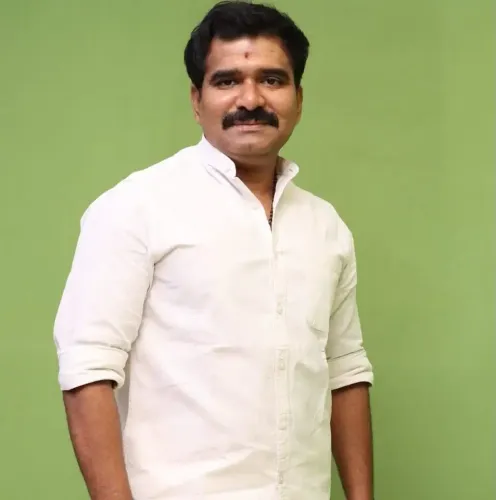
We the Leaders , through advocate Abhilash Gopinathan , on 25 November 2025 urged the Tamil Nadu Governor to seek an explanation from the Chief Minister on the Deepam row.
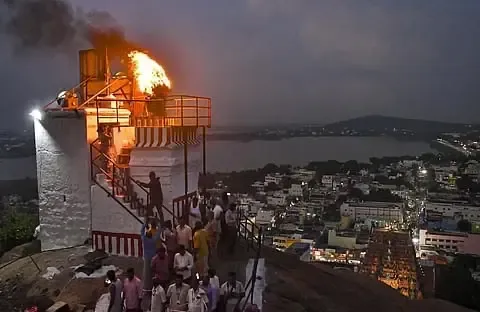
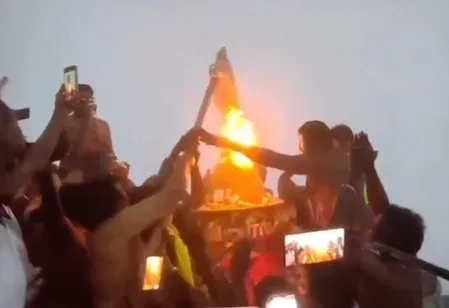
The group alleged the state failed to implement a 20 November Supreme Court order allowing Karthigai Deepam to be lit at the Deepathoon on Thirupparankundram hill in Madurai .
The ceremony in question took place on 24 November .
The representation cites Writ Petition (Civil) No.
1280 of 2025 and Articles 167, 144, 355 and 356 .
Gopinathan asked whether the facts warranted a report to the President and consideration of President’s Rule.
We the Leaders, through advocate Abhilash Gopinathan, on 25 November 2025 urged the Tamil Nadu Governor to seek an explanation from the Chief Minister over the state government’s alleged failure to implement a Supreme Court order permitting the Karthigai Deepam to be lit at a stone pillar on Thirupparankundram hill in Madurai. In a representation to the Governor, Gopinathan also asked whether the circumstances warranted a special report to the President under Articles 355 and 356 of the Constitution, raising the possibility of President’s Rule in Tamil Nadu.
What the representation seeks
The representation concerns the 24 November Karthigai Deepam ceremony and the site on the hill known as the Deepathoon. Gopinathan asked the Governor to invoke Article 167 to obtain a detailed account from the Chief Minister of the circumstances that, in his view, had led to the order going unimplemented.
He also sought an examination of the steps the government took ahead of the ceremony and whether any action or omission amounted to a breach of its obligations. The lawyer asked the Governor to assess whether the alleged lapse justified intervention under Articles 355 and 356 and whether the matter should be placed before the President. He urged the Governor to consider any other measures available under the Constitution after examining the circumstances surrounding the 24 November ceremony.
The Supreme Court order and the 24 November ceremony
On 20 November, the Supreme Court had permitted the ceremonial lamp to be lit at the pillar. Gopinathan cited the order in Writ Petition (Civil) No. 1280 of 2025 and connected cases. According to the representation, reports indicated that the state authorities took no decision to light the lamp at the pillar despite the court having set out how the ceremony could proceed.
Gopinathan said this raised questions about how the government had discharged its constitutional responsibilities. The petition frames the episode as more than a local ritual dispute: it asks whether a binding direction of the apex court was given effect on the ground at Thirupparankundram on the day of the festival.
Constitutional articles cited
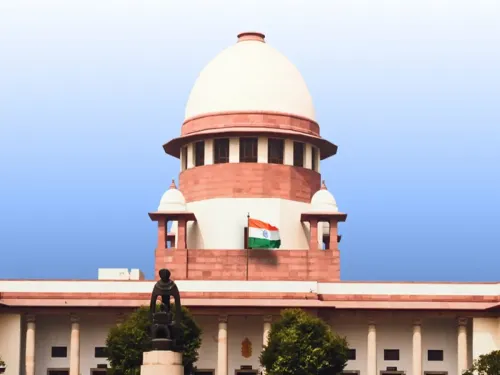
Gopinathan cited Article 144, which requires civil and judicial authorities throughout India to act in aid of the Supreme Court. Implementing a binding court order was a constitutional duty, he argued, and the executive had no discretion to decide whether to carry it out.
Article 167, which the representation asks the Governor to invoke, concerns the Chief Minister’s duty to furnish information to the Governor. Articles 355 and 356, also flagged, deal with the Union’s duty to ensure that the government of a state is carried on in accordance with the Constitution and with the extraordinary power to impose President’s Rule if that condition is not met. The representation does not itself impose such a measure; it asks the Governor to examine whether a report to the President is warranted.
Why the group says the alleged lapse matters
Gopinathan argued that deliberate disregard of a binding judicial order by a state government would undermine the rule of law and weaken the authority of constitutional institutions. He urged the Governor to examine the allegation in light of the state’s duty to give effect to the court’s order.
This comes amid a larger contest over how court directions on religious sites are implemented in Tamil Nadu and over the Governor’s role vis-à-vis the elected government. Notably, the lighting of Karthigai Deepam at Thirupparankundram had already been taken to the Supreme Court, with the Deepathoon identified as the site at issue. The 20 November order, according to the petitioners, set out how the ceremony could proceed; the representation alleges that no decision was taken to light the lamp at the pillar on 24 November.
What happens next
The representation now lies with the Governor. There is no public indication yet of whether the Governor will call for an account from the Chief Minister under Article 167, or whether any communication will go to the President. Any consideration of Articles 355 and 356 would be an exceptional constitutional step and would require the President’s attention, not merely a private petition.
Devotees in Madurai, the state government, and those tracking enforcement of Supreme Court orders on religious sites will watch how the Governor’s office responds. The Governor has been asked to examine the circumstances of the 24 November ceremony and then consider such measures as the Constitution permits.
Point of View
In practice, sit on a Supreme Court direction, and whether a Governor should convert that dispute into a Union intervention. President’s Rule is among the most drastic tools in the Constitution; using a Deepam order as the trigger will be read as Centre-state politics as much as rule-of-law advocacy. The test for the Governor is not the heat of the hill dispute but whether the alleged non-implementation, if established, meets the high bar of a government that cannot be carried on in accordance with the Constitution.
NationPress
25 Nov 2026
Frequently Asked Questions
What did We the Leaders ask the Tamil Nadu Governor?
We the Leaders, through advocate Abhilash Gopinathan, asked the Tamil Nadu Governor on 25 November 2025 to seek an explanation from the Chief Minister over the alleged failure to implement a Supreme Court order on lighting Karthigai Deepam at Thirupparankundram. The representation also asked whether a report to the President under Articles 355 and 356, including the possibility of President’s Rule, was warranted.
What did the Supreme Court say about Karthigai Deepam at Thirupparankundram?
On 20 November, the Supreme Court permitted the ceremonial lamp to be lit at a stone pillar, known as the Deepathoon, on Thirupparankundram hill in Madurai. The order was cited as Writ Petition (Civil) No. 1280 of 2025 and connected cases.
Why has President's Rule been mentioned in the Deepam row?
The representation asked the Governor to assess whether the alleged non-implementation of the Supreme Court order justified a special report to the President under Articles 355 and 356. Those articles concern the Union’s duty to ensure constitutional governance in a state and the power to impose President’s Rule.
Which constitutional articles did Abhilash Gopinathan cite?
Gopinathan cited Article 167 on information from the Chief Minister to the Governor, Article 144 requiring authorities to act in aid of the Supreme Court, and Articles 355 and 356 on Union protection of constitutional governance and President’s Rule. He argued that implementing a binding court order is a duty, not a matter of executive discretion.
What is the Deepathoon in the Karthigai Deepam dispute?
The Deepathoon is the stone pillar on Thirupparankundram hill in Madurai that was the site at issue for lighting the Karthigai Deepam lamp. The 24 November ceremony and whether the lamp was lit there, despite the 20 November Supreme Court order, form the core of the representation to the Governor.