West Asia War a 'Blight on Humanity': South Africa Envoy Warns
Synopsis
South African High Commissioner Anil Sooklal declared the West Asia war a 'blight on humanity with no winners,' warning it is strangling global energy security and economic growth. He urged sustained US-Iran dialogue, slammed South Africa's G20 exclusion, and revealed South Africa's constitution drew inspiration from India's founding document.
Key Takeaways
South African High Commissioner Anil Sooklal called the West Asia conflict a "blight on humanity" with no winners, urging global pressure for peace talks.
The first round of US-Iran negotiations in Islamabad (April 11–22) collapsed after 21 hours , with Tehran refusing to confirm participation in a second round.
The Trump administration is pursuing a dual-track strategy — ceasefire extension alongside intensified naval blockade and financial sanctions on Iran .
Sooklal accused the current G20 host of "weaponising" the grouping by excluding South Africa , a full member, from all 2025 proceedings.
The envoy welcomed the shift toward a multipolar world order , highlighting India , Africa , and BRICS nations as key architects of the new global system.
South Africa's 1996 Constitution was partly inspired by the Indian Constitution , reflecting deep democratic ties between the two nations on the 30th Constitution Day .
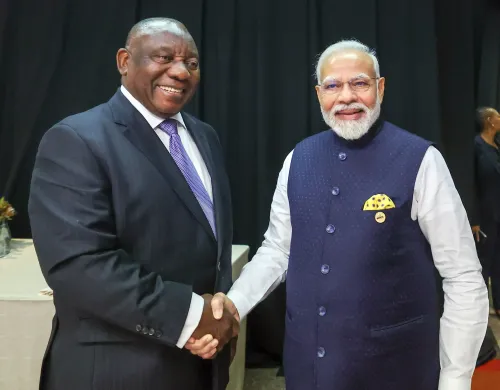
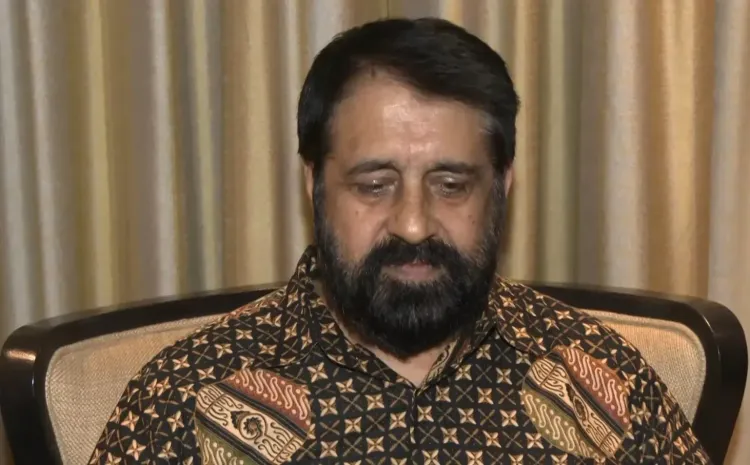
New Delhi, April 23: South African High Commissioner to India, Anil Sooklal, has issued a stark warning that the ongoing West Asia conflict is a "blight on humanity" with no winners — calling on the global community to push all warring parties toward sustained dialogue and a durable peace settlement. Speaking in an exclusive interview, Sooklal echoed Prime Minister Narendra Modi's oft-repeated position that "now is not the time for war," urging nations to prioritise diplomacy over military escalation.
War Stunting Global Growth and Energy Security
The South African envoy painted a grim picture of the conflict's cascading economic consequences, emphasising that the war is severely hampering energy security worldwide and choking opportunities for economic growth across all sectors.
"The war, if it continues, is going to have a devastating effect on all of us. It's already had a very negative impact, especially in terms of energy security, but it also impacts on all other sectors of our lives. Our economic growth is being stunted, opportunities are being stunted because of this war," Sooklal stated.
He further noted that the conflict is also slowing the global transition to renewable energy, calling it a significant setback for international energy cooperation at a time when the world can least afford delays in the clean energy shift.
US-Iran Peace Talks: Hope Amid Uncertainty
Despite the bleak landscape, Ambassador Sooklal expressed cautious optimism about the prospects of peace, particularly if negotiations between the United States and Iran gain traction. He pointed to South Africa's own transition from apartheid as proof that dialogue can resolve even the most entrenched conflicts.
"As we have seen in the case of South Africa, it is through dialogue that you address differences and find a common solution and lasting peace. We need to encourage the parties to remain engaged and to continue talking to each other so that we can find a peace dividend for the region and for the good of humanity," he said.
The first high-level US-Iran talks, held in Islamabad between April 11 and 22, collapsed after 21 hours of negotiations. The prospects for a second round remain uncertain, with Tehran refusing to commit to further participation. Meanwhile, the Donald Trump administration has extended its ceasefire with Iran while simultaneously intensifying a sweeping naval blockade and financial restrictions — a dual-track strategy the White House confirmed is ongoing with no set deadline.
Multipolar World Order: The Global South's Rising Role
Sooklal used the interview to underscore a broader geopolitical shift, welcoming the emergence of a multipolar world order and calling it beneficial for the global community, particularly for nations of the Global South.
"We're moving towards a multipolar world and I think this is good for the global community. We don't want one or two powers determining what happens in our collective world," he said, adding that India, as a leading voice of the Global South, along with BRICS nations and Africa, would play a defining role in shaping this new international architecture.
G20 'Weaponised': South Africa Excluded by Current Host
In a sharp criticism, Sooklal condemned what he described as the deliberate exclusion of South Africa from G20 proceedings under the current host, calling it a case of the grouping being "weaponised" for political purposes.
"South Africa is a full member of the G20 and has participated in every summit, including the summit we hosted very successfully last year, and we have been excluded by the current host from all proceedings this year," he said, asserting that South Africa would "assume its place at the G20 table next year" and continue contributing meaningfully to the bloc's collective agenda.
South Africa's Constitution Inspired by India
On the occasion of the 30th anniversary of South Africa's Constitution Day, Sooklal revealed that South Africa drew inspiration from the Indian Constitution when drafting its own foundational document following the end of apartheid in 1994.
"In crafting our new constitution, we took inspiration from the Indian constitution as well in terms of ensuring that our constitution espouses all of the values that we'd like to see in terms of building a new nation," he said, adding that South Africa's 1996 Constitution enshrines a three-tier governance structure with a robust judiciary, executive, and legislature.
He described both India and South Africa as among the world's most vibrant democracies, bound together by shared values and a common commitment to constitutional governance and multilateralism.
As the second round of US-Iran talks hangs in the balance and global energy markets remain volatile, the international community will be watching closely to see whether diplomatic pressure can break the deadlock and deliver the peace dividend that nations like South Africa and India are actively championing.
Point of View
Energy transition, and multilateral order. India's own position — aligned with dialogue over confrontation — finds strong resonance in South Africa's diplomatic stance, reinforcing the strategic convergence between two of the world's most influential emerging democracies within BRICS and the G20 framework.
NationPress
9 Oct 2026
Frequently Asked Questions
What did South Africa's envoy say about the West Asia conflict?
South African High Commissioner Anil Sooklal called the West Asia conflict a 'blight on humanity' with no winners, warning it is damaging global energy security and stunting economic growth worldwide. He urged the international community to push all parties toward sustained peace negotiations.
What is the current status of US-Iran peace talks in 2025?
The first round of high-level US-Iran talks held in Islamabad between April 11 and 22 collapsed after 21 hours of negotiations. Tehran has refused to commit to a second round, while the Trump administration maintains a dual-track approach of ceasefire extension and intensified naval and financial pressure on Iran.
Why was South Africa excluded from the G20 Summit?
South African High Commissioner Anil Sooklal stated that the current G20 host excluded South Africa from all proceedings in 2025, calling it a case of the grouping being 'weaponised.' South Africa, a full G20 member, hosted the summit successfully in 2024 and plans to reassume its seat in 2026.
How is the West Asia war affecting renewable energy adoption?
According to Ambassador Sooklal, the ongoing West Asia conflict is slowing the global transition to renewable energy and hampering all forms of international energy cooperation. He described the war as a major obstacle to sustainable development goals worldwide.
Did South Africa's constitution take inspiration from India?
Yes. South African High Commissioner Anil Sooklal confirmed that South Africa drew inspiration from the Indian Constitution while drafting its own 1996 Constitution, which was adopted two years after the end of apartheid in 1994. Both constitutions emphasise democratic values, multi-tier governance, and the protection of fundamental rights.