Is India Truly Committed to Women’s Safety at the Workplace?
Synopsis
At a recent conference, Union Minister Annpurna Devi highlighted India's commitment to women's safety at the workplace, emphasizing the importance of legislative measures and institutional frameworks like SHe-Box. With rising female labor participation and significant budget allocations, the nation aims for a future where women can work without fear, reinforcing equality and justice.
Key Takeaways
Women's safety is a reflection of national commitment to equality.
Over 1.48 lakh institutions registered on SHe-Box.
Significant rise in female labor force participation.
The budget allocation emphasizes women's empowerment.
Legislative frameworks enhance workplace safety.
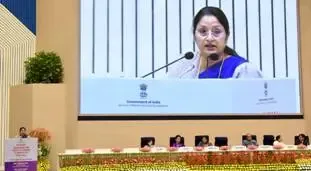
New Delhi, Feb 14 (NationPress) Union Minister for Women and Child Development (WCD) Annpurna Devi stated on Saturday that ensuring women’s safety in the workplace transcends mere legal obligations; it embodies the nation's dedication to justice and equality.
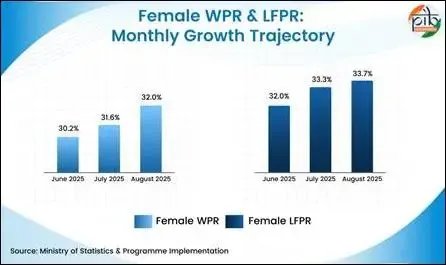
In her address at the National Conference on Safety of Women at Workplace (SHe-Box), the Minister noted that with over 1.48 lakh institutions registered on the SHe-Box portal and more than 60,000 Internal Committees actively operating, alongside an increase in female labor force participation from 23 percent to 42 percent over the past six years, India is undergoing a significant transformation towards accountability and women-led development.
Referring to the historic budget allocation exceeding Rs 5 lakh crore, she emphasized that the dignity, security, and economic empowerment of women are pivotal to the vision of Viksit Bharat 2047, asserting that a truly developed India would be one where every woman can work and lead without fear.
Union Minister of State (MoS) Savitri Thakur emphasized that workplace safety is a fundamental right.
She pointed out the broader empowerment ecosystem that has fortified women’s economic engagement—from the rise in women’s labor force participation to nearly 41.7 percent in 2023–24, to 70 percent of Mudra loans being granted to women, 44 percent of PM SVANidhi beneficiaries being women, and over 10 crore women connected through 90 lakh Self-Help Groups.
She stressed that although these statistics indicate progress, the ultimate aim is to ensure that every woman feels safe, respected, and empowered in all aspects of life.
Echoing these sentiments, Sudhanshu Trivedi, Rajya Sabha Member of Parliament, highlighted that ensuring women’s safety at work is fundamental to India’s constitutional commitment to equality and justice.
He remarked that legislative and institutional frameworks, such as the PoSH Act and the SHe-Box portal, enhance transparency, accountability, and trust across sectors.
A thematic film titled “Safe Workplaces as Drivers of Viksit Bharat through Equality and Economic Participation of Women” was also showcased.
A nationwide PoSH training video was presented, and the Ministry of Labour and Employment shared insights regarding the role of the new Labour Codes in facilitating safe workplaces.
Earlier, Women and Child Development Secretary Anil Malik emphasized the significant institutional progress achieved via SHe-Box, noting that with over 1.5 lakh workplaces onboarded and Local Committees active in every district, a nationwide safety framework has been established.
However, he noted that with women’s labor force participation at 42 percent and over 80 percent of women working in the informal sector, ongoing efforts are crucial for ensuring comprehensive coverage and protection.
Point of View
It is imperative to recognize the significance of women's safety at the workplace as a cornerstone of national development. The strides made thus far reflect a broader commitment to equality and empowerment, essential for fostering a prosperous and just society. Supporting legislative frameworks and ensuring their implementation is crucial for achieving these goals, demonstrating a collective commitment to women's rights.
NationPress
7 Oct 2026
Frequently Asked Questions
Why is women's safety at the workplace important?
Women's safety at the workplace is crucial for ensuring equality and justice, allowing women to work without fear and contribute to economic growth.
What initiatives are being taken to enhance women's safety?
Initiatives like the SHe-Box portal and the PoSH Act provide frameworks for accountability and safety, supporting women's participation in the workforce.
How has female labor force participation changed in India?
Female labor force participation in India has risen significantly from 23% to 42% in the past six years, showcasing a positive trend towards empowerment.