MP CM Mohan Yadav flags Panja durries, mahua products as Sidhi's rural growth engines
Synopsis
At Sidhi's Balram Krishi Mahotsav, MP CM Mohan Yadav pointed to a quiet rural economy story: women's groups earning ₹13 lakh in six months from mahua laddus and biscuits, Panja durries drawing international buyers, and millet cultivation spread across thousands of hectares — all signalling that Sidhi's tribal and forest assets are being converted, slowly, into market income.
Key Takeaways
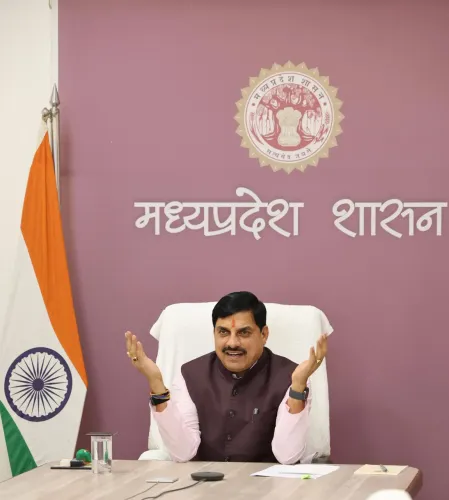
MP CM Mohan Yadav addressed the ' Balram Krishi Mahotsav ' in Sidhi virtually from Bhopal on 23 September 2026 .
Women's self-help groups in Sidhi earned approximately ₹13 lakh in six months by selling 24 quintals of mahua laddus and five quintals of mahua biscuits.
Panja durries and handloom carpets are being promoted under the One District-One Product (ODOP) initiative, with reported international market demand.
A handloom and Khadi production unit is operational in Bharatpur village , Rampur Naikin , supporting local artisans.
Ragi is cultivated on approximately 2,000 hectares and Kodo on about 2,500 hectares in Sidhi; Yadav stressed linking millet farmers to processing and markets.
Modern techniques including mulching and drip irrigation are being promoted for vegetable cultivation alongside improved fruit varieties.
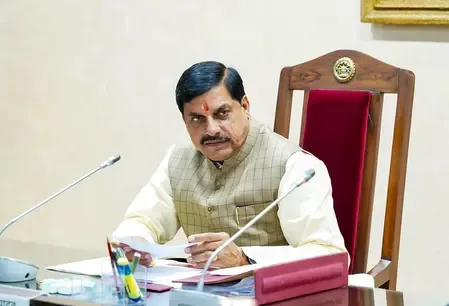
Madhya Pradesh Chief Minister Mohan Yadav on Wednesday, 23 September spotlighted Sidhi district's traditional crafts and forest-based produce as emerging pillars of rural income, citing international demand for Panja durries and significant earnings by women's self-help groups from mahua-based products. Addressing the 'Balram Krishi Mahotsav' in Sidhi virtually from Bhopal, Yadav said the district's tribal culture, handicrafts, agriculture, tourism and natural resources together could build a broader economic base for local communities.
Panja Durries and Handloom Products on the Global Map
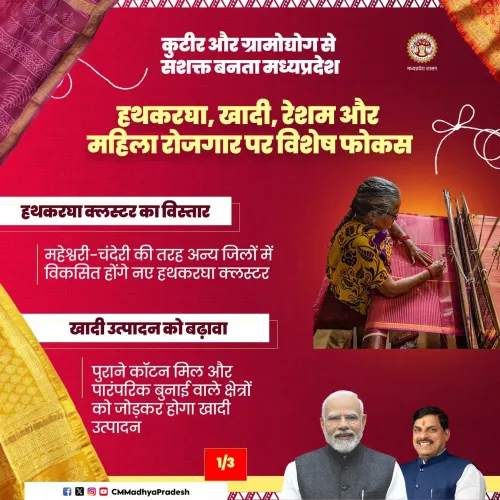
Sidhi has carved a distinct identity for its Panja durries and carpet weaving, according to Yadav. He noted that traditional durries from the district already attract international market demand and are being promoted under the One District-One Product (ODOP) initiative alongside handloom carpets. A production unit for handloom goods and Khadi garments is operational in Bharatpur village of Rampur Naikin, providing income to local artisans. 'Sidhi, enriched by its tribal culture, holds immense potential. Agriculture, tourism, Panja durrie craftsmanship, natural beauty and folk culture form the backbone of the region,' Yadav said.
Women's Groups Earn ₹13 Lakh from Mahua Products in Six Months
Women's self-help groups in Sidhi have moved into value-addition of locally available forest produce, generating notable returns. Over the past six months, these groups earned approximately ₹13 lakh by selling 24 quintals of mahua laddus and five quintals of mahua biscuits. Yadav described such initiatives as a model for creating local enterprises around traditional products while supplementing rural household incomes.
Millet Economy: Kodo, Kutki and Ragi in Focus
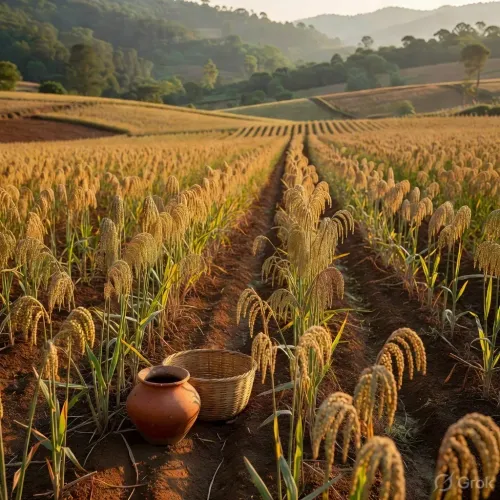
The Chief Minister also underscored the potential of Sidhi's millet economy. Varieties including Kodo, Kutki, Sanwa, Mijri and Kakun are traditionally cultivated in the district. Currently, Ragi is grown on approximately 2,000 hectares and Kodo on about 2,500 hectares in Sidhi. 'We endeavour to not only increase Shri Anna production but also link farmers with processing and markets, thereby creating new income opportunities,' Yadav said. This emphasis on millets aligns with broader Central and state-level policy pushes to mainstream coarse cereals as nutritional and income crops.
Diversifying Sidhi's Agricultural Base
Beyond millets, Yadav encouraged farmers to explore horticulture, animal husbandry, food processing and agro-based industries to widen their income streams. Sidhi's existing agricultural output spans paddy, wheat, mustard, gram, sesame, pigeon pea, fruits and vegetables, with tomato cultivation emerging as a significant activity. The district administration is promoting modern techniques such as mulching and drip irrigation for vegetables, while improved varieties of jackfruit, mango, guava and lemon are being encouraged among growers.
Broader Vision for Sidhi's Rural Economy
The Chief Minister's address at the Balram Krishi Mahotsav reflects a broader state strategy of linking tribal districts' natural and cultural assets to formalised markets, whether through ODOP branding, millet processing infrastructure, or forest produce value chains. Sidhi, which is home to significant tribal communities and rich forest cover, has historically lagged in economic indicators relative to other Madhya Pradesh districts. If policy intent translates into sustained market linkages, the district's craft and agri-produce sectors could serve as replicable models for other similarly positioned tribal districts in the state.
Point of View
Women's enterprise and millet revival all in one speech — but the numbers, while positive, are still modest: ₹13 lakh across women's groups over six months is encouraging proof-of-concept, not structural transformation. The real gap lies in scalable market linkages; ODOP branding has a mixed record in converting district products into sustainable export pipelines. Sidhi's tribal economy needs consistent procurement, processing infrastructure and cold-chain investment, not just ceremonial spotlight at annual agri-fests. The millet push is well-timed given national policy, but linking farmers to processing and buyers — which Yadav mentioned — remains the hard operational challenge that rarely gets resolved in a speech.
NationPress
23 Sept 2026
Frequently Asked Questions
What is the Balram Krishi Mahotsav in Sidhi?
The Balram Krishi Mahotsav is an agricultural event held in Sidhi, Madhya Pradesh, focused on promoting rural livelihoods, farming practices and local produce. MP CM Mohan Yadav addressed the event virtually from Bhopal on 23 September 2026, highlighting Sidhi's crafts, forest produce and millet economy.
How much did women's groups earn from mahua products in Sidhi?
Women's self-help groups in Sidhi earned approximately ₹13 lakh over six months by selling 24 quintals of mahua laddus and five quintals of mahua biscuits. CM Yadav cited this as a model for creating local enterprises around traditionally available forest produce.
What are Panja durries and why are they significant for Sidhi?
Panja durries are traditional handwoven floor coverings that have become a distinctive product of Sidhi district. They reportedly attract international market demand and are being promoted under the One District-One Product (ODOP) initiative alongside handloom carpets.
Which millets are cultivated in Sidhi and on how much land?
Sidhi traditionally cultivates Kodo, Kutki, Sanwa, Mijri and Kakun millets. Currently, Ragi is grown on approximately 2,000 hectares and Kodo on about 2,500 hectares in the district. CM Yadav stressed linking millet farmers to processing units and markets to boost their incomes.
What other agricultural activities are being promoted in Sidhi?
Besides millets and crafts, Sidhi produces paddy, wheat, mustard, gram, sesame and pigeon pea, with tomato cultivation emerging as a notable activity. CM Yadav also encouraged horticulture, animal husbandry and food processing, while promoting drip irrigation, mulching and improved varieties of mango, jackfruit, guava and lemon.