Yadav: India crosses 50% non-fossil power capacity milestone
Synopsis
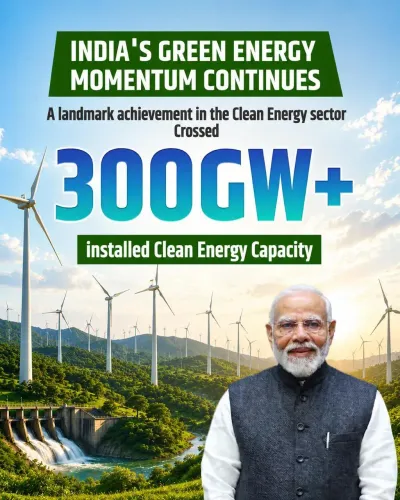
Union Environment Minister Bhupender Yadav has announced that over 50% of India's installed power capacity now comes from non-fossil fuel sources — fulfilling a formal COP26 Panchamrit pledge that was originally set for 2030, four years ahead of schedule.
Key Takeaways
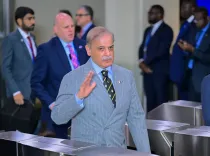
Union Environment Minister Bhupender Yadav announced on 2 November 2026 that more than 50% of India's installed power capacity now comes from non-fossil fuel sources.
The 50% non-fossil capacity target was a core plank of India's Panchamrit commitments announced at COP26 in Glasgow in 2021 , with a deadline of 2030 .
India has met this target approximately four years ahead of schedule , according to the minister's announcement.
The milestone covers installed capacity — solar, wind, hydro, and nuclear combined — and is distinct from the share of electricity actually generated, where coal remains dominant.
India's next major clean energy horizon is 500 GW of non-fossil installed capacity as part of its broader 2030 climate commitments under the Paris Agreement .
The Central Electricity Authority publishes monthly capacity data that will provide the granular breakdown underpinning this announcement.
India has crossed one of its most consequential clean-energy thresholds — more than half of the country's installed power capacity now comes from non-fossil fuel sources. Union Environment Minister Bhupender Yadav announced the landmark on Monday, 2 November 2026, marking what the government frames as a defining moment in India's energy transition.
The 2030 promise, delivered four years early
The number carries enormous symbolic weight. At the COP26 summit in Glasgow in 2021, Prime Minister Narendra Modi unveiled India's Panchamrit (five-nectar) climate commitments — a package of five targets that included achieving 50% non-fossil fuel installed power capacity by 2030. That deadline was nine years away. It has now been met, by India's own account, in 2026 — four years ahead of schedule.
The target was also embedded in India's updated Nationally Determined Contribution under the Paris Agreement, making it a formal international pledge, not merely a domestic ambition. Crossing it shifts the conversation from 'whether India can' to 'how far India will go.'
Solar and wind: the engines behind the shift
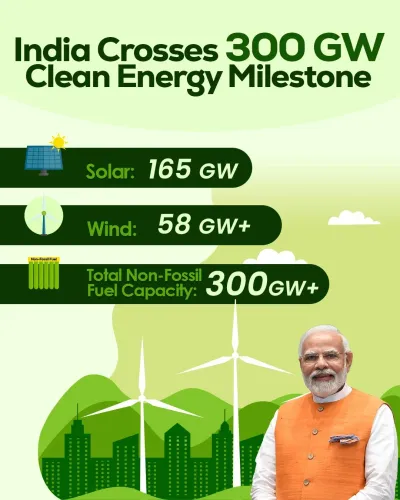
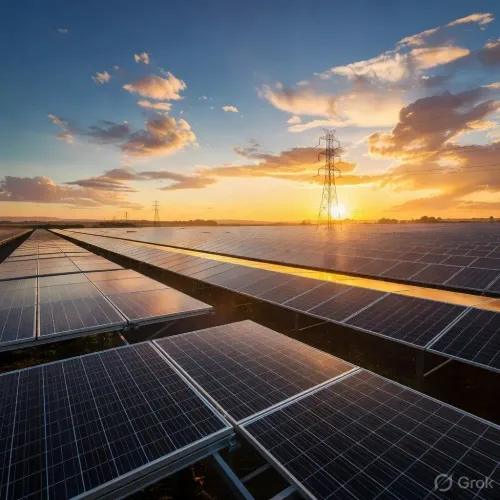
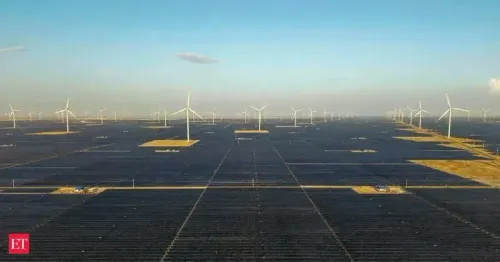
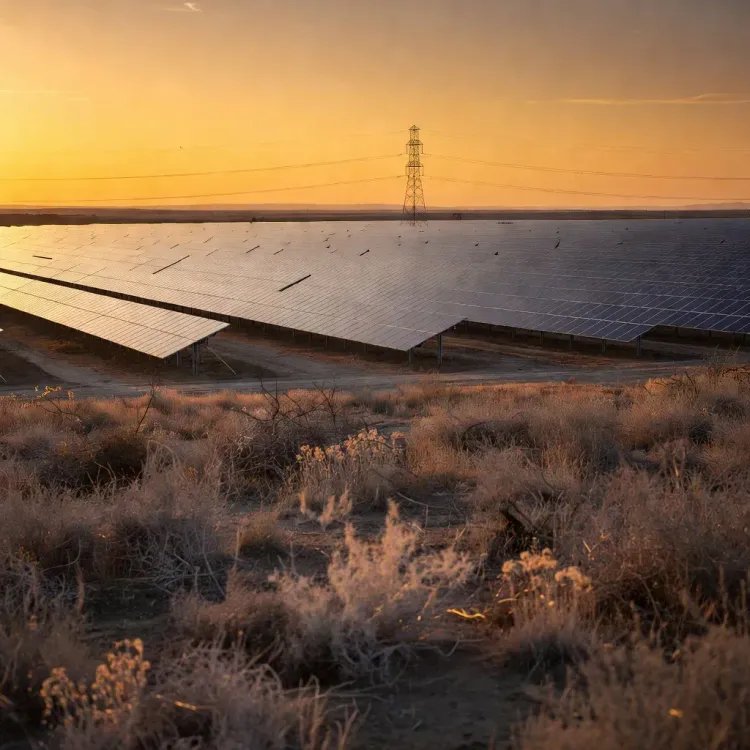
India's renewable surge has been driven overwhelmingly by solar and wind capacity additions over the past decade. The country's solar programme — anchored by massive utility-scale parks and a distributed rooftop push — has transformed the generation mix faster than most official projections anticipated. State power utilities and private renewable developers have collectively poured capital into projects that now account for a growing share of the national grid.
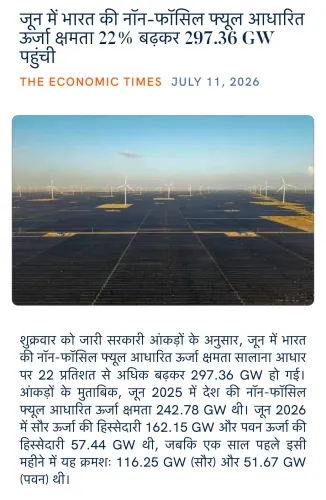
The Central Electricity Authority, the government body that publishes authoritative monthly data on installed capacity by source, tracks this shift in real time. Its periodic reports have shown non-fossil sources — solar, wind, hydro, nuclear — steadily eating into coal's share of total installed capacity, even as coal remains the dominant source of actual electricity generated (a distinction that matters: capacity is the ceiling; generation is what actually flows).
What the milestone does — and does not — mean
Installed capacity and actual power generation are two different metrics, and the gap between them matters for honest accounting. Non-fossil sources, particularly solar and wind, carry lower 'plant load factors' than coal — they generate power only when the sun shines or wind blows. Coal still dominates the kilowatt-hours that actually reach Indian homes and factories. The 50% capacity milestone is therefore a structural signal, not a claim that India runs on clean power half the time.
Even so, the structural signal is real and significant. India's next declared horizon is 500 GW of non-fossil capacity — a target linked to its broader 2030 clean energy commitments and one that will be closely watched at upcoming climate summits. Getting to 50% of capacity earlier than planned makes the 500 GW goal look less like an aspiration and more like a trajectory.
India's climate credibility on the global stage
For a country that is still the world's third-largest emitter and home to 1.4 billion people navigating rapid development, this milestone arrives at a moment when India's climate credibility matters enormously in multilateral negotiations. Yadav has been the face of India's position at successive COP talks, consistently arguing that India's record on capacity additions earns it the right to a managed, just transition rather than an abrupt coal exit. A verifiable 50% non-fossil capacity share is now the single most powerful data point in that argument.
The next Central Electricity Authority monthly report will offer the granular breakdown — total installed capacity, the renewable and hydro and nuclear shares, and the coal baseline — that turns a minister's post into an auditable milestone. That report is the number to watch.
Point of View
Concrete deliverable to present in climate diplomacy at a time when developing nations face intensifying pressure to accelerate coal exits. For the BJP government, the milestone reinforces a narrative of measurable climate action that coexists with continued coal use for actual generation — a carefully managed political balance. The gap between installed capacity share and actual generation share, however, means scrutiny from climate analysts will be sharp: the real test of ambition is whether the 500 GW target translates into a proportionate fall in coal's share of units generated. Yadav's announcement effectively raises the stakes for India's next NDC cycle and sets the floor for what New Delhi will claim as its baseline at future COP negotiations.
NationPress
2 Nov 2026
Frequently Asked Questions
What does it mean that India has 50% non-fossil fuel power capacity?
It means that more than half of India's total installed power generation capacity — measured in gigawatts — now comes from sources other than fossil fuels, primarily solar, wind, large hydro, and nuclear. This is a measure of the ceiling, not actual electricity output; coal still generates the majority of units consumed.
What was India's Panchamrit target on non-fossil power?
At the COP26 summit in Glasgow in 2021 , India announced five climate commitments called Panchamrit . One target was to achieve 50% of installed power capacity from non-fossil sources by 2030 . The government's announcement in November 2026 suggests this target has been met four years ahead of the deadline.
Which body tracks India's installed power capacity by source?
The Central Electricity Authority (CEA) , a statutory body under the Ministry of Power, publishes detailed monthly reports on India's installed generation capacity broken down by source — coal, gas, nuclear, large hydro, solar, wind, and others.
Is India's electricity mostly from renewables now?
Not yet in terms of actual generation. While non-fossil sources now account for over 50% of installed capacity , coal still dominates the electricity actually produced and consumed in India, because renewable sources like solar and wind operate only when conditions allow and have lower utilisation rates than thermal plants.
What is India's next renewable energy target after the 50% capacity milestone?
India has committed to achieving 500 GW of non-fossil fuel installed capacity by 2030 as part of its updated Nationally Determined Contribution under the Paris Agreement. This is the next major quantitative benchmark for India's energy transition.