Yadav Reviews MoEFCC Regional Offices in Mumbai Meet

Synopsis
Union Environment Minister Bhupender Yadav chaired a review of MoEFCC's Regional Offices at Nagpur, Ranchi, and Bhubaneswar in Mumbai on 20 June 2026, deliberating on forest conservation, environmental safeguards, and governance reforms aligned with PM Modi's reform agenda.
Key Takeaways
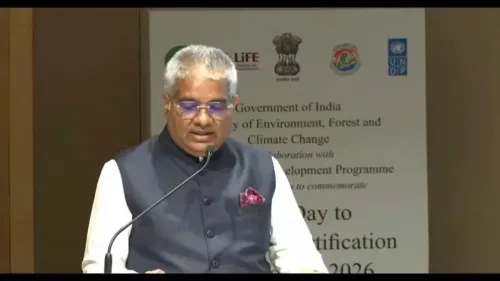
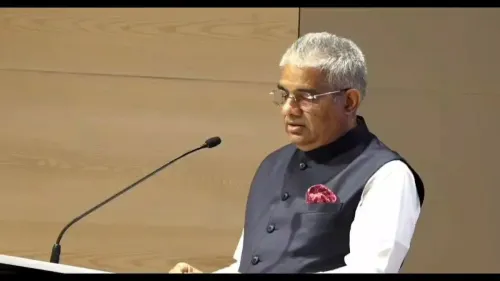
Union Environment Minister Bhupender Yadav held a review meeting in Mumbai on 20 June 2026 to assess MoEFCC's Regional Offices.
The offices under review are located in Nagpur , Ranchi , and Bhubaneswar , covering ecologically significant states.
Discussions focused on forest conservation , environmental safeguards, and improving field-level compliance and governance.
The review was framed around PM Narendra Modi 's reform-oriented agenda, emphasising efficiency and measurable environmental outcomes.
Regional offices play a critical role under the Forest (Conservation) Act, 1980 and the 2023 Amendment Act in monitoring forest diversions and clearances.
Further regional office reviews and possible updates to environmental implementation guidelines are expected in coming months.
Union Environment Minister Bhupender Yadav on Saturday, 20 June 2026, chaired a review meeting in Mumbai to assess the functioning of the Ministry of Environment, Forest and Climate Change (MoEFCC)'s Regional Offices at Nagpur, Ranchi, and Bhubaneswar, with a focus on strengthening field-level environmental governance and translating ground-level experiences into national policy.
Context
The meeting brought together officials overseeing three of the ministry's key regional units, which serve as front-line bodies for monitoring forest diversions, processing wildlife clearances, and ensuring compliance with environmental safeguards. Minister Yadav said the deliberations centred on 'key field-level issues relating to forest conservation and environmental safeguards, with a focus on translating on-ground experiences into robust national policy outcomes.' The regional offices under review cover ecologically significant and resource-rich states — Maharashtra, Jharkhand, and Odisha — where forest land diversion pressures are among the highest in the country.
Policy Backdrop
The MoEFCC's regional offices derive their mandate from the Forest (Conservation) Act, 1980, which established the legal framework for field-level appraisal and monitoring of forest land use changes. The Forest (Conservation) Amendment Act, 2023 subsequently sought to rationalise clearance timelines while mandating stricter compensatory afforestation oversight — functions that fall squarely within the remit of these regional units. The Compensatory Afforestation Fund Act, 2016, further expanded the role of field offices in channelling and monitoring funds collected from project proponents for afforestation activities.
Minister Yadav noted that the discussions were 'guided by PM Shri Narendra Modi ji's reform-oriented agenda, with a focus on enhancing efficiency, improving governance, and delivering better environmental outcomes through effective implementation.' This framing situates the review within the broader administrative reform push that has characterised the current government's approach to regulatory bodies since 2014.
Stakeholders and Impact
State forest departments in Maharashtra, Jharkhand, and Odisha are the primary institutional counterparts of the reviewed regional offices, and any changes to clearance workflows or compliance protocols would directly affect their operations. Project proponents — including infrastructure developers, mining companies, and public-sector undertakings — depend on these offices for timely environmental and forest clearances, making operational efficiency a matter of economic consequence. Tribal communities living in and around forest areas covered by these offices have a direct stake in how rigorously forest diversion proposals are scrutinised and whether compensatory afforestation commitments are enforced on the ground.
The review also signals continued central government attention to reducing procedural delays without compromising environmental compliance — a balance that has been a recurring tension in India's environmental governance debate.
What's Next
The ministry is expected to follow up on the outcomes of this review with possible revisions to field-level monitoring protocols and implementation guidelines for regional offices. Observers will watch for any announcements relating to the Environment Impact Assessment notification framework, where reform proposals have been under discussion. Further rounds of regional office reviews covering other parts of the country are anticipated in the coming months, as the ministry seeks to build a more uniform, outcome-oriented approach to environmental regulation across its field network.
Point of View
Minister Yadav is framing environmental governance not merely as a conservation imperative but as an administrative efficiency challenge, consistent with the government's whole-of-ministry reform push. The choice of offices covering Jharkhand, Odisha, and Maharashtra — states with high forest diversion pressure from mining and infrastructure — suggests the review has practical, near-term clearance-pipeline implications. If the ministry follows through with revised protocols, it could reshape how quickly and rigorously large-scale projects in forested regions navigate regulatory scrutiny.
NationPress
20 Jun 2026
Frequently Asked Questions
What did Bhupender Yadav discuss at the Mumbai meeting on 20 June 2026?
Minister Yadav reviewed the functioning of MoEFCC's Regional Offices at Nagpur, Ranchi, and Bhubaneswar, deliberating on forest conservation, environmental safeguards, and ways to strengthen implementation for a greener India.
What are MoEFCC Regional Offices and what do they do?
MoEFCC Regional Offices are field units of the Union Environment Ministry that monitor forest land diversions, process wildlife clearances, and ensure compliance with environmental regulations on the ground.
Which states do the Nagpur, Ranchi, and Bhubaneswar regional offices cover?
The Nagpur office primarily covers Maharashtra, the Ranchi office covers Jharkhand, and the Bhubaneswar office covers Odisha — all states with significant forested areas and high development pressure.
What is the Forest Conservation Amendment Act 2023?
The Forest (Conservation) Amendment Act, 2023 rationalised forest clearance processes, mandated stricter compensatory afforestation oversight, and updated the legal framework originally established by the Forest (Conservation) Act, 1980.
Why is the review of MoEFCC regional offices significant?
The review reflects the central government's push to tighten coordination between the environment ministry's headquarters and its field units, aiming to reduce clearance delays while strengthening compliance with environmental laws.