CM Yogi: 70,000+ Anganwadi Centres Run Pre-Primary, Bal Vatika
Synopsis
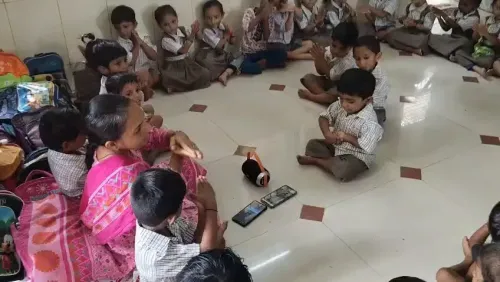
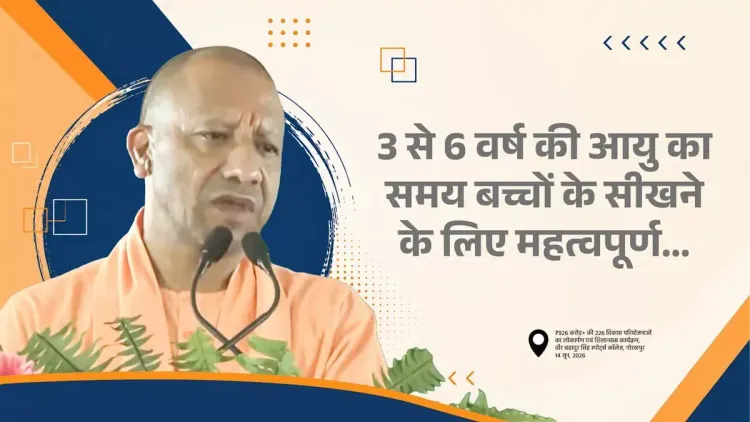
Chief Minister Yogi Adityanath says more than 70,000 Anganwadi centres in Uttar Pradesh are successfully running pre-primary and Bal Vatika programmes, marking a large-scale rollout of the NEP 2020 early childhood education mandate across India's most populous state.
Key Takeaways
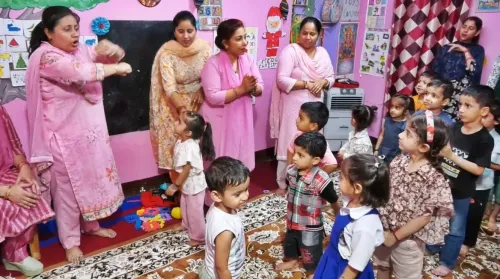
More than 70,000 Anganwadi centres in Uttar Pradesh are running pre-primary and Bal Vatika programmes, according to CM Yogi Adityanath .
Bal Vatika is a structured pre-primary curriculum for children aged 3–6 years introduced under the National Education Policy 2020 .
The programme is delivered through the Integrated Child Development Services (ICDS) network, established in 1975 .
Anganwadi workers serve as frontline educators and are central to the programme's quality and reach.
The rollout supports the NEP 2020 goal of universalising foundational literacy and numeracy before Class 1 .
Enrolment and transition data are expected to be reflected in the next UDISE report.
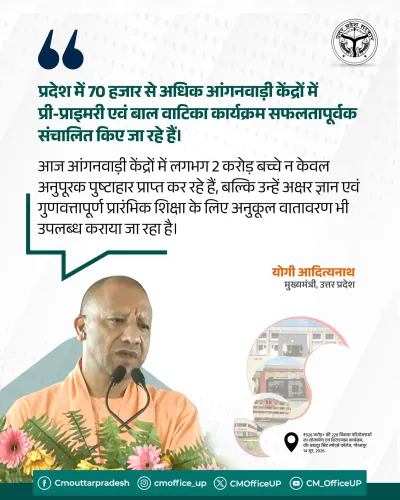
The Chief Minister's Office of Uttar Pradesh announced on Sunday, 14 June 2026 that more than 70,000 Anganwadi centres across the state are successfully running pre-primary and Bal Vatika programmes, quoting Chief Minister Yogi Adityanath directly.
In the post, CM Yogi Adityanath stated: 'प्रदेश में 70 हजार से अधिक आंगनवाड़ी केंद्रों में प्री-प्राइमरी एवं बाल वाटिका कार्यक्रम सफलतापूर्वक संचालित किए जा रहे हैं' — ('Pre-primary and Bal Vatika programmes are being successfully run in more than 70,000 Anganwadi centres across the state.')
Context
Anganwadi centres are community-based facilities established under the Integrated Child Development Services (ICDS) scheme in 1975. They deliver nutrition support, health check-ups, and preschool education to children aged 0–6 years. Uttar Pradesh, the country's most populous state, operates one of the largest networks of such centres in India. The Bal Vatika programme is a structured three-year pre-primary curriculum for children aged 3–6 years, introduced under the National Education Policy (NEP) 2020. It is designed to build foundational literacy and numeracy before children transition to Class 1, addressing documented early learning gaps.Policy Backdrop
The NEP 2020 mandated states to integrate early childhood care and education into the existing Anganwadi and school systems. Uttar Pradesh's budget announcements for 2021–22 expanded Anganwadi infrastructure and worker training under the Samagra Shiksha framework, laying the groundwork for this scale of deployment. The state's effort is part of a broader national push to universalise foundational education by repurposing the ICDS network. Multiple states have issued similar directives to convert existing Anganwadi centres into Bal Vatika sites with standardised curricula and dedicated worker training modules. The approach responds to learning outcome surveys that have consistently flagged early-grade deficiencies.Stakeholders and Impact
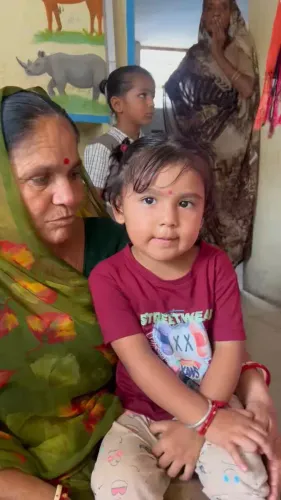
The primary beneficiaries are children aged 3–6 years in Uttar Pradesh, many of whom are from low-income and rural households that rely on Anganwadi centres as their only access point to structured early education. Anganwadi workers serve as the frontline educators delivering the programme, and their training and remuneration are central to its sustained quality. A successful pre-primary foundation is widely regarded as a critical determinant of long-term learning outcomes, school retention, and eventual workforce readiness. Reaching more than 70,000 centres simultaneously represents a significant administrative undertaking for any state government.What's Next
Policy watchers will track the next release of the Unified District Information System for Education (UDISE) report, which is expected to reflect enrolment data and transition rates from Bal Vatika to Class 1. Any supplementary state budget provisions for Anganwadi infrastructure upgradation and worker compensation will also be closely watched as indicators of the programme's long-term sustainability. The scale of Uttar Pradesh's rollout could set a reference point for other large states still in the early stages of NEP 2020 implementation.Point of View
A reform that successive Union governments have prioritised but states have implemented unevenly. By citing the 70,000-centre figure, the Chief Minister's Office is signalling administrative scale as a political achievement ahead of what remains a competitive state-level governance narrative. The emphasis on Anganwadi workers as delivery agents also reflects a conscious effort to leverage existing infrastructure rather than build parallel systems — a fiscally prudent but operationally demanding choice. The real test will come when independent learning outcome data, rather than rollout numbers alone, are placed in the public domain.
NationPress
13 Sept 2026
Frequently Asked Questions
What is the Bal Vatika programme in Uttar Pradesh?
Bal Vatika is a three-year structured pre-primary programme for children aged 3–6 years, introduced under the National Education Policy 2020 and delivered through Anganwadi centres. In Uttar Pradesh, it is being run alongside pre-primary activities in more than 70,000 Anganwadi centres.
How many Anganwadi centres are in Uttar Pradesh?
According to Chief Minister Yogi Adityanath, more than 70,000 Anganwadi centres in Uttar Pradesh are currently running pre-primary and Bal Vatika programmes.
What is the difference between pre-primary and Bal Vatika?
Pre-primary is a broad term for early childhood education before Class 1, while Bal Vatika is a specific structured curriculum for ages 3–6 introduced under NEP 2020 to standardise foundational learning across Anganwadi and school systems.
What is the Integrated Child Development Services scheme?
The Integrated Child Development Services (ICDS) is a central government scheme launched in 1975 that delivers nutrition, health, and preschool education to children aged 0–6 through a network of community-based Anganwadi centres.
How does NEP 2020 relate to Anganwadi centres?
The National Education Policy 2020 directed all states to integrate early childhood care and education into existing Anganwadi centres, making them the primary delivery points for the Bal Vatika pre-primary curriculum before children enter formal schooling.