Is Disrespecting the Constitution an Insult to Freedom Fighters?
Synopsis
Uttar Pradesh Chief Minister Yogi Adityanath emphasizes the significance of the Constitution during the 77th Republic Day celebrations, asserting that disrespecting its core values is akin to disrespecting the sacrifices of freedom fighters. He honors the architects of the nation and reinforces the duty of every citizen to uphold constitutional principles.
Key Takeaways
Uttar Pradesh CM Yogi Adityanath hoisted the national flag on Republic Day.
Disrespecting the Constitution equates to disrespecting freedom fighters .
Every citizen holds the duty to uphold the core values of the Constitution.
The Constitution came into effect on January 26, 1950 .
Republic Day commemorates India's transition to a sovereign republic .
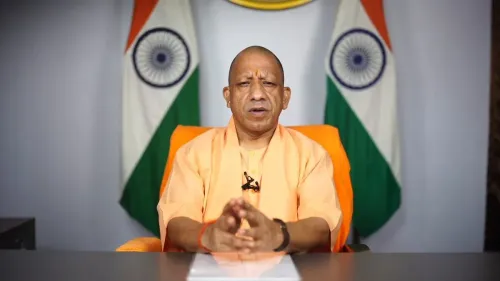
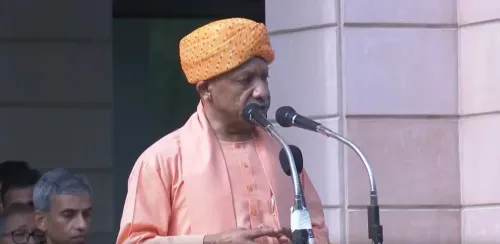
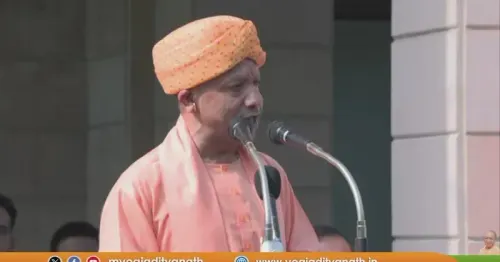
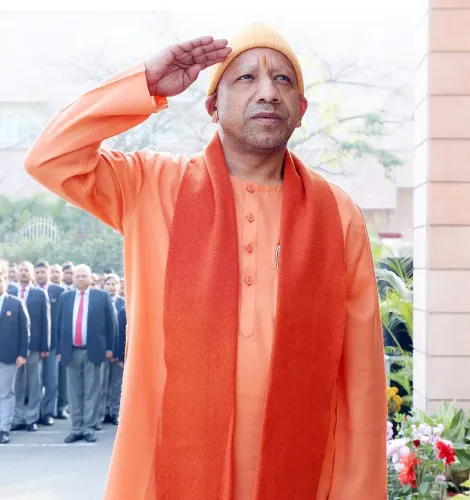
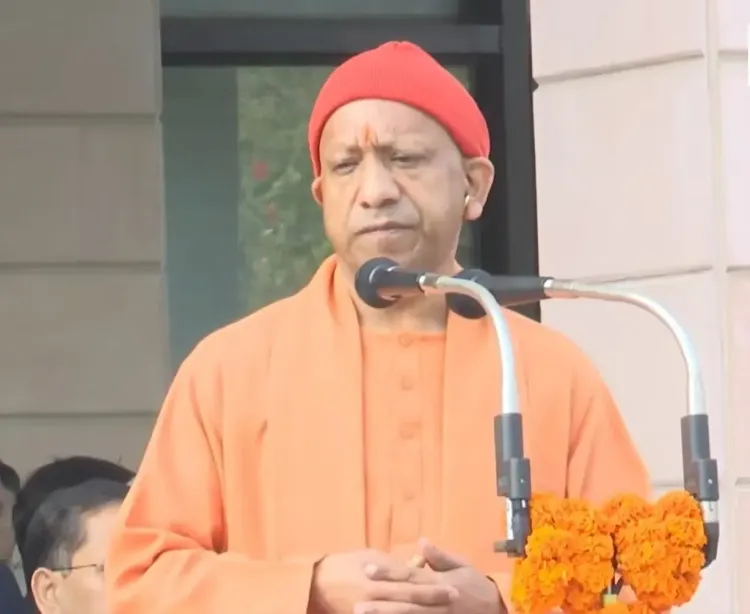
Lucknow, Jan 26 (NationPress) The Chief Minister of Uttar Pradesh, Yogi Adityanath, celebrated the 77th Republic Day by hoisting the national flag at his official residence on Monday. He emphasized that any act of disrespect towards the essence of the Constitution is tantamount to dishonoring the freedom fighters who fought for India’s independence.
In his address following the flag-hoisting, CM Yogi honored the founders of the nation along with its courageous heroes. He remarked, “I extend my profound respects to Dr. Rajendra Prasad, Dr. B.R. Ambedkar, Sardar Vallabhbhai Patel, and Subhas Chandra Bose. I also pay homage to all the known and unseen brave souls who sacrificed their lives for the security of our nation in independent India. I bow deeply to their memories and offer my humble salute.”
Discussing the importance of the Constitution, the Chief Minister stated, “As we know, India attained independence on August 15. The Constitution was framed under the leadership of Dr. Rajendra Prasad. It is the responsibility of every Indian to engage with full faith, respect, and commitment towards the Constitution, as it has guided our nation through both favorable and challenging times.”
He reiterated that dedication to constitutional values signifies the collective allegiance of citizens to the country.
He further voiced, “This demonstrates our respect and commitment to the Constitution. Upholding its core values is a true tribute to the great sons of Mother India, whose sacrifices laid the groundwork for a free and sovereign nation.”
Highlighting the role of the populace, CM Yogi asserted, “The real guardian of the Constitution is the citizen of India. Disrespecting the fundamental spirit of the Constitution is a direct affront to all freedom fighters and those who battled for the nation’s independence.”
Every year, Republic Day is observed on January 26 to honor the establishment of the Indian Constitution, which is regarded as the supreme law of the land and applies to all citizens. Although India won its independence on August 15, 1947, the nation did not possess its own Constitution immediately afterward.
Prior to the Constitution, laws were governed by the common law system and a modified version of the British-era Government of India Act, 1935. Approximately two weeks post-independence, a Drafting Committee was formed to create the Constitution, with Dr. B.R. Ambedkar as its chairman.
After thorough discussions, the Constitution of India was finalized and adopted on November 26, 1949, a day now recognized as Constitution Day. It came into force on January 26, 1950, marking India’s transformation into a sovereign, democratic, and republican state. While India attained freedom on August 15, 1947, it was with the adoption of the Constitution that the nation officially proclaimed itself a sovereign republic operating under democratic principles and constitutional values.
Point of View
It is vital to recognize the significance of the Constitution in shaping India's democratic framework. CM Yogi Adityanath's remarks reinforce the need for collective respect and adherence to constitutional values, which are paramount in commemorating the sacrifices of our freedom fighters. This perspective aligns with the nation’s commitment to uphold justice and equality for all citizens.
NationPress
22 Sept 2026
Frequently Asked Questions
Why is the Constitution important for India?
The Constitution of India serves as the supreme law, guiding the country’s governance and upholding the rights of its citizens.
What is celebrated on Republic Day?
Republic Day, celebrated on January 26, marks the adoption of the Indian Constitution, establishing India as a sovereign republic.
Who were the key figures in framing the Constitution?
Dr. B.R. Ambedkar was the chairman of the Drafting Committee, alongside other prominent leaders like Dr. Rajendra Prasad and Sardar Vallabhbhai Patel.
What is the significance of honoring freedom fighters?
Honoring freedom fighters acknowledges their sacrifices and reaffirms the values of liberty and justice they fought for.
How can citizens uphold constitutional values?
Citizens can uphold constitutional values by respecting the law, participating in democracy, and promoting justice and equality.