UP CM Yogi Adityanath: State once scarred by riots now a rule-of-law model
Synopsis
Yogi Adityanath used the launch of an NSG–UP Police joint training programme in Lucknow to deliver his most detailed public accounting yet of the state's security overhaul — 21 ATS field units, 1.5 million CCTV cameras, response times slashed from 65 minutes to under 7, and ₹15,000 crore in seized criminal assets. The speech doubles as a 2027 election pitch built on a law-and-order foundation.
Key Takeaways
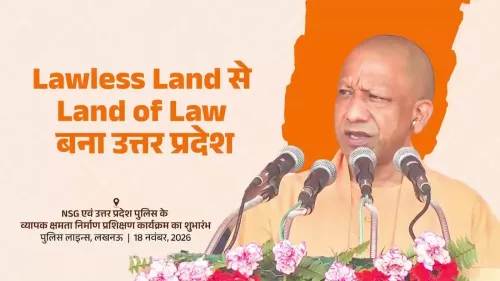
UP CM Yogi Adityanath addressed the launch of a joint NSG–UP Police capacity-building training programme at Lucknow Police Lines on 18 November 2026 .
The ATS now has 21 field units deployed statewide, with 10 new units recently added, plus dedicated Illegal Conversion Cell , Crypto Analysis Wing , and Cyber Operations Team .
Operation Trinetra has installed over 1.5 million CCTV cameras ; PRV 112 response time cut from 65 minutes to 5–7 minutes .
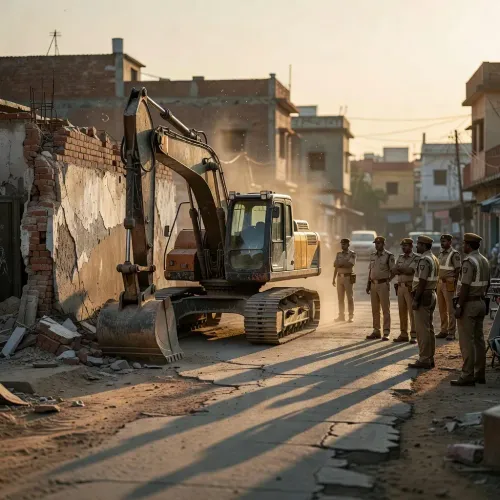
Illegal properties worth more than ₹15,000 crore have been confiscated or demolished under the current administration.
Cyber police stations have expanded from 2 to all 75 districts in UP.
Police budget has been increased three to four times alongside recruitment transparency reforms.
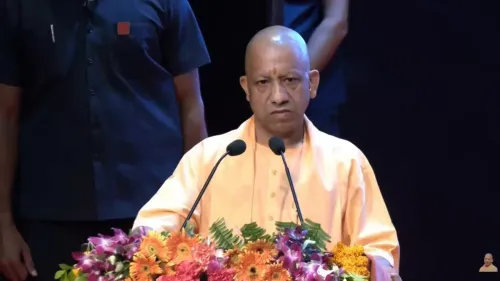
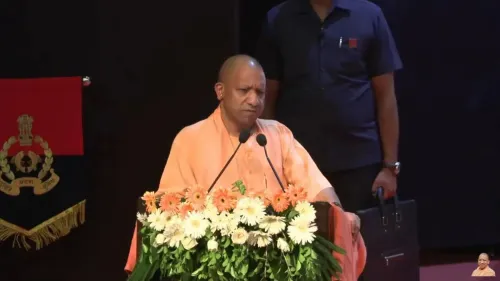
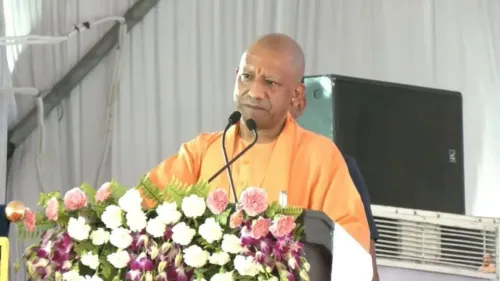
Uttar Pradesh Chief Minister Yogi Adityanath on Wednesday, 18 November declared that a state once gripped by communal violence and unchecked criminality has been transformed into a benchmark for law and order, crediting the Uttar Pradesh Police and the Anti-Terrorism Squad (ATS) for the turnaround. His remarks came at the launch of a joint capacity-building training programme of the National Security Guard (NSG) and UP Police at the Lucknow Police Lines.
What the Chief Minister Said
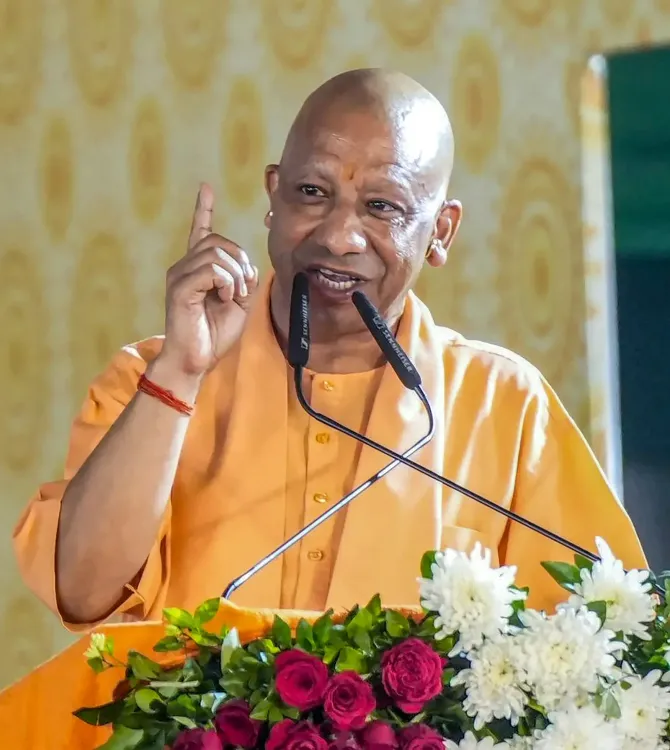
Addressing the gathering, Adityanath recalled a time when Uttar Pradesh was engulfed in the 'flames of riots, criminals were emboldened, and anarchy reigned everywhere.' He claimed those conditions have been decisively reversed. 'Today, the state is governed by the rule of law,' he said.
He outlined the governing philosophy underpinning the security overhaul: 'The policy of the Central and State governments is clear — neither fearlessness for criminals, nor opportunity for terrorists, nor any compromise with the security of the nation.' He stressed that meeting today's threats demands 'not just courage, but also modern technology, an infallible strategy, swift decision-making, and the efficiency to act as a team.'
Emerging Threats and ATS Expansion
The Chief Minister warned that adversaries have shifted tactics, now operating through what he described as 'invisible fronts.' He specifically cited hawala networks, counterfeit currency, illegal conversions, cybercrime, and cryptocurrency as tools being used to 'hollow out the system from within.' He expressed confidence that UP Police and ATS personnel had 'exposed every such invisible conspiracy.'
Adityanath announced that 21 ATS field units are currently deployed across the state, with 10 new field units added to build what he called an 'impregnable security network.' The ATS now operates three specialised cells: an Illegal Conversion Cell, a Crypto Analysis Wing, and a Cyber Operations Team.
Infrastructure Overhaul: Numbers Behind the Claims
The Chief Minister pointed to a series of measurable changes in policing infrastructure. Cyber police stations have expanded from just two to all 75 districts of the state. Under Operation Trinetra, more than 1.5 million CCTV cameras have been installed across UP. The emergency response time of PRV 112 has been cut from 65 minutes to just 5–7 minutes.
He also cited a crackdown on crime-linked assets, stating that illegal properties worth more than ₹15,000 crore have been confiscated or demolished, which he attributed to a 'significant decline in robbery and dacoity' statewide. The police budget, he added, has been increased three to four times alongside reforms ensuring transparency in recruitment.
Security at Kumbh and Mahakumbh
Invoking two of India's largest religious gatherings, Adityanath cited the security arrangements at Kumbh 2019 and Mahakumbh 2025 in Prayagraj as proof of his administration's capability. 'The impregnable security of our SPOT commandos and UP Police is such that not even a bird can flutter past to breach security,' he said, referring to the deployment protecting crores of pilgrims at both events.
Context and Significance
This comes amid a broader political narrative the Adityanath government has consistently projected ahead of the 2027 Uttar Pradesh Assembly elections — positioning law enforcement transformation as its primary governance achievement. The launch of the NSG–UP Police joint training programme signals a deepening of counter-terrorism coordination between central and state security agencies, a noteworthy institutional development beyond the rhetoric. Critics and opposition parties have, however, historically contested the administration's characterisation of the state's law-and-order record, citing selective enforcement concerns — claims the government disputes.
Point of View
ATS units, and seized assets are carefully curated data points designed to cement a governance identity ahead of 2027. The NSG–UP Police joint programme is a substantive institutional development that deserves coverage on its own terms, but it risks being overshadowed by the electoral framing. What the speech does not address is independent verification of these metrics: response times, seizure valuations, and riot-incidence comparisons all come from the government's own account. Without opposition scrutiny or judicial audit, the transformation narrative remains self-certified — which is a legitimate question the mainstream coverage largely sidesteps.
NationPress
18 Nov 2026
Frequently Asked Questions
What did UP CM Yogi Adityanath say about Uttar Pradesh's law and order on 18 November?
Chief Minister Yogi Adityanath claimed that Uttar Pradesh, once known for communal riots and rampant crime, is now governed by the rule of law. He attributed the change to the Uttar Pradesh Police and ATS, citing expanded field units, mass CCTV deployment, and over ₹15,000 crore in seized criminal assets.
What is the NSG–UP Police joint training programme launched in Lucknow?
It is a joint capacity-building training initiative between the National Security Guard (NSG) and Uttar Pradesh Police, launched at Lucknow Police Lines on 18 November. The programme aims to strengthen counter-terrorism capabilities and coordination between central and state security agencies.
How has the UP ATS expanded under the Yogi Adityanath government?
The UP ATS now operates 21 field units across the state, with 10 new units recently established. It has also added three specialised divisions: an Illegal Conversion Cell, a Crypto Analysis Wing, and a Cyber Operations Team to counter emerging financial and digital threats.
What is Operation Trinetra in Uttar Pradesh?
Operation Trinetra is a surveillance initiative under which more than 1.5 million CCTV cameras have been installed across Uttar Pradesh. It is part of the state's broader security infrastructure overhaul, complemented by an expansion of cyber police stations to all 75 districts.
How much illegal property has been seized or demolished in Uttar Pradesh?
According to Chief Minister Adityanath, properties worth more than ₹15,000 crore linked to criminal activity have been confiscated or demolished under his administration. He cited this as a key factor behind a decline in robbery and dacoity cases across the state.