Amur Falcons Apapang and Alang begin 3,000 km nonstop Arabian Sea crossing
Synopsis
Weighing just 150 grams, Amur falcons Apapang and Alang have launched a nonstop 3,000 km flight across the Arabian Sea — no land, no rest. Their satellite tags, fitted by the Wildlife Institute of India, are offering scientists an unprecedented real-time window into one of nature's most extreme migrations, linking breeding grounds in Russia and China to wintering sites in East Africa.
Key Takeaways
Satellite-tagged Amur falcons Apapang and Alang have begun their nonstop trans-oceanic crossing of the Arabian Sea towards Africa as of 19 November 2026 .
The birds spent 25 days roosting at Chiuluan, Tamenglong district, Manipur before departing.
Each falcon weighs barely 150 grams and must fly nearly 3,000 km without landing or resting.
In 2025 , Apapang covered 6,100 km to Tanzania in 6 days 8 hours ; Alang flew 5,600 km to Kenya in 6 days 14 hours .
A 2024 Journal of Raptor Research study found that one million falcons can consume up to two billion termites during their northeast India stopover.
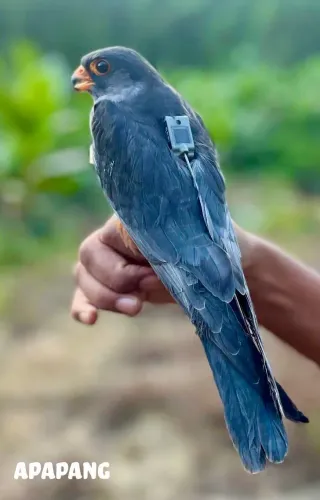
Satellite transmitters were fitted by the Wildlife Institute of India (WII) in November 2025 to map migratory routes and inform international conservation efforts.
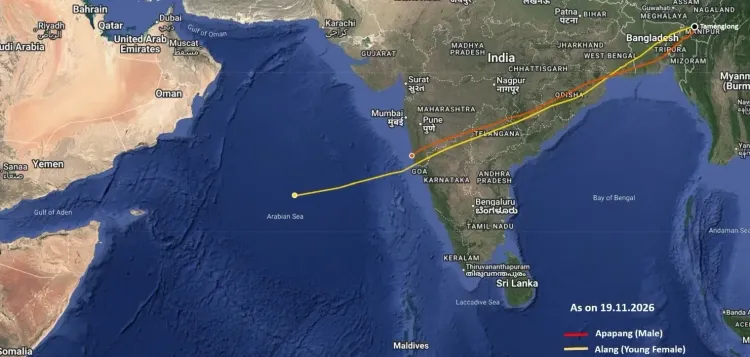
Satellite-tagged Amur falcons Apapang and Alang have set off on their annual trans-oceanic migration towards Africa, departing after a 25-day roosting halt at Chiuluan in Manipur's Tamenglong district, according to Supriya Sahu, Additional Chief Secretary for Environment, Climate Change and Forests, Tamil Nadu, who shared tracking updates on Thursday, 19 November 2026. The two raptors, each weighing barely 150 grams, now face a gruelling nonstop overwater flight of nearly 3,000 km across the Arabian Sea with no opportunity to land or rest.
Where the falcons are now
According to real-time satellite telemetry data shared by Sahu, the male falcon Apapang has already crossed peninsular India and reached the western coast near Goa. The young female Alang, meanwhile, is reported to be well out over the Arabian Sea. A third tagged bird, Ahu, is also being monitored as part of the same research programme.
'Ahead lies one of nature's most astonishing feats, a nonstop flight of nearly 3,000 km across the Arabian Sea towards Somalia. Imagine such tiny birds taking on an ocean with nowhere to land or rest! We are back on Amur Watch, following their journey with excitement, wonder and a little anxiety too. Safe skies, Apapang and Alang,' Sahu posted on social media platform X.
Record-breaking flights from 2025
During their previously recorded migration in 2025, all three birds completed the journey along distinct trajectories. Apapang covered roughly 6,100 km in six days and eight hours to reach Tanzania. Alang travelled approximately 5,600 km in six days and 14 hours, landing in Kenya. Ahu covered around 5,100 km in five days to arrive in northern Somalia. These figures, logged by the satellite transmitters fitted by scientists from the Wildlife Institute of India (WII), offer a rare quantified picture of one of the animal kingdom's most demanding migrations.
The science behind the stopover
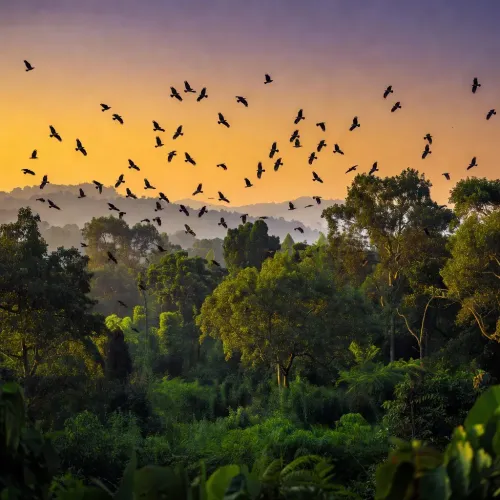
Amur falcons (Falco amurensis) breed in parts of eastern Russia, northeastern China, and Mongolia before moving south each autumn. Thousands of the raptors congregate at roosting sites in Nagaland and Manipur, where they feed intensively to build the fat reserves required for the oceanic crossing.
A 2024 study published in the Journal of Raptor Research, led by Suresh Kumar of the WII, shed new light on exactly what fuels this preparation. Analysis of around 1,200 regurgitated pellets collected from Pangti, Yaongyimchen, and Hakhizhe in Nagaland identified two termite species — Odontotermes feae and Odontotermes horni — as a dominant dietary component. Researchers estimated that one million falcons can collectively consume up to two billion termites in just over a fortnight during this critical pre-migration phase.
Why this matters for conservation
Conservationists note that satellite telemetry is transforming the understanding of Amur falcon migratory corridors, documenting flight durations, stopover habitats, and oceanic crossing routes with a precision previously unavailable to researchers. The data, they argue, makes a compelling case for coordinated international conservation efforts spanning northern Asia, India, and Africa — the full arc of the species' annual journey. This comes amid growing concern over habitat degradation at key stopover sites and illegal hunting that has historically threatened the species at certain points along its route. The satellite programme, initiated by the WII in November 2025, represents a significant step towards evidence-based protection of these migratory corridors.
Point of View
150 grams each — but it carries outsized policy implications. India sits at the centre of this species' migratory arc, yet cross-border conservation coordination between India, Russia, China, and East African nations remains largely informal. The 2024 WII termite-diet study is a reminder that the survival of a species can hinge on ecosystems as unglamorous as subterranean termite colonies in Nagaland; degrade those, and the fat reserves that power a 6,000 km ocean crossing simply do not accumulate. What mainstream coverage of these annual migration stories misses is the governance gap: satellite data is now rich enough to identify critical stopover habitats with precision, but the legal and diplomatic frameworks to protect them across four or five sovereign jurisdictions lag far behind the science.
NationPress
19 Nov 2026
Frequently Asked Questions
Who are Apapang and Alang, and why are they significant?
Apapang and Alang are two Amur falcons fitted with satellite transmitters by scientists from the Wildlife Institute of India (WII) in November 2025 to track their migration from northeastern India to Africa. They are significant because their real-time telemetry data is helping researchers map exact flight routes, durations, and stopover habitats for one of the world's longest overwater bird migrations.
How far do Amur falcons fly to reach Africa from India?
The nonstop overwater segment across the Arabian Sea alone spans nearly 3,000 km, with no opportunity to land or rest. In 2025, Apapang's full journey from India to Tanzania covered roughly 6,100 km completed in six days and eight hours, while Alang flew approximately 5,600 km to Kenya in six days and 14 hours.
Where do Amur falcons stop over in India before crossing the Arabian Sea?
Thousands of Amur falcons roost at sites in Nagaland and Manipur each autumn, where they feed intensively to build fat reserves. Apapang and Alang spent nearly 25 days at Chiuluan in Manipur's Tamenglong district before beginning their oceanic crossing in November 2026.
What do Amur falcons eat during their India stopover?
According to a 2024 study in the Journal of Raptor Research led by WII's Suresh Kumar, Amur falcons rely heavily on subterranean termites — specifically Odontotermes feae and Odontotermes horni — during their northeast India stopover. Researchers estimated that one million falcons can consume up to two billion termites in just over a fortnight.
Why is satellite tagging of Amur falcons important for conservation?
Satellite telemetry provides precise data on flight durations, stopover habitats, and migratory corridors that was previously unavailable. Conservationists argue this evidence base is essential for coordinating international protection efforts across the falcons' full migratory range — from breeding grounds in Russia, China, and Mongolia through India to wintering sites in East Africa.