Anthropic CEO Dario Amodei pushes US to harden China chip export bans

Synopsis
Anthropic CEO Dario Amodei has publicly urged Washington to tighten chip export bans on China and clamp down on AI model distillation, warning that unchecked practices could shrink the US-China AI capability gap to just a few months — a striking escalation in the global AI arms race.
Key Takeaways
Anthropic CEO Dario Amodei published a blog post on Monday, 28 July 2026 calling on Washington to tighten chip export bans targeting China .
Amodei described a chip ban as 'the most efficient and direct way' to prevent Beijing from building frontier AI models for military use and domestic surveillance.
He called for cracking down on 'rampant smuggling and workarounds' used to bypass existing US chip export sanctions.
Amodei warned that large-scale AI model distillation by Chinese developers could reduce the US - China AI capability gap to just a few months .
The remarks follow the release of Moonshot AI 's Kimi K3 model, which has intensified speculation about potential US restrictions on open-weight AI models.
Anthropic founder and CEO Dario Amodei has called on Washington to significantly tighten chip export restrictions on China, arguing that stronger controls are the most direct way to preserve America's lead in frontier artificial intelligence. In a blog post published on Monday, 28 July 2026, Amodei framed the issue as a matter of national security, citing concerns over military AI applications and domestic surveillance.
The Case for a Tighter Chip Ban
Amodei described a chip ban as 'the most efficient and direct way' of preventing Beijing from developing frontier AI models for military use and domestic surveillance — which he identified as his primary concern. He argued that the US 'should not sell powerful chips or chipmaking equipment to China' and must crack down on the 'rampant smuggling and workarounds' currently being used to circumvent existing sanctions.
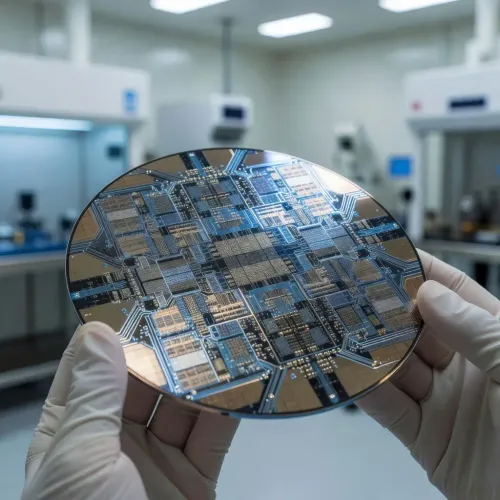
The call comes as the global semiconductor supply chain remains under intense scrutiny, with companies such as Nvidia navigating an increasingly complex web of export-control rules governing chip sales to Chinese customers.
Why Distillation Is the New Battleground
Beyond hardware controls, Amodei took direct aim at AI model distillation — a widely used industry practice in which the outputs of a more capable model are used to train or refine a less capable one. He accused Chinese developers of leveraging large-scale distillation on American models to effectively bypass hardware limitations imposed by export controls.
Amodei warned that unchecked distillation could narrow the capability gap between US and Chinese AI systems to just a few months — a striking claim that underscores the urgency he attaches to both hardware and software-level restrictions.
The Competitive Backdrop
The remarks arrive amid intensifying competition in the global AI race. Speculation is mounting that Washington could introduce restrictions on open-weight AI models following a series of rapid advances by Chinese competitors. The recent release of the Kimi K3 model by Moonshot AI has been widely cited as evidence of the pace at which Chinese labs are closing the gap with leading US developers, including Anthropic, OpenAI, and Meta Platforms.
Open-weight models — whose parameters are publicly released, often via platforms such as Hugging Face — present a particular challenge for policymakers because they can be downloaded and fine-tuned without the oversight that governs access to proprietary systems.
What's Next
Amodei's public intervention raises the stakes in an ongoing policy debate that now spans chip controls, model-weight access, and the legality of distillation from proprietary systems. Regulators in Washington are expected to weigh responses that could affect a broad range of companies — from chip designers and cloud providers to open-source AI communities. How aggressively the US government acts on these recommendations will determine whether the current capability lead can be sustained or whether Chinese labs continue to close the gap through alternative means.
Point of View
In theory, handicap rivals while entrenching incumbents like Anthropic — a dynamic that mainstream coverage tends to underplay. The distillation argument is particularly consequential because it targets a legal grey area that current export-control frameworks were never designed to address, potentially forcing regulators to extend controls from silicon into software and model weights. This fits a broader pattern in the chip war where each US restriction prompts a technical workaround, which then demands a new, more complex restriction — a ratchet effect with no clear end state. Investors in open-source AI platforms and chip-adjacent companies should watch closely: if Washington acts on these recommendations, the collateral impact on non-Chinese entities could be significant.
NationPress
28 Jul 2026
Frequently Asked Questions
What did Anthropic CEO Dario Amodei say about China chip export bans?
Anthropic CEO Dario Amodei called a chip ban 'the most efficient and direct way' to prevent China from building frontier AI models for military use and domestic surveillance. In a blog post on 28 July 2026, he urged Washington to stop selling powerful chips or chipmaking equipment to China and to crack down on smuggling and workarounds used to bypass existing sanctions.
What is AI model distillation and why is it a concern?
AI model distillation is a common industry practice where developers use the outputs of a more capable model to train or refine a less capable one. Amodei warned that Chinese developers are using large-scale distillation on American models to bypass hardware limitations imposed by export controls, potentially shrinking the US-China AI capability gap to just a few months.
What is the Kimi K3 model and how does it relate to this debate?
Kimi K3 is a recently released AI model developed by Chinese company Moonshot AI. Its release has intensified speculation that Washington may introduce restrictions on open-weight AI models, as it is seen as evidence of how rapidly Chinese AI labs are closing the gap with leading US developers.
Could the US restrict open-weight AI models?
There is growing speculation that Washington could introduce restrictions on open-weight AI models following rapid advances by Chinese competitors. Open-weight models, whose parameters are publicly released on platforms like Hugging Face, are particularly difficult to control because they can be freely downloaded and fine-tuned without oversight.
Which companies are most affected by tighter US chip export controls on China?
Chip designer Nvidia is among the most directly exposed, as it has long navigated complex export-control rules governing chip sales to Chinese customers. Broader restrictions could also affect cloud providers, open-source AI platforms, and any company with significant China-facing AI infrastructure or partnerships.