Ayush Ministry launches WHO-ICHI workshop to code traditional medicine into global health systems
Synopsis
India is quietly building the digital backbone for its traditional medicine systems. The Ayush Ministry's WHO-ICHI coding workshop — covering over 2,200 Ayurveda, Siddha, and Unani procedures — could determine whether these systems are recognised in global health burden data, cross-border insurance, and universal health coverage frameworks. The stakes go well beyond a coding exercise.
Key Takeaways
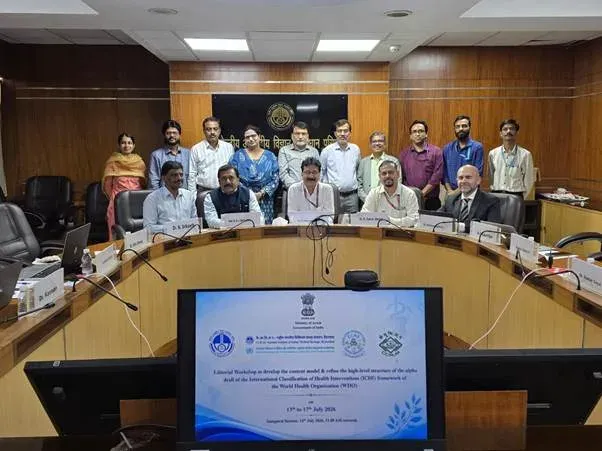
The Ministry of Ayush launched a five-day WHO-ICHI Framework workshop on 14 July 2026 in New Delhi .
The workshop aims to finalise National Health Intervention Codes (NHIC) for Ayurveda , Siddha , and Unani systems.
The expert-validated repository spans 714 procedures for Ayurveda, 996 for Siddha , and 551 for Unani — over 2,200 procedures in total.
WHO representatives including Dr Robert Jakob and Dr Stephane Espinosa participated, signalling international alignment.
The workshop is organised by CCRAS through NIIMH Hyderabad , building on drafts from consultative meetings in May 2026 .
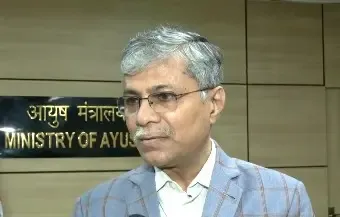
The Ministry of Ayush on 14 July 2026 launched a five-day workshop in New Delhi on the WHO-ICHI Framework for Ayurveda, Siddha, and Unani systems, marking a significant step toward integrating India's traditional medicine practices into the global digital health ecosystem and universal health coverage frameworks. The initiative aims to standardise health terminologies so that Ayush interventions align with modern health informatics standards, according to Vaidya Rajesh Kotecha, Secretary, Ministry of Ayush.
What the Workshop Aims to Achieve
At the inaugural session, Kotecha described the initiative as far more consequential than a routine administrative exercise. 'It represents a transformational step towards positioning India's traditional medical systems within the global scientific, digital, and policy ecosystem,' he said. The core objective is to finalise a scientifically robust, layered hierarchy of National Health Intervention Codes (NHIC) for the three Ayush sub-systems — Ayurveda, Siddha, and Unani.
Dr Kavita Jain, Joint Secretary, Ministry of Ayush, elaborated on the long-term policy implications of embedding traditional practices into digital documentation and global health frameworks. Her remarks underscored that the coding exercise has direct bearing on how Ayush interventions are recognised, reimbursed, and tracked within national and international health systems.
Global Collaboration and WHO Involvement
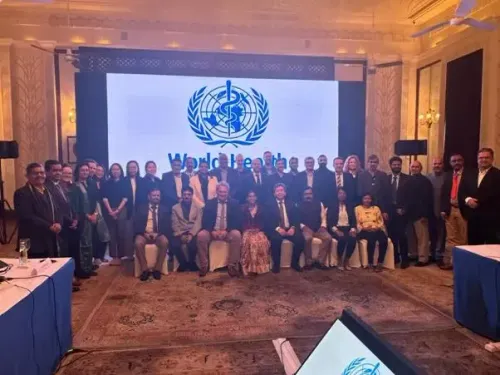
The workshop drew participation from senior World Health Organization (WHO) representatives, including Dr Robert Jakob, Data Standards and Informatics Team Leader, and Dr Stephane Espinosa, Consultant, WHO, both of whom addressed global interoperability and alignment with digital informatics standards. Dr Geeta Krishnan, Unit Head, GTMC Jamnagar, shared the global operational context for integrating traditional medicine into WHO-compliant frameworks.
This international participation signals that the effort is not limited to domestic policy — it is positioned as India's contribution to the WHO's broader agenda on traditional medicine classification and universal health coverage.
Scale of the Expert-Validated Repository
The workshop builds on base drafts prepared during consultative meetings held in May 2026. The expert-validated repository currently covers 13 specialties, 76 therapies, and 714 procedures for Ayurveda; 25 specialties, 130 therapies, and 996 procedures for Siddha; and 15 specialties, 179 therapies, and 551 procedures for Unani, according to the ministry statement.
The breadth of this repository — spanning more than 2,200 procedures across the three systems — reflects the scale of the standardisation effort underway.
Organising Bodies and Institutional Mandate
The workshop is being organised by the Central Council for Research in Ayurvedic Sciences (CCRAS) through its WHO Collaborating Centre, the National Institute of Indian Medical Heritage (NIIMH), based in Hyderabad. It brings together leading scientific experts, institutional heads, and international informatics professionals to validate and finalise the coding hierarchy.
This comes amid India's wider push to position Ayush as a credible, data-driven complement to conventional medicine — an effort that has gained momentum since the establishment of a dedicated Ministry of Ayush in 2014. With WHO-ICHI alignment, India's traditional medicine systems could eventually feature in global health burden calculations and cross-border insurance frameworks, a development that would represent a structural shift in how Ayush is perceived internationally.
Point of View
Siddha, and Unani under the WHO-ICHI framework is a strategically significant move that most health coverage treats as a bureaucratic footnote. If these codes are accepted into global health classification systems, Indian traditional medicine could appear in WHO disease burden data and become eligible for cross-border health insurance reimbursements — a commercial and diplomatic win that far exceeds the scope of a five-day workshop. The real question is whether the NHIC repository will achieve interoperability with ICD-11 and SNOMED CT, the dominant global standards, or remain a parallel system. Without that bridge, the exercise risks producing a well-catalogued but isolated taxonomy that does not move the needle on Ayush's global standing.
NationPress
12 Oct 2026
Frequently Asked Questions
What is the WHO-ICHI Framework workshop launched by the Ayush Ministry?
It is a five-day workshop launched on 14 July 2026 in New Delhi to develop National Health Intervention Codes (NHIC) for Ayurveda, Siddha, and Unani systems using the WHO International Classification of Health Interventions (ICHI) framework. The goal is to integrate traditional medicine into global digital health ecosystems and universal health coverage frameworks.
Why does coding Ayurveda and Unani into WHO frameworks matter?
Standardised coding allows Ayush interventions to be documented, tracked, and recognised within global health informatics systems — a prerequisite for inclusion in international health burden data, insurance reimbursement frameworks, and cross-border health policy. Without such codes, traditional medicine systems remain outside the data infrastructure that drives global health funding and policy.
How many procedures does the Ayush coding repository currently cover?
According to the ministry, the expert-validated repository covers 714 procedures for Ayurveda, 996 for Siddha, and 551 for Unani — more than 2,200 procedures in total, across 13, 25, and 15 specialties respectively.
Which institutions are organising the workshop?
The workshop is organised by the Central Council for Research in Ayurvedic Sciences (CCRAS) through its WHO Collaborating Centre, the National Institute of Indian Medical Heritage (NIIMH), based in Hyderabad. It involves scientific experts, institutional heads, and international informatics professionals.
What was discussed at previous consultative meetings before this workshop?
Base drafts for the National Health Intervention Codes were prepared during consultative meetings held in May 2026. The current five-day workshop builds on those drafts to finalise a scientifically robust, layered coding hierarchy for the three Ayush systems.