China's Big Fund becomes SMIC's third-largest shareholder in $6bn Star Market deal
Synopsis
China's state-backed Big Fund has become SMIC's third-largest shareholder after a record 40.6 billion yuan ($6bn) Star Market deal — the largest M&A transaction in the exchange's history — deepening Beijing's state-directed consolidation of its domestic semiconductor supply chain amid tightening US export controls.
Key Takeaways
SMIC completed a 40.6 billion yuan (US$6 billion) acquisition of a 49 per cent stake in subsidiary SMNC , the largest-ever deal on Shanghai's Star Market .
The transaction involved issuing 547 million new SMIC shares to five shareholders of Semiconductor Manufacturing North China (Beijing) Corporation .
China's Big Fund (National Integrated Circuit Industry Investment Fund) is now SMIC 's third-largest shareholder following deal completion on 25 June 2026 .
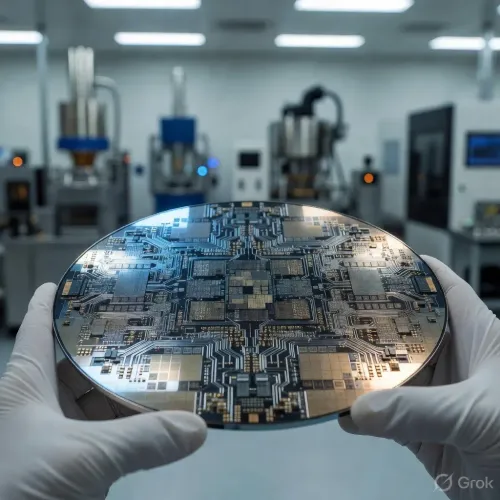
SMNC , founded in 2013 , operates 12-inch wafer foundry services and functions as SMIC 's key manufacturing base in Beijing .
According to Lukedao Tech founder Lu Kelin , the deal is 'essentially aimed at addressing its production capacity shortage and converting the premium from external shareholders into internal strategic benefits.' The deal was first proposed in August 2025 and is part of Beijing 's broader push for chip self-sufficiency amid escalating US export controls.
China's National Integrated Circuit Industry Investment Fund, widely known as the Big Fund, has become the third-largest shareholder of Semiconductor Manufacturing International Corporation (SMIC) — the country's largest wafer foundry — after the completion of a landmark 40.6 billion yuan (US$6 billion) acquisition deal on 25 June 2026, marking the biggest merger and acquisition transaction ever recorded on Shanghai's Star Market.
The Deal Structure
SMIC issued 547 million new shares to five shareholders of its subsidiary, Semiconductor Manufacturing North China (Beijing) Corporation (SMNC), in exchange for a 49 per cent stake in the unit. The transaction, first proposed in August 2025, was formally completed this week after months of regulatory and shareholder approvals. The five beneficiary shareholders include the Big Fund, which now ranks among SMIC's top owners.
Why It Matters
The deal consolidates SMIC's grip over a strategically critical manufacturing node. SMNC, founded in 2013, specialises in 12-inch wafer foundry services and has served as SMIC's primary production base in Beijing. In an April 2026 filing, SMIC stated the transaction would 'further improve the company's asset quality, enhance business synergies and promote long-term development.'
Lu Kelin, founder of consultancy Lukedao Tech, offered a pointed read of the move: 'SMIC's acquisition of minority stake in SMNC is essentially aimed at addressing its production capacity shortage and converting the premium from external shareholders into internal strategic benefits.'
The Competitive Backdrop
The transaction arrives as Washington continues to tighten export controls on advanced semiconductor equipment and chips destined for China. Beijing's response has been to deepen state financing of its domestic chip supply chain, with the Big Fund acting as the primary vehicle. By folding SMNC's capacity directly into SMIC's balance sheet, the state effectively converts a partially external asset into a fully integrated national resource.
What's Next
With SMNC's 12-inch wafer capacity now more tightly integrated, SMIC is positioned to accelerate output for domestic chip designers who have been squeezed by both global supply constraints and US-imposed procurement barriers. Analysts and industry observers will be watching whether the expanded capacity translates into meaningful yield improvements at advanced nodes, and whether further consolidation of China's fragmented foundry landscape follows this record-setting precedent on the Star Market.
Point of View
Beijing is effectively ring-fencing critical 12-inch wafer capacity from market volatility and foreign pressure. What mainstream coverage underplays is the signal this sends to other partially state-owned semiconductor subsidiaries — consolidation, not organic growth, is now the preferred lever for scaling capacity quickly. The record Star Market valuation also reveals how aggressively China is willing to price strategic industrial assets to keep the supply chain narrative intact. Investors in global foundry peers — and the equipment suppliers who serve them — should note that SMIC's integrated capacity base is about to become a more formidable competitor in mature-node markets.
NationPress
24 Sept 2026
Frequently Asked Questions
What is the Big Fund's new role in SMIC after this deal?
China's National Integrated Circuit Industry Investment Fund — the Big Fund — has become the third-largest shareholder of SMIC following the completion of the SMNC acquisition on 25 June 2026. The fund was among the five shareholders of SMNC that received 547 million newly issued SMIC shares worth 40.6 billion yuan in exchange for a 49 per cent stake in the subsidiary.
Why is the SMIC-SMNC deal historically significant?
The 40.6 billion yuan (US$6 billion) transaction is the largest merger and acquisition deal ever recorded on Shanghai's Star Market. It marks a major consolidation milestone for China's domestic semiconductor industry, tightening state control over critical 12-inch wafer manufacturing capacity.
What does SMNC do and why is it strategically important?
Semiconductor Manufacturing North China (Beijing) Corporation, founded in 2013, specialises in 12-inch wafer foundry services and has been SMIC's primary manufacturing base in Beijing. Integrating it fully into SMIC's balance sheet is intended to address production capacity shortages and improve operational synergies, according to the company's April 2026 filing.
How does this deal relate to US export controls on China?
The deal is a direct response to tightening US export controls that restrict China's access to advanced semiconductor equipment and technology. By consolidating SMNC's capacity under SMIC with state backing from the Big Fund, Beijing is deepening domestic chip self-sufficiency and reducing dependence on foreign supply chains.
What happens next for SMIC after acquiring the SMNC stake?
With SMNC's 12-inch wafer capacity now more tightly integrated, SMIC is expected to ramp output for domestic chip designers facing supply constraints. Industry observers will watch whether this consolidation triggers further M&A activity across China's fragmented foundry sector.