China's AI platform engineers custom plant immunity in weeks
Synopsis
Chinese scientists and biotech firm Qi Biodesign have built an AI-guided platform that engineers custom plant immune receptors in weeks rather than years — a potential game-changer for crop disease response and agro-biodefence, published in Science.
Key Takeaways
Chinese Academy of Sciences and Qi Biodesign published the platform in the peer-reviewed journal Science last month.
Programmable synthetic immune receptors can be introduced into plants to detect and neutralise specific bacteria , viruses , and fungi .
AI-guided protein design cuts receptor engineering time from years to weeks .
Conventional crop resistance is 'rapidly overcome by fast-evolving pathogens' in large-scale monoculture systems, the team warned.
The platform also addresses the threat of agro-terrorism and deliberate plant bioweapons targeting commercial crops.
Commercial deployment timelines depend on pending field trials and regulatory approvals.
Chinese scientists have unveiled the world's first AI-guided platform capable of engineering custom plant immune receptors on demand, offering a rapid-response tool against emerging crop diseases and potential agro-biological threats. The breakthrough, published in the peer-reviewed journal Science last month, was developed by researchers at the Chinese Academy of Sciences' Institute of Genetics and Developmental Biology in collaboration with biotechnology firm Qi Biodesign.
What the platform does
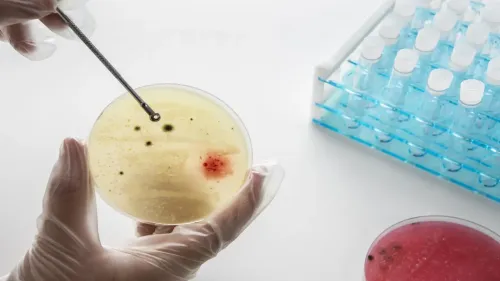
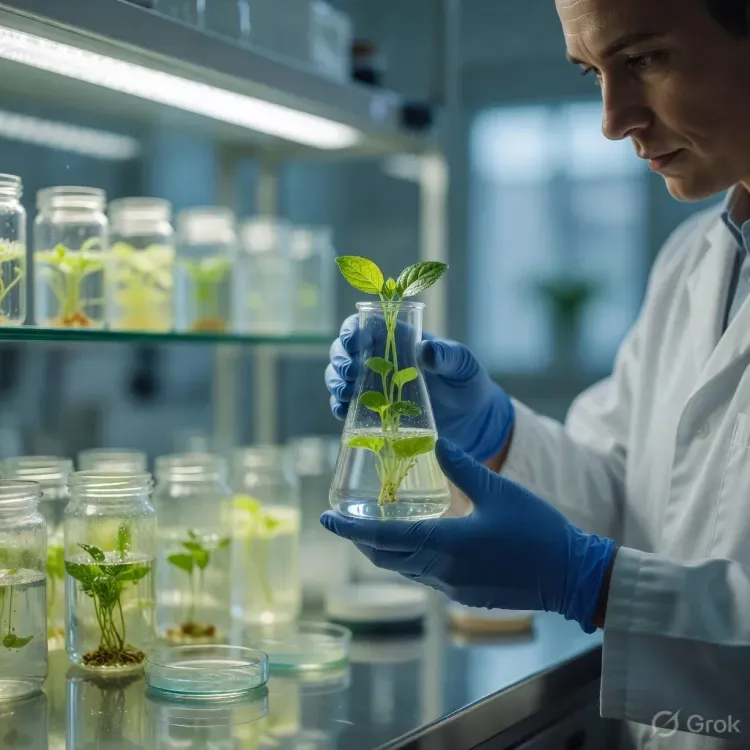
The system centres on programmable synthetic immune receptors that can be introduced into plants to detect specific proteins produced by bacteria, viruses, and fungi, triggering a targeted immune response. By harnessing artificial intelligence-guided protein design, the team says custom receptors can be engineered within weeks rather than the years typically required through conventional breeding. This dramatically compresses the timeline for developing disease-resistant crops and responding to novel plant pathogens.
Why it matters
Essential crops worldwide face persistent threats from fast-evolving plant pathogens that can devastate agricultural yields and undermine global food security. Traditional plant breeding programmes rely on naturally occurring resistance genes, but as the research team noted, 'this resistance is often rapidly overcome by fast-evolving pathogens, particularly in modern agricultural systems characterised by large-scale monoculture of genetically uniform crops.' This biological vulnerability also heightens the threat of agro-terrorism and deliberate deployment of plant bioweapons — pathogens purposefully introduced or modified to target specific crops.
The competitive backdrop
The development positions China at the frontier of synthetic biology applied to agriculture, a domain where speed of response to disease outbreaks is increasingly seen as a strategic asset. The integration of AI-driven protein design with plant immunity engineering mirrors broader trends in pharmaceutical biodefence, where generative AI is being used to accelerate antibody and receptor development. The platform's programmability means it could, in principle, be rapidly reconfigured against novel or engineered pathogens.
What's next
'This work establishes a versatile platform for efficient plant immunity engineering,' the team said in their Science paper. The researchers indicated the platform is designed for broad applicability across crop species, though field trials and regulatory pathways for commercial deployment remain ahead. Industry analysts are likely to watch whether Qi Biodesign moves to license or commercialise the technology for large-scale agricultural use.
The platform's real-world test will come when it is deployed against an active disease outbreak — a scenario that could validate both its speed advantage and its resilience against rapidly mutating pathogens.
Point of View
By definition, also be reconfigured to model or counter deliberately engineered ones, making it as much a biodefence asset as an agricultural tool. China's pairing of a state research institute with a private biotech firm mirrors the civil-military fusion model seen in its semiconductor and AI sectors. The deeper question is whether this platform will remain open science or become a proprietary strategic asset, and how quickly Western agricultural biotech will respond.
NationPress
23 Aug 2026
Frequently Asked Questions
What did Chinese scientists develop for plant disease immunity?
Scientists at the Chinese Academy of Sciences' Institute of Genetics and Developmental Biology and Qi Biodesign developed an AI-guided platform that engineers custom synthetic immune receptors for plants. These receptors detect proteins from specific pathogens and trigger an immune response to neutralise them, with results published in the journal Science .
How fast can the AI platform engineer plant immune receptors?
The platform can engineer custom plant immune receptors within weeks , compared to the years typically required through conventional plant breeding. This speed advantage is enabled by artificial intelligence -guided protein design.
Why is this plant immunity platform significant for food security?
Essential crops worldwide are threatened by fast-evolving pathogens that devastate yields, and traditional resistance genes are 'rapidly overcome' in large-scale monoculture systems. A platform that can generate targeted defences on demand could significantly strengthen global food security and reduce vulnerability to both natural outbreaks and deliberate plant bioweapons .
What is Qi Biodesign and what role did it play?
Qi Biodesign is a Chinese biotechnology company that co-developed the synthetic immune receptor platform alongside the Chinese Academy of Sciences . The collaboration reflects a broader model of pairing state research institutions with private biotech firms to accelerate applied science.
When will AI-engineered disease-resistant crops be commercially available?
No commercial timeline has been announced. Field trials and regulatory approval processes remain ahead before the platform's outputs can be deployed at scale in commercial agriculture, according to the research team.