National Space Day 2026: PM Modi hails India's space rise, Gen Z at the helm
Synopsis
Three years after Chandrayaan-3 made India the first nation to land near the Moon's south pole, PM Modi used National Space Day 2026 to reframe the achievement as a launchpad — crediting Gen Z engineers with building technologies 'not even imagined some time ago' and positioning India's private space sector as a magnet for global capital.
Key Takeaways
PM Narendra Modi marked National Space Day 2026 on 23 August with greetings to citizens and scientists, praising India's global space rise.
Modi called India's space sector a 'magnet for global investors' and highlighted the role of Gen Z engineers, designers, coders, and scientists.
National Space Day commemorates the Chandrayaan-3 Vikram lander's soft landing near the Moon's south pole on 23 August 2023 — a world first.
The 2026 theme is 'Towards Viksit Bharat: Innovating, Collaborating and Aspiring to Global Space Leadership.' ISRO Chairman Dr V Narayanan called for greater innovation and collaboration to establish India as a global space leader.
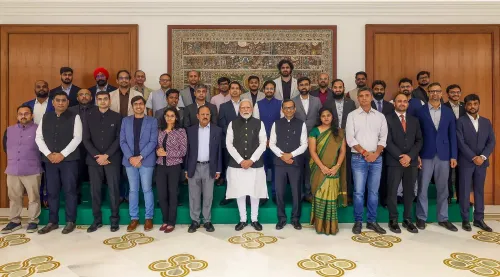
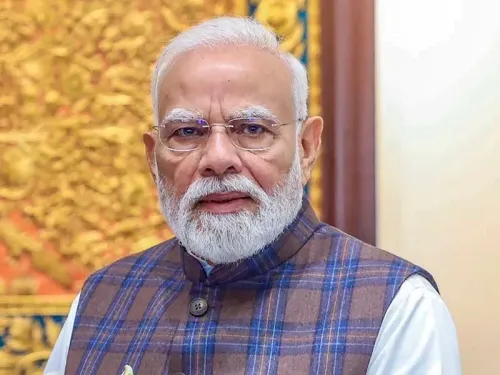
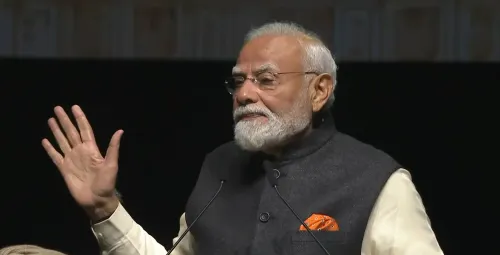
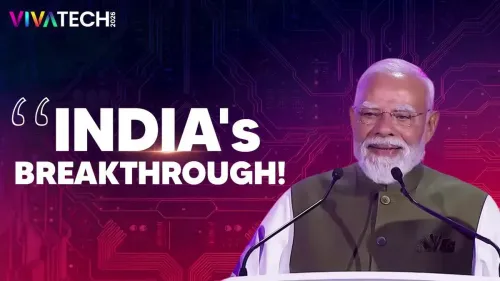
Prime Minister Narendra Modi on 23 August 2026 extended greetings to citizens and scientists on National Space Day, lauding India's expanding footprint in the global space sector and crediting Gen Z engineers, coders, and scientists for driving a new wave of technological innovation. Modi described India's space sector as a 'magnet for global investors', underscoring the country's rapid ascent in the commercial and scientific space arena.
What PM Modi Said
Sharing a video of his earlier speeches, Modi drew a direct line between India's space ambitions and its broader development goals. 'I said in Ayodhya that this is the beginning of a new cycle of change. In this new cycle, India is steadily expanding its space presence in the global order, and this is clearly reflected in our space program,' he said.
He also invoked the Viksit Bharat 2047 vision, stating, 'Together, we have resolved to make India a developed nation by 2047, and the space sector plays a vital role in achieving this goal.'
Gen Z and India's Private Space Sector
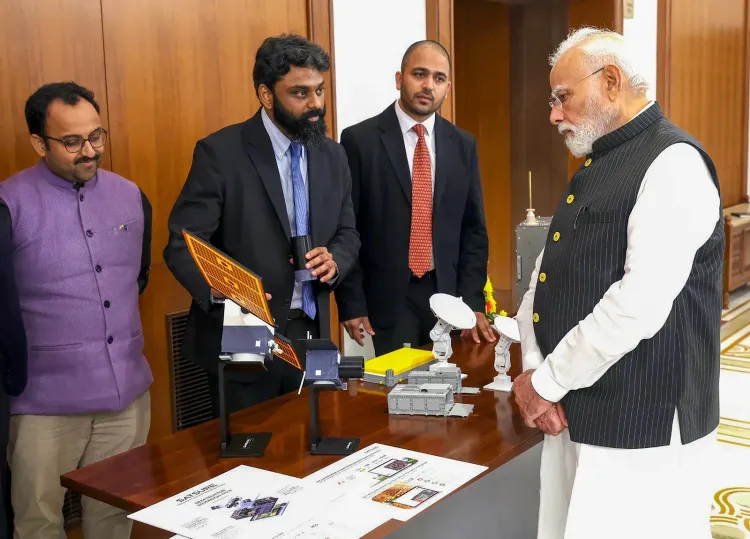
Modi singled out the country's young talent for special praise, noting that Gen Z professionals are now working on propulsion systems, composite materials, rocket stages, and satellite platforms — domains that were, in his words, 'not even imagined some time ago.' He also highlighted the growing global identity of India's private space industry, saying it is carving out its own place on the world stage and drawing international investment.
ISRO's Inspirational Role
The Prime Minister credited the Indian Space Research Organisation (ISRO) with inspiring the next generation of scientists. 'Seeing the success of ISRO, many children think that when they grow up, they too will become scientists,' he said — a reflection of the cultural impact that missions like Chandrayaan-3 have had on public imagination.
Why National Space Day Is Observed on 23 August
National Space Day is observed every year on 23 August to commemorate the historic soft landing of the Chandrayaan-3 Vikram lander near the Moon's south pole on 23 August 2023 — making India the first nation to reach that region of the Moon. The achievement is widely regarded as a defining milestone in India's space programme.
Theme and ISRO's 2026 Message
The 2026 National Space Day celebrations are being held under the theme 'Towards Viksit Bharat: Innovating, Collaborating and Aspiring to Global Space Leadership.' ISRO Chairman and Secretary of the Department of Space, Dr V Narayanan, used the occasion to call for greater innovation, collaboration, and ambition as India works towards cementing its position as a global space leader. He emphasised the importance of pushing scientific boundaries while building strategic partnerships that can strengthen India's space ecosystem.
As India's private space sector matures and ISRO's mission pipeline grows, the country's trajectory in space — from a late entrant to a first-mover at the lunar south pole — points to an increasingly central role in the global space economy in the years ahead.
Point of View
And the private sector, while growing, is yet to produce a breakout commercial launch provider. The 2047 framing gives political cover for a long runway, but near-term milestones and accountability markers are conspicuously absent from the messaging.
NationPress
23 Aug 2026
Frequently Asked Questions
Why is National Space Day celebrated on 23 August in India?
National Space Day is observed on 23 August to mark the successful soft landing of the Chandrayaan-3 Vikram lander near the Moon's south pole on 23 August 2023, making India the first nation to reach that region of the Moon. The day honours India's scientific and technological achievement in space exploration.
What did PM Modi say on National Space Day 2026?
PM Modi extended greetings to citizens and scientists, praised Gen Z engineers and coders for building new technologies in propulsion, composite materials, and satellite platforms, and called India's space sector a 'magnet for global investors.' He also reiterated the Viksit Bharat 2047 goal and ISRO's role in inspiring the next generation of scientists.
What is the theme of National Space Day 2026?
The theme for National Space Day 2026 is 'Towards Viksit Bharat: Innovating, Collaborating and Aspiring to Global Space Leadership.' It reflects India's ambition to strengthen scientific capabilities and deepen participation in the global space ecosystem.
What role does ISRO play in India's space ambitions?
ISRO serves as both the operational backbone and an inspirational symbol of India's space programme. ISRO Chairman Dr V Narayanan used National Space Day 2026 to call for greater innovation and collaboration, positioning the organisation as a catalyst for both public scientific achievement and private sector growth.
How is Gen Z contributing to India's space sector?
According to PM Modi, Gen Z engineers, designers, coders, and scientists are now working on advanced areas including propulsion systems, composite materials, rocket stages, and satellite platforms — fields that were not part of India's space landscape until recently. Their work is central to the growth of India's private space industry.