China joins Greece excavation in first dig at Western civilisation core
Synopsis
For the first time, Chinese archaeologists are excavating at the heart of an ancient Western civilisation — a joint dig in Greece that could reshape how China engages with, and ultimately challenges, Western-dominated narratives of ancient history.
Key Takeaways
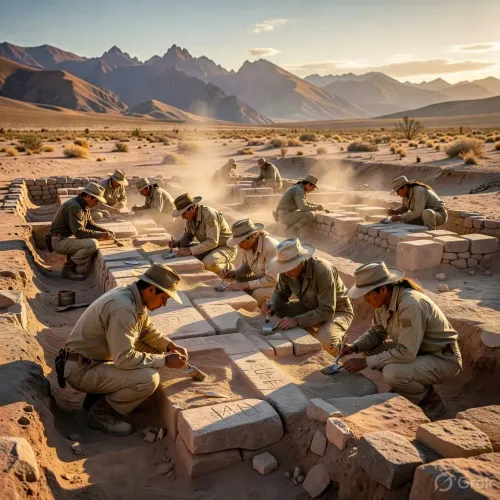
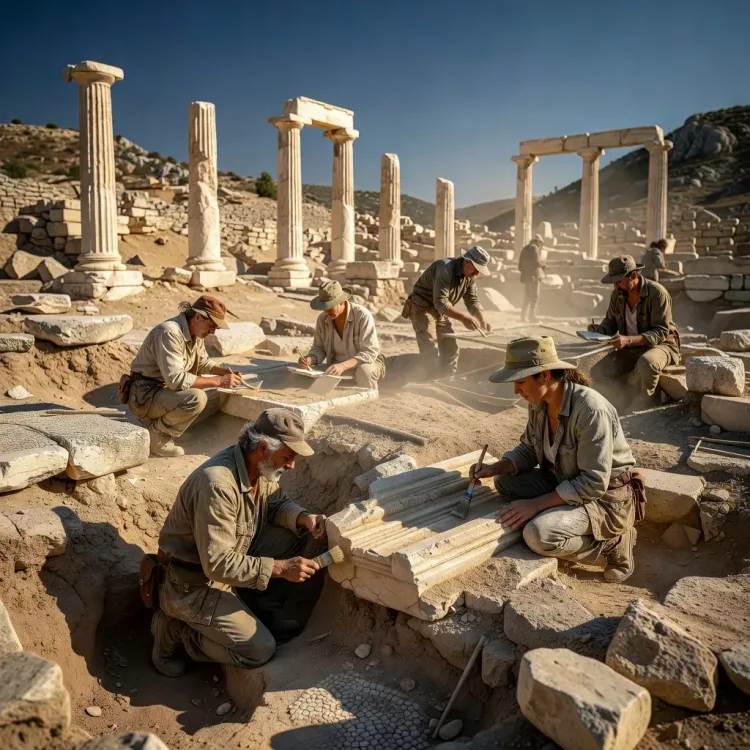
Chinese archaeologists have begun a joint excavation in Greece , the first such project at the core of an ancient Western civilisation .
The dig is linked to the Angelokastro site in the Aetolia-Acarnania region and focuses on the Hellenistic period .
According to Chinese Social Sciences Net , Chinese academic research on ancient Greece has historically depended on texts and materials compiled by Western scholars.
China has expanded overseas archaeological work in recent years, with prior projects in Central Asia , South America , and Egypt .
The project is backed by strong Chinese government support and is seen as a milestone for the Chinese Social Sciences Academy (CSCSA) .
Academics including Li Xinwei and public figures such as Jin Canrong are part of the broader domestic conversation the excavation seeks to inform with primary evidence.
Chinese archaeologists have launched a joint excavation project at an ancient site in Greece, marking the first time China has participated in on-site fieldwork at the heart of a Western civilisation. The collaboration, backed by strong government support, represents a significant milestone in China's expanding overseas archaeological programme and arrives amid growing domestic debate over who gets to write the history of the ancient world.
A historic first for Chinese field archaeology
For decades, Chinese scholars studying ancient Greek civilisation were limited to working with texts, museum collections, and archaeological materials compiled and published by Western researchers. According to an article posted on Chinese Social Sciences Net — a web portal of the Chinese Social Sciences Academy (CSCSA) — this reliance on secondary sources has long constrained the independence of Chinese academic inquiry into antiquity.
The new excavation, located in the Aetolia-Acarnania region of Greece and connected to the Angelokastro site, changes that equation by giving Chinese teams direct access to primary evidence from the Hellenistic period.
Why it matters
Most global historical narratives have been shaped by European and American scholars. As China's national influence has grown, scepticism within the country toward Western-centric historical frameworks has intensified — though much of that scepticism, analysts note, has until now rested on second-hand information rather than first-hand archaeological evidence.
The Greece project is part of a broader push by Beijing to send archaeologists abroad. Chinese teams have already conducted or joined excavations in Central Asia, South America, and Egypt, but the Greek dig is qualitatively different: it places Chinese researchers inside the geographical and cultural nucleus of the classical Western tradition.
The competitive backdrop
The project intersects with a long-running global conversation about the ownership of historical knowledge. Figures such as Jin Canrong, a prominent Chinese academic, have popularised revisionist questions about ancient history among domestic audiences. Meanwhile, mainstream Chinese archaeology — represented by institutions like the CSCSA and researchers including Li Xinwei — has sought to ground these conversations in rigorous fieldwork rather than speculation.
Aristotle's philosophical legacy and the broader Hellenistic period are among the scholarly touchstones that Chinese researchers hope to engage with more directly through primary excavation data from sites around Athens and the wider Greek mainland.
What's next
The excavation is still in its early stages, and findings are not expected to surface immediately. What the project signals, however, is a structural shift: China is no longer content to be a consumer of Western-produced ancient history and is investing institutional resources to become a producer of it. The results — and the international academic reception they receive — will be closely watched by historians, archaeologists, and policymakers on both sides of the debate.
Point of View
Space, and AI, it is now contesting the authorship of antiquity itself. What mainstream coverage often misses is that the real audience for these findings is domestic — Chinese citizens and institutions who have been told their scepticism of Western historical narratives lacks evidentiary grounding. A successful excavation season in Greece would hand that scepticism a scholarly credential, with consequences for how ancient history is taught and debated globally.
NationPress
7 Oct 2026
Frequently Asked Questions
What is China doing in Greece archaeologically?
Chinese archaeologists have launched a joint excavation at an ancient site in Greece , specifically linked to Angelokastro in the Aetolia-Acarnania region. It is the first time China has participated in on-site fieldwork at the core of an ancient Western civilisation .
Why is China expanding its overseas archaeology programme?
China has increased overseas excavations — in Central Asia , South America , Egypt , and now Greece — backed by strong government support. The goal is to move beyond reliance on Western -compiled texts and generate independent primary evidence about ancient world history.
What is the Angelokastro site and why does it matter?
Angelokastro is an ancient site in the Aetolia-Acarnania region of Greece associated with the Hellenistic period . Its significance in this context is that it places Chinese researchers directly inside the geographical heartland of classical Western civilisation for the first time.
Who is behind China's ancient Greece research push?
The project is institutionally anchored by the Chinese Social Sciences Academy (CSCSA) , whose web portal Chinese Social Sciences Net published details of the initiative. Researchers such as Li Xinwei represent the academic side, while public intellectuals like Jin Canrong have helped fuel popular domestic interest in revisiting ancient history.
What could China's Greece excavation reveal?
The excavation aims to provide primary archaeological data on ancient Greek civilisation — particularly the Hellenistic period — that is independent of Western -curated scholarship. Early-stage findings are not expected immediately, but the project could eventually reshape academic debate about the origins and character of ancient civilisations.