China's Shandong farms hit 3,000 jin/mu yields via dual-crop tech
Synopsis
Farms in Dezhou, Shandong have reproducibly hit 3,000 jin per mu annually via two-crop rotation — the same yield figure that, when fabricated during the 1958 Great Leap Forward, helped trigger one of history's deadliest famines. This time, the numbers appear real.
Key Takeaways
A farmland programme in Dezhou, Shandong province has achieved 3,000 jin per mu (approximately 22 tonnes per hectare ) through annual two-crop rotations.
The figure mirrors inflated harvest claims made during China's Great Leap Forward in June 1958 , which contributed to a catastrophic famine — but the current results are described as verified and repeatable.
In 1958 , Qian Xuesen , father of China's rocket programme , published photosynthesis-efficiency calculations that cadres used to justify yields that eventually reached a claimed 10,000 jin per mu .
Institutions including the Chinese Academy of Engineering and the Beijing Academy of Agriculture and Forestry Sciences are involved in China's high-yield agricultural research.
China feeds roughly 20% of the global population on about 9% of the world's arable land, making per-hectare yield gains a national food-security imperative.
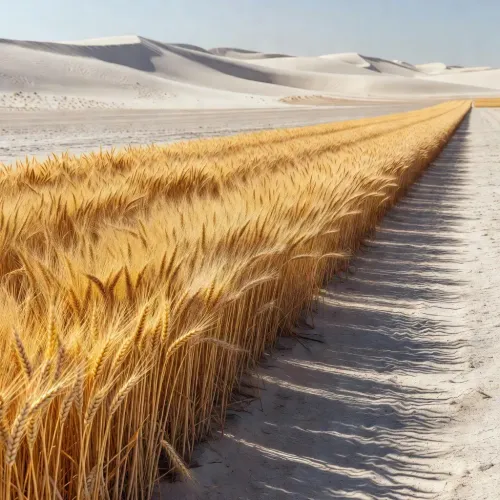
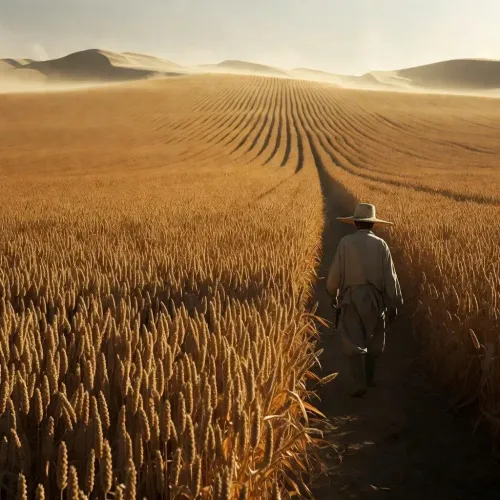
China has also pursued cultivation in extreme environments such as the Taklamakan Desert as part of its broader food-security strategy.
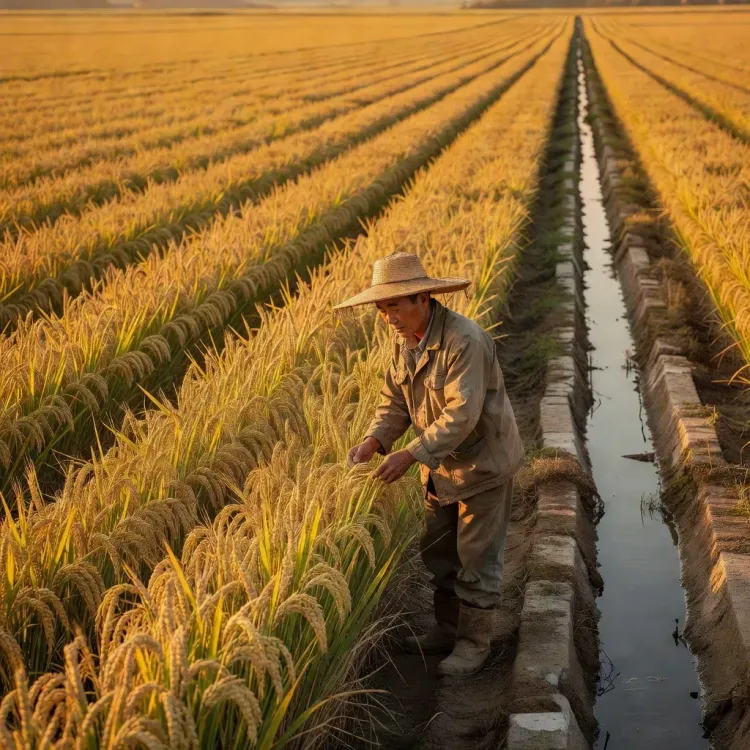
A farmland programme in Dezhou, Shandong province, eastern China, has achieved annual grain yields of 3,000 jin per mu — roughly 22 tonnes per hectare — through a two-crop rotation system, marking a verifiable agricultural milestone that echoes, yet sharply contrasts with, the fabricated harvest claims of China's Great Leap Forward era in the late 1950s.
A Number Haunted by History
In June 1958, state media reported astronomical yields from central Henan province exceeding 3,000 jin per mu during the Great Leap Forward campaign. Qian Xuesen, widely regarded as the father of China's rocket programme, published theoretical calculations on maximum solar energy conversion during crop photosynthesis that month — figures political cadres cited to legitimise the inflated claims.
Reported yields subsequently spiralled to 5,000, 7,000, and even 10,000 jin per mu. The fabricated statistics triggered nationwide agricultural chaos and contributed to one of the deadliest famines in recorded human history.
What the Dezhou Programme Has Achieved
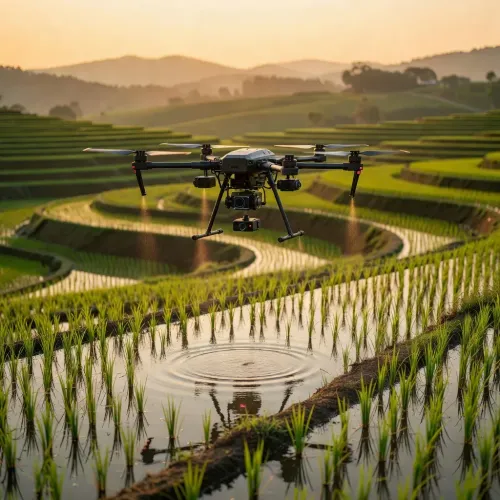
Unlike those unverified single-harvest claims, the Dezhou results are produced through annual two-crop rotations — a systematic, repeatable agronomic approach rather than a one-off anomaly. The programme represents a convergence of precision agronomy, improved seed varieties, and optimised field management, according to reports citing People's Daily and Science and Technology Daily.
Institutions including the Chinese Academy of Engineering and the Beijing Academy of Agriculture and Forestry Sciences have been involved in advancing high-yield cultivation research in China, lending scientific credibility to the latest results.
Why It Matters
China feeds roughly 20% of the world's population on approximately 9% of its arable land, making yield-per-unit-area gains a matter of national food security. Achieving 3,000 jin per mu annually — not as a propaganda figure but as a reproducible outcome — would meaningfully reduce import dependence and buffer against climate-driven supply shocks.
Comparable high-yield programmes have been pursued in South Korea and Japan, but the scale of China's farmland base means even marginal per-hectare gains translate into tens of millions of tonnes of additional output nationally.
The Competitive Backdrop
Agricultural productivity has become a strategic priority across major economies, intersecting with seed-technology competition, water-resource constraints, and geopolitical supply-chain concerns. China has been expanding cultivation into previously marginal environments — including research efforts in the Taklamakan Desert — as part of a broader push to maximise domestic food output. Researcher Yu Zhenwen is among the scientists associated with frontier cultivation work in challenging terrains.
What's Next
The immediate question is whether the Dezhou model can be replicated at provincial and national scale without the soil degradation, water overuse, or input-cost pressures that often accompany intensive farming. Observers will watch whether China's agricultural authorities move to standardise the two-crop rotation methodology across other high-potential regions, and how quickly independent verification follows official reporting.
Point of View
Particularly as food-import dependency becomes a leverage point in trade tensions with the United States. What mainstream coverage underplays is the verification gap: official Chinese media outlets including People's Daily and Science and Technology Daily are the primary sources, and independent agronomic audits at scale remain absent. The two-crop rotation method is agronomically plausible, but replicating it nationally risks accelerating groundwater depletion in the North China Plain — an existential constraint that yield headlines rarely address. Investors in global grain markets and agri-input companies should watch whether China's self-sufficiency push translates into sustained reductions in corn and wheat import volumes over the next two to three crop cycles.
NationPress
15 Sept 2026
Frequently Asked Questions
What has China achieved in agricultural yields in Shandong?
A farmland programme in Dezhou, Shandong province has achieved annual yields of 3,000 jin per mu — approximately 22 tonnes per hectare — through a two-crop rotation system. Unlike historical claims, these results are described as reproducible across full annual cycles rather than single unverified harvests.
How does this compare to China's Great Leap Forward yield claims?
During the Great Leap Forward beginning in June 1958 , state media reported yields from Henan province exceeding 3,000 jin per mu , with claims eventually reaching 10,000 jin per mu . Those figures were fabricated, led to agricultural chaos, and contributed to one of history's deadliest famines — making the current verified results a historically significant contrast.
Who was Qian Xuesen and what was his role in the Great Leap Forward?
Qian Xuesen was the father of China's rocket programme and a prominent scientist. In June 1958 he published theoretical calculations on maximum solar energy conversion during crop photosynthesis, which political cadres cited to validate the exaggerated harvest claims of the era.
Why does China's food production matter globally?
China supports roughly 20% of the world's population while farming approximately 9% of global arable land. Any sustained increase in per-hectare yields at scale could reduce China's reliance on grain imports, with ripple effects on global commodity markets and trade relationships.
What other extreme-environment farming is China pursuing?
China has been conducting agricultural research in challenging environments including the Taklamakan Desert as part of a broader national food-security strategy. Researcher Yu Zhenwen is among scientists associated with frontier cultivation work in such terrains.