China grows giant wheat-rye hybrids in Xinjiang desert to boost food security
Synopsis
China is growing human-height wheat-rye hybrids called triticale in Xinjiang's deserts, with yields of up to 4 tonnes of forage per mu — a striking bid to turn barren saline-alkali land into a national food and fodder resource.
Key Takeaways
Triticale , a synthetic wheat-rye hybrid first bred in Scotland and Germany in the late 19th century , is being cultivated in Xinjiang 's desert regions.
Kuang Feiting , executive director of Xinjiang Maishengdao Biotechnology , says triticale can yield up to 4 tonnes of forage per mu ( 667 sq m ) per year.
The crop tolerates poor soil, cold, drought, salinity, and sandstorms — conditions where ordinary wheat reportedly struggles to sprout.
Triticale serves a dual purpose: grain for human food and tall stalks for animal feed.
Institutions including the Chinese Academy of Agricultural Sciences Institute of Crop Science and Cuixi Academy of Biotechnology are reportedly involved in related research.
The project targets newly reclaimed desert saline-alkali land, central to China 's food self-sufficiency strategy.
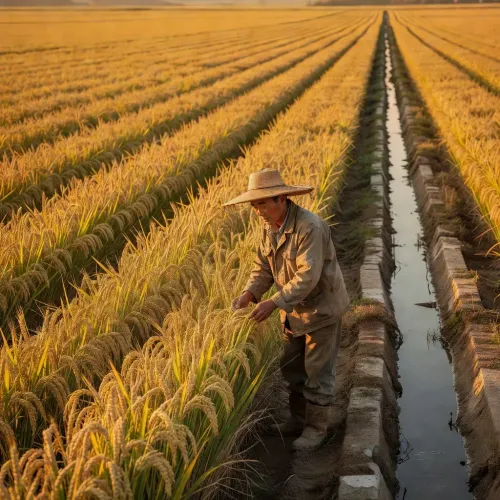
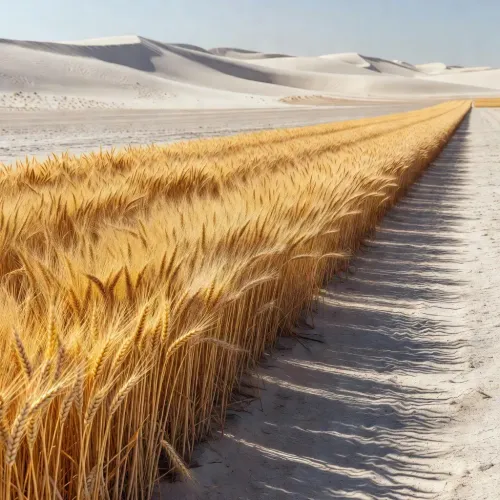
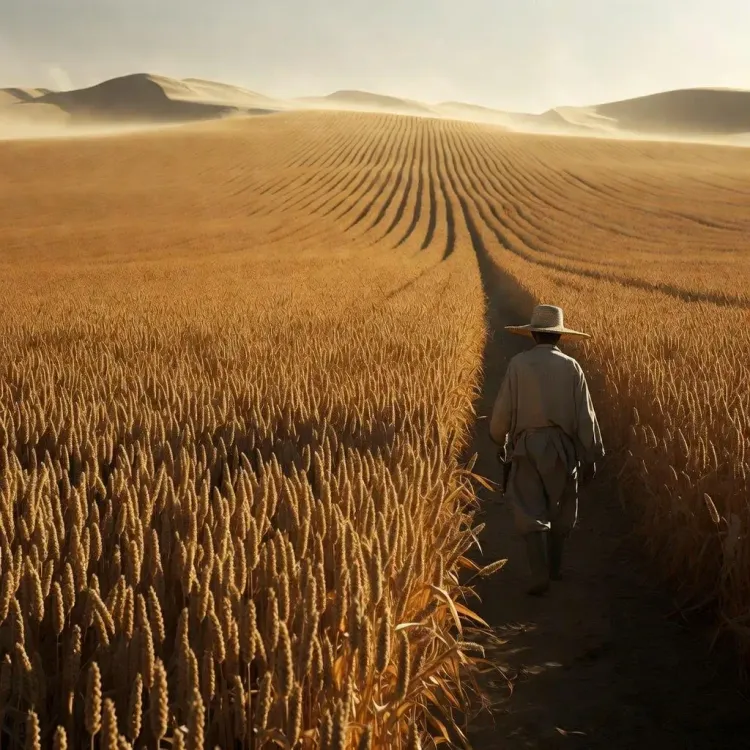
China is cultivating towering triticale — a synthetic wheat-rye hybrid — across the desert terrain of its western Xinjiang region, in a bid to convert barren, saline-alkali land into productive agricultural zones. The crop, which can grow taller than an average human, is being championed as a resilient alternative to conventional wheat in one of the country's harshest growing environments.
What is triticale and why does it matter?
Triticale is a laboratory-bred hybrid of wheat and rye, first developed in Scotland and Germany in the late 19th century. Unlike standard wheat, it is engineered to withstand poor soil quality, cold temperatures, drought, salinity, and sandstorms — conditions that define much of Xinjiang's newly reclaimed desert land.
The crop serves a dual purpose: its grain can be processed for human consumption, while its tall stalks and leaves are repurposed as high-yield animal feed, addressing both food and fodder demands in a single harvest cycle.
Key figures and yields
Kuang Feiting, executive director of Xinjiang Maishengdao Biotechnology — the firm playing a leading role in the project — said the hybrid 'is tolerant of poor soil, cold, drought, salinity, and wind and sand.' He added that in 'newly reclaimed desert saline-alkali land, it may be difficult for ordinary wheat to even sprout, and it may take two or three years to become profitable.'
According to Kuang, triticale can yield up to 4 tonnes of forage per mu — a Chinese land unit equivalent to 667 square metres (7,180 sq ft) — annually, making bumper harvests viable even on marginal land.
Why Xinjiang?
Xinjiang, located in China's far northwest, contains vast stretches of saline-alkali desert that have historically resisted conventional agriculture. Reclaiming this land is central to China's broader food self-sufficiency strategy, particularly as global supply chains for grain face mounting pressure. Institutions including the Chinese Academy of Agricultural Sciences Institute of Crop Science and the Cuixi Academy of Biotechnology are reportedly involved in related research efforts.
The project also carries echoes of the legacy of the late Yuan Longping, China's celebrated 'father of hybrid rice,' whose work on high-yield grain varieties transformed the country's agricultural output in the 20th century.
The competitive backdrop
China is not alone in exploring stress-tolerant crops — research into saline-resistant and drought-hardy grains is accelerating globally, driven by climate change and the expansion of arid growing zones. However, China's scale of desert reclamation, particularly around areas such as Kashgar in southern Xinjiang, gives these trials an outsized strategic dimension.
What's next
As triticale cultivation expands across Xinjiang's reclaimed desert plots, the focus will shift to whether commercial-scale yields can be sustained year-on-year and whether the model can be replicated in other arid provinces. The viability of saline-alkali land conversion at national scale could redefine China's agricultural frontier.
Point of View
Converting saline-alkali wasteland into productive farmland is a long-term food-sovereignty play. What mainstream coverage often misses is the dual-use logic — triticale's forage yield directly supports livestock production, tying crop innovation to protein supply chains in a single intervention. The involvement of state-linked research academies alongside a private biotech firm signals that this is not a fringe experiment but a coordinated, policy-backed programme. Internationally, as climate change expands arid zones across South Asia and Africa, China's desert-farming methodology could become a quietly influential export.
NationPress
13 Oct 2026
Frequently Asked Questions
What is triticale and why is China growing it in Xinjiang?
Triticale is a synthetic hybrid grain produced by crossbreeding wheat and rye, first developed in Scotland and Germany in the late 19th century. China is cultivating it in Xinjiang's deserts because it tolerates poor soil, drought, salinity, and cold — conditions where conventional wheat struggles to grow.
How much can triticale yield per mu in Xinjiang?
According to Kuang Feiting of Xinjiang Maishengdao Biotechnology, triticale can produce up to 4 tonnes of forage per mu — a Chinese land unit equivalent to 667 square metres — each year.
Who is leading the triticale project in Xinjiang?
Xinjiang Maishengdao Biotechnology is playing a leading role, with Kuang Feiting serving as executive director. The Chinese Academy of Agricultural Sciences Institute of Crop Science and the Cuixi Academy of Biotechnology are also reportedly involved in related research.
Why is saline-alkali land reclamation important for China's food security?
Saline-alkali land makes up a significant portion of China's uncultivated terrain, particularly in Xinjiang. Converting it to productive farmland is central to China's goal of food self-sufficiency, reducing dependence on grain imports amid global supply chain pressures.
Can triticale be used for both human food and animal feed?
Yes. Triticale grain can be processed for human consumption, while its tall stalks and leaves serve as high-yield animal fodder, making it a dual-purpose crop well suited to regions that need to support both food and livestock production.