Desert moss gene boosts Xinjiang cotton yield 23.8% against fungal wilt
Synopsis
Scientists at China's Xinjiang Institute of Ecology and Geography have spliced a gene from desert-surviving moss into cotton plants, delivering a 23.8% yield boost against 'cotton cancer' — Verticillium wilt — in a peer-reviewed breakthrough that could reshape disease-resistant crop engineering globally.
Key Takeaways
Researchers from the Chinese Academy of Sciences' Xinjiang Institute of Ecology and Geography (XIEG) inserted a stress-resistance gene from desert moss Syntrichia caninervis into cotton plants.
The transgenic cotton showed a 23.8 per cent yield increase compared to non-transgenic plants under Verticillium dahliae (Verticillium wilt) infection conditions.
The findings were published in the peer-reviewed Plant Biotechnology Journal in April 2026 .
Verticillium wilt , known as 'cotton cancer', also threatens fruits and vegetables, giving this gene-transfer approach potential beyond cotton alone.
Xinjiang is China's largest cotton-producing region, and the research aligns with the country's broader food-security and desert-reclamation strategy.
The team described the approach as a 'promising strategy' for leveraging extremophile-organism genes to improve crop resilience.
Chinese scientists have engineered a transgenic cotton plant by inserting a stress-resistance gene from Syntrichia caninervis, a steppe moss native to the deserts of Xinjiang Uygur autonomous region, achieving a 23.8 per cent yield increase under infection by Verticillium wilt — a fungal disease commonly called 'cotton cancer' that devastates crops globally. The research, led by a team from the Chinese Academy of Sciences' Xinjiang Institute of Ecology and Geography (XIEG), was published in the peer-reviewed Plant Biotechnology Journal in April 2026.
The breakthrough and how it works
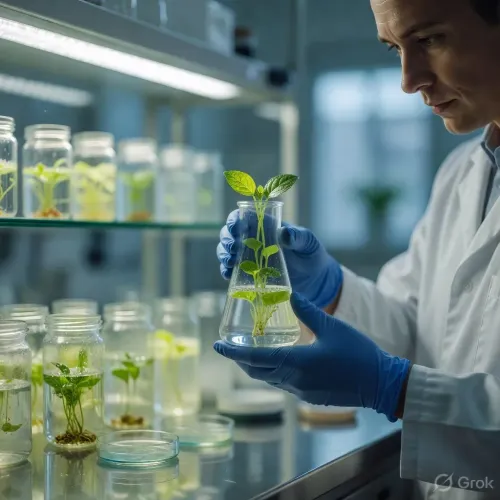
The XIEG-led team extracted a stress-resistance gene from Syntrichia caninervis, a desert moss that thrives in the extreme arid conditions of Xinjiang, and inserted it into cotton plants. The resulting transgenic variety demonstrated measurably stronger resistance to Verticillium dahliae, the pathogen responsible for Verticillium wilt. According to the team's paper, the modified plants recorded 'an approximate 23.8 per cent yield increase relative to non-transgenic counterparts under pathogen infection conditions.'
Verticillium wilt is not limited to cotton — it can also devastate fruits and vegetables, making this gene-transfer approach potentially applicable across a broader range of crops. The team described the method as a 'promising strategy' for improving agricultural output by harnessing genes from organisms adapted to extreme environments.
Why it matters for global agriculture
Transgenic crops are not new — golden rice, engineered to produce beta-carotene as a precursor to vitamin A, is among the most cited examples — but sourcing resistance genes from extremophile organisms such as desert mosses represents a less explored frontier. The ability to transfer survival traits from plants that endure severe drought and heat stress into commercial crops could offer a scalable toolkit for climate-adaptive agriculture.
Xinjiang is China's largest cotton-producing region, and the stakes are high: Verticillium wilt has long been one of the most persistent threats to cotton harvests there and worldwide. A near-quarter yield improvement under disease conditions, if validated at scale, would represent a significant commercial and food-security gain.
China's broader agricultural push
This research sits within China's wider drive to fortify its agricultural sector. In recent years, the country has undertaken large-scale desert reclamation projects in Xinjiang to cultivate rice, wheat, and fruit alongside cotton. The government has also been integrating technologies including artificial intelligence and smart farming systems into its agricultural strategy to ensure long-term food security.
The use of genomic tools from extreme-environment species adds a biotechnology dimension to what has previously been a land-use and infrastructure-led effort in the region.
What's next
The publication in Plant Biotechnology Journal marks the peer-reviewed validation of the lab-scale results, but field trials at commercial scale and regulatory approval pathways will determine how quickly — and where — this transgenic cotton can be deployed. Researchers and industry observers will be watching whether the same gene-transfer methodology can be extended to other crops vulnerable to Verticillium dahliae, including tomatoes, strawberries, and potatoes, potentially broadening the technology's global agricultural impact.
Point of View
China is effectively building a domestic biotech toolkit that sidesteps dependence on foreign seed-technology IP. Mainstream coverage tends to frame Xinjiang agriculture through a geopolitical lens, overlooking the region's role as a living laboratory for stress-biology research in some of the planet's harshest conditions. If the 23.8% yield figure holds at commercial scale, this could accelerate a broader shift toward sourcing crop-improvement genes from non-model organisms — a trend that challenges the dominance of established agrochemical and seed conglomerates.
NationPress
24 Oct 2026
Frequently Asked Questions
What did Chinese scientists discover about desert moss and cotton?
Scientists from the Chinese Academy of Sciences' Xinjiang Institute of Ecology and Geography inserted a stress-resistance gene from the desert moss Syntrichia caninervis into cotton plants, producing a transgenic variety that resisted Verticillium wilt and yielded 23.8 per cent more than non-transgenic cotton under disease conditions. The results were published in the Plant Biotechnology Journal in April 2026 .
What is Verticillium wilt and why is it called cotton cancer?
Verticillium wilt , caused by the pathogen Verticillium dahliae , is a soil-borne fungal disease that blocks water and nutrient transport in plants, often killing them. It is nicknamed 'cotton cancer' because of its destructive and difficult-to-control impact on cotton crops, though it also affects fruits, vegetables, and other plants worldwide.
How does this transgenic cotton compare to other genetically modified crops?
Like well-known transgenic crops such as golden rice — which was engineered to produce beta-carotene — this cotton has had a gene from another species introduced into it. What distinguishes this approach is sourcing the gene from an extremophile organism, Syntrichia caninervis , which survives in the harsh deserts of Xinjiang , rather than from a closely related crop species.
Why is Xinjiang significant for China's cotton and agriculture strategy?
Xinjiang is China's largest cotton-producing region and a focal point of the country's desert-reclamation and food-security programmes. The government has been converting desert land in the region to grow rice, wheat, fruit, and cotton, while also deploying artificial intelligence and smart farming technologies to boost agricultural productivity.
What are the next steps for this transgenic cotton technology?
The Plant Biotechnology Journal publication validates the lab-scale findings, but commercial deployment will require large-scale field trials and regulatory approval. Researchers are also exploring whether the same gene-transfer strategy can be applied to other crops susceptible to Verticillium dahliae , including tomatoes, strawberries, and potatoes.