China's lychee-longan hybrid 'Cuimi' heads to market after bumper harvest
Synopsis
Chinese scientists at South China Agricultural University have created 'Cuimi', a lychee-longan hybrid that yields double the output of standard longan, resists cold better, and ripens later — extending the commercial selling season. Trial sales launch mid-September 2026, marking the first market test of an intergeneric fruit cross long deemed scientifically impossible.
Key Takeaways
Cuimi is the world's first commercially cultivated hybrid of a lychee and a longan , bred at South China Agricultural University (SCAU) in Guangzhou .
The variety uses the Shixia longan as its maternal parent; approximately 90% of its genetic material comes from the longan, giving it a longan-leaning taste and appearance.
Cuimi delivers roughly double the yield of the Shixia longan and ripens 15 to 20 days later , extending the commercial selling season.
The fruit has been planted in Guangdong , Sichuan , and Yunnan provinces, with several thousand jin expected from this year's harvest.
Trial sales are scheduled for mid-September 2026 , the first commercial market test of the hybrid.
State-run Science and Technology Daily called the creation a breakthrough in intergeneric hybridisation , long considered a major technical obstacle in plant science.
Chinese agricultural scientists are preparing to commercially launch Cuimi, a first-of-its-kind hybrid fruit created by crossing a lychee with a longan, after the variety's first substantial harvest is expected to ripen in September 2026. Developed at South China Agricultural University (SCAU) in Guangzhou, the fruit represents a rare breakthrough in intergeneric hybridisation — crossing plants from different genera — long considered a near-impossible technical barrier in botany.
What is Cuimi and how was it created?
The hybrid was bred using the Shixia longan — a widely cultivated variety in Guangdong province — as its maternal parent and a lychee as its paternal parent, according to the research team. Professor Liu Chengming, lead developer and faculty member at SCAU's College of Horticulture, said at an on-site demonstration on August 9 that roughly 90 per cent of Cuimi's genetic material derives from the longan mother, giving the fruit an appearance and flavour profile closer to longan.
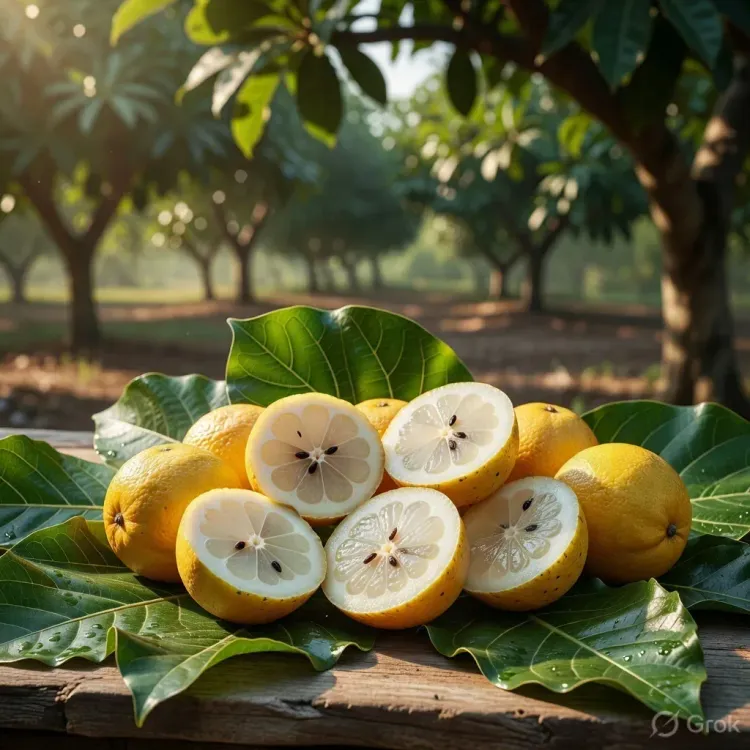
Despite this, Cuimi has inherited several distinctive lychee traits, most notably the cracked, textured outer skin typical of lychees. The research team described its flesh as tender, crisp, and free of fibrous strands.
Why it matters: yield, cold resistance, and season extension
Compared with the Shixia longan, Cuimi delivers approximately double the yield and demonstrates stronger cold resistance, while ripening 15 to 20 days later than its maternal parent. These attributes are commercially significant: a later ripening window extends the fresh-fruit selling season, and improved cold tolerance opens cultivation to regions currently unsuitable for longan farming.
The variety has already been planted across Guangdong, Sichuan, and Yunnan provinces, with this year's output reaching several thousand jin — a Chinese unit equivalent to 500 grams or 17.6 ounces per jin. Trial sales are scheduled for mid-September 2026.
Scientific significance: breaking intergeneric barriers
State-run outlet Science and Technology Daily described Cuimi's creation on Monday as 'significant for its breakthrough in intergeneric hybridisation, long regarded as a major technical obstacle.' Intergeneric crosses — hybrids between plants of different genera rather than just different species — are exceptionally rare in agriculture and have historically faced near-insurmountable reproductive incompatibility.
According to Professor Liu, the successful cross could serve as a scientific template for future hybridisation efforts across other fruit genera.
Market reaction and commercial outlook
The upcoming mid-September trial sales will be the first real test of consumer acceptance for a fruit that looks like a lychee but tastes closer to a longan. Pricing, retail channels, and volume targets for the commercial rollout have not yet been disclosed by the research team.
If Cuimi gains traction with consumers, it could reshape premium fresh-fruit supply chains in southern China and potentially attract export interest, given growing global appetite for tropical Asian fruits. Observers will be watching whether the variety can scale beyond trial plantings and whether intellectual property protections will be sought for the cultivar.
What's next
With the first significant harvest weeks away, the focus now shifts from laboratory achievement to commercial viability. The reception of Cuimi in trial markets this September will determine whether SCAU and affiliated growers across Guangdong, Sichuan, and Yunnan pursue large-scale expansion — and whether China's agricultural biotech pipeline can convert scientific firsts into durable agri-business wins.
Point of View
It could control licensing for similar crosses globally, mirroring the playbook seen in high-yield rice and CRISPR-edited crops. The mid-September trial sale is not just a market test — it is the opening move in a longer competition over who controls the genetics of Asia's most prized tropical fruits.
NationPress
26 Sept 2026
Frequently Asked Questions
What is Cuimi fruit?
Cuimi is a hybrid fruit created by crossing a lychee with a longan, developed by researchers at South China Agricultural University in Guangzhou, China. About 90% of its genetic material comes from the longan mother, giving it a longan-like taste and appearance, while its cracked, textured skin is inherited from the lychee father.
When will Cuimi fruit be available to buy?
Trial sales of Cuimi are scheduled for mid-September 2026. The first substantial harvest is expected to ripen in September 2026, with the fruit currently planted across Guangdong, Sichuan, and Yunnan provinces in China.
Why is the lychee-longan hybrid scientifically significant?
Cuimi represents a breakthrough in intergeneric hybridisation — crossing plants from entirely different genera rather than just different species — which has long been considered a major technical obstacle in plant science. State-run Science and Technology Daily described it as a landmark achievement in agricultural biology.
How does Cuimi compare to regular longan?
Compared with the Shixia longan, Cuimi yields approximately double the output, is more cold-resistant, and ripens 15 to 20 days later. The later ripening window is commercially valuable as it extends the fresh-fruit selling season beyond the standard longan harvest period.
Who developed the Cuimi hybrid fruit?
Professor Liu Chengming, a researcher at the College of Horticulture at South China Agricultural University (SCAU) in Guangzhou, led the development of Cuimi. He presented details of the variety at an on-site demonstration hosted by SCAU on August 9, 2026.