GalaxySpace launches China's first turnkey satellite export to Southeast Asia
Synopsis
GalaxySpace has delivered China's first complete turnkey satellite to a Southeast Asian customer, bundling spacecraft, ground systems, and training for Thailand's GISTDA — a model that could be replicated across emerging markets and directly challenges SpaceX's Starlink ecosystem strategy.
Key Takeaways
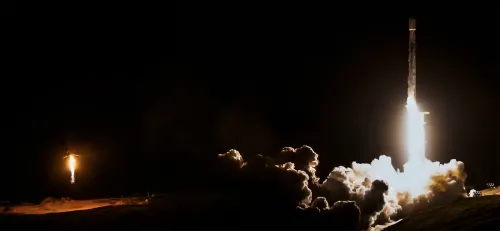
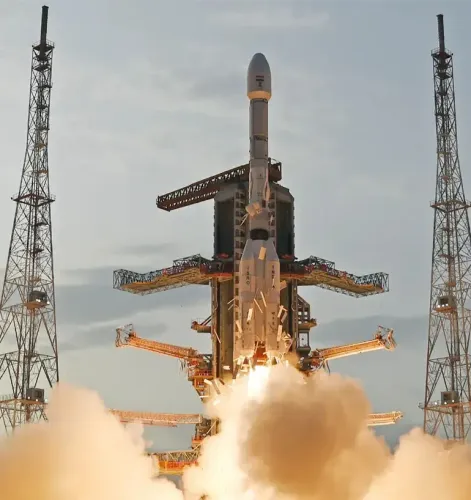
GalaxySpace launched the Lingzhi-09 Thailand CubeSat on a Long March-6C rocket from Taiyuan Satellite Launch Centre on Tuesday, 26 August 2026 .
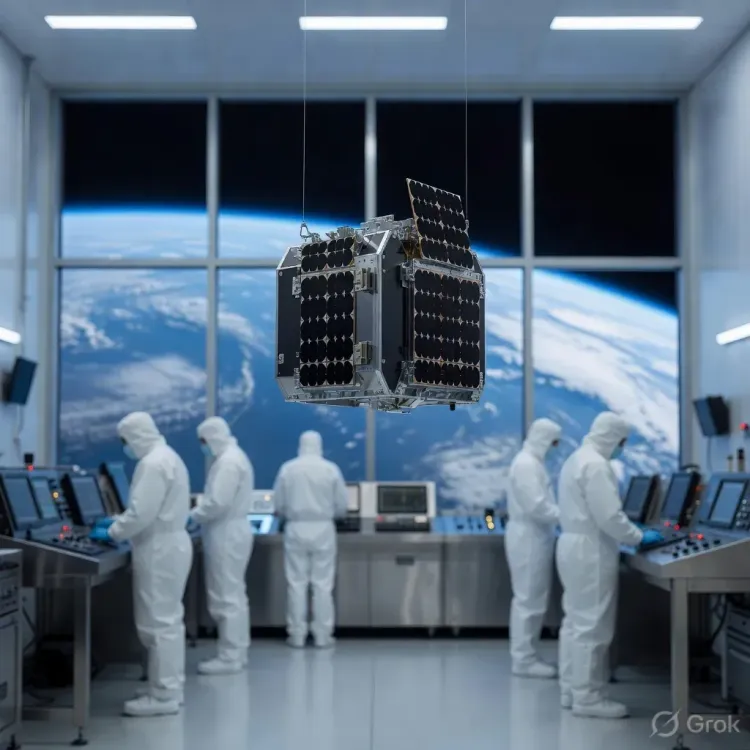
The mission is China 's first end-to-end commercial satellite deployment for a Southeast Asian customer, covering spacecraft, ground systems, and personnel training.
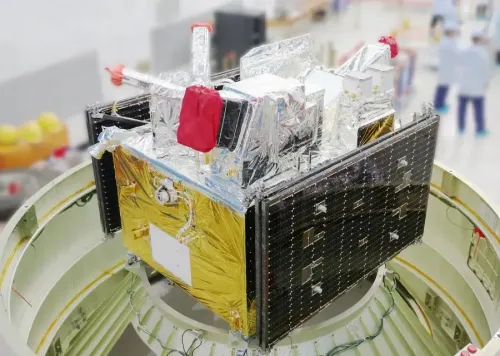
The satellite was developed for Thailand 's GISTDA and will support land, agriculture, and ecological remote-sensing, as well as training for Thai university students.
GalaxySpace is China 's first commercial space unicorn, valued at US$1 billion or more.
Yang Kuan of Beijing Institute of Technology described the shift as moving from 'exporting products' to 'exporting services and ecosystems.' The push directly challenges SpaceX 's Starlink project as Chinese firms accelerate overseas constellation and services expansion.
GalaxySpace, Beijing's commercial space unicorn, deployed China's first end-to-end satellite export to Southeast Asia on Tuesday, 26 August 2026, marking a strategic leap in the country's push to challenge SpaceX's global space dominance. The mission signals a shift in Chinese commercial space strategy — from selling hardware to delivering complete orbital ecosystems.
The Mission: Lingzhi-09 Thailand CubeSat
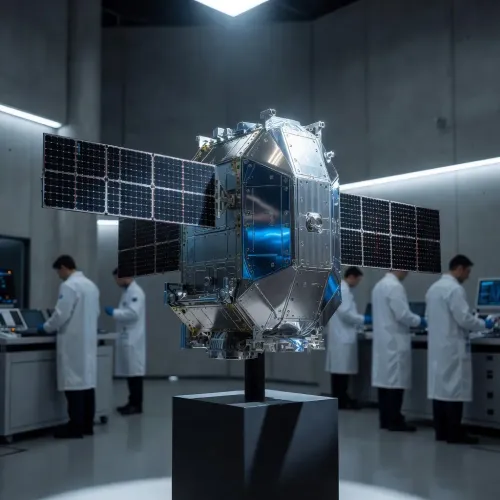
GalaxySpace launched the Lingzhi-09 Thailand CubeSat aboard a Long March-6C rocket — alongside six other satellites — from the Taiyuan Satellite Launch Centre in Shanxi province. The satellite was developed for Thailand's Geo-Informatics and Space Technology Development Agency (GISTDA) and will collect remote-sensing data for land, agriculture, and ecological monitoring, while also supporting practical training for Thai university students.Why It Matters: A Packaged Space Solution
The mission is the first instance of a Chinese commercial space company developing, launching, and deploying a complete satellite in orbit for a Southeast Asian customer as a packaged solution, according to the company. GalaxySpace provided GISTDA with an integrated package covering the spacecraft, ground system, and personnel training. Thai personnel were trained in China, while GalaxySpace teams were subsequently dispatched to Thailand to assist in building and testing the ground infrastructure.The Competitive Backdrop: Taking on Starlink
China's commercial space sector is accelerating satellite constellation deployment and overseas expansion in a direct challenge to Elon Musk's SpaceX Starlink project. Chinese firms are moving beyond component exports toward full-service orbital solutions — a model that bundles satellite delivery, ground operations, and human capital development into a single contract. Yang Kuan, associate professor at Beijing Institute of Technology and deputy director of its Institute of Aerospace Policy and Law, described the trend as a pivot from 'exporting products' to 'exporting services and ecosystems,' turning satellite technology into an end-to-end service offering for overseas markets.What's Next: Ecosystem Exports on the Rise
With GalaxySpace — China's first commercial space unicorn, valued at US$1 billion or more — now having demonstrated a replicable turnkey model in Southeast Asia, other emerging markets across the Middle East, Central Asia, and Latin America are potential targets for similar deals. The pace at which Chinese commercial space firms can replicate this model across multiple geographies will determine how effectively they can erode SpaceX's first-mover advantage in the global commercial satellite services market.Point of View
Lock in sovereign customers early, and build switching-cost moats before SpaceX or European rivals can consolidate emerging-market relationships. What mainstream coverage underplays is the human-capital dimension — training Thai engineers in China creates long-term institutional alignment that hardware exports alone cannot achieve. This mirrors the Belt and Road infrastructure model, now extended into low-Earth orbit. Markets in the Middle East, Central Asia, and sub-Saharan Africa, where regulatory friction with US-origin technology is high, are the most exposed to this strategy in the near term.
NationPress
28 Aug 2026
Frequently Asked Questions
What is the Lingzhi-09 Thailand CubeSat and who launched it?
The Lingzhi-09 Thailand CubeSat is a remote-sensing satellite developed by Beijing-based GalaxySpace for Thailand's Geo-Informatics and Space Technology Development Agency (GISTDA). It was launched on a Long March-6C rocket from the Taiyuan Satellite Launch Centre in Shanxi province on Tuesday, 26 August 2026, alongside six other satellites.
Why is this satellite launch significant for China's space ambitions?
It marks the first time a Chinese commercial space company has developed, launched, and deployed a complete satellite in orbit for a Southeast Asian customer as a packaged solution. The deal bundles spacecraft delivery, ground system construction, and personnel training — signalling a shift from product exports to full-service ecosystem exports.
How does GalaxySpace's deal challenge SpaceX?
GalaxySpace's turnkey model directly competes with SpaceX's Starlink by offering sovereign governments an integrated alternative that includes on-the-ground support and local capacity building. China's commercial space sector is accelerating satellite constellation deployment and overseas expansion specifically to challenge Starlink's global reach.
What did GalaxySpace provide to Thailand beyond the satellite itself?
GalaxySpace provided GISTDA with an integrated package covering the spacecraft, a ground system, and personnel training. Thai personnel were trained in China, and GalaxySpace subsequently sent teams to Thailand to help build and test the ground infrastructure.
Which other markets could benefit from China's satellite ecosystem export model?
Industry analysts have noted that Chinese commercial space firms are targeting overseas markets across the Middle East, Central Asia, and Latin America with similar end-to-end service models. Countries with regulatory friction around US-origin space technology are considered the most likely candidates for future deals modelled on the Thailand transaction.