China sends archaeologists to Peru to probe ancient civilisation links
Synopsis
For the first time, Chinese archaeologists will excavate in South America, partnering with Peru at the 5,000-year-old Caral site to test the theory that ancient Chinese and American civilisations share a common ancestor — a project that could redraw the map of early human cultural diffusion.
Key Takeaways
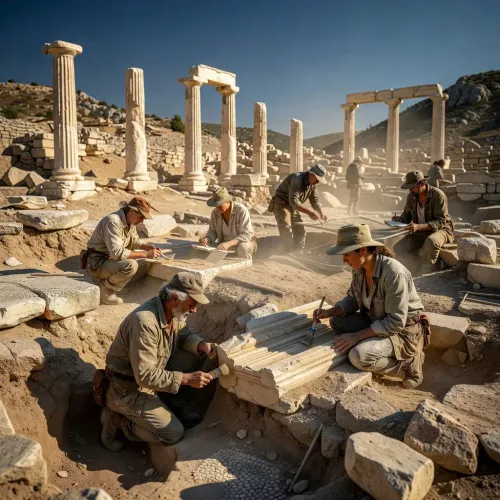
Chinese archaeologists are launching their first-ever field project in South America , following an agreement signed in Supe, Peru on Friday, 22 August 2026 .
The joint China-Peru team will work within the Caral archaeological zone , home to the oldest known urban centre in the Americas , which emerged approximately 5,000 years ago .
Initial surveys will cover the Chancay-Huaral and Supe river basins and key sites including the Sacred City of Caral and the coastal settlement of Aspero .
Jia Xiaobing of the Chinese Academy of Social Sciences' Institute of Archaeology led the Chinese delegation and outlined a programme covering excavations, advanced technologies, heritage conservation, and researcher training.
The project is grounded in the hypothesis that Chinese and American civilisations share a common ancestor, supported by reported similarities in astronomical observation and spiritual beliefs.
The initiative extends China's existing international archaeology programme, which has previously operated in Egypt , Honduras , Greece , and the Andean highlands .
Chinese archaeologists are embarking on their first-ever field project in South America, launching a joint excavation with Peruvian counterparts to investigate potential ancestral connections between ancient Chinese and native American civilisations. An agreement formalising the collaboration was signed by national research institutions from both countries in Supe, Peru on Friday, 22 August 2026, marking a historic milestone in cross-Pacific archaeological cooperation.
The Caral Connection
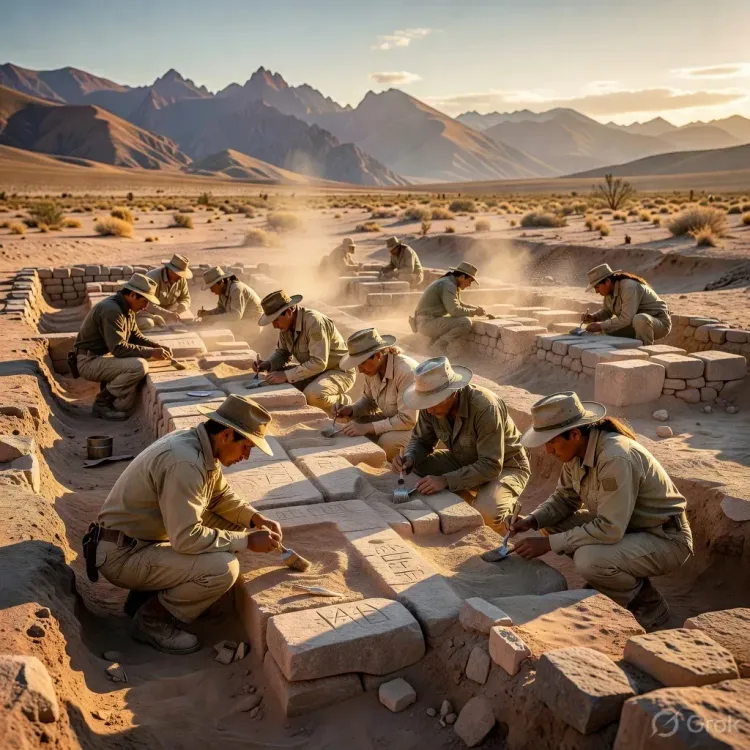
The joint team will operate within the Caral archaeological zone, home to what is widely regarded as the oldest known urban centre in the Americas. Caral emerged approximately 5,000 years ago in present-day Peru, with its people constructing large settlements and monumental architecture centuries before pottery became common in the region. The civilisation flourished for more than a thousand years.
Initial fieldwork will focus on surveys across the basins of the Chancay-Huaral and Supe rivers, as well as key sites including the Sacred City of Caral and the coastal settlement of Aspero.
Scope of the Research Programme
Jia Xiaobing, a researcher from the Chinese Academy of Social Sciences' Institute of Archaeology who led the Chinese delegation in Supe, said the collaboration would encompass field surveys and excavations, the application of advanced archaeological technologies, heritage conservation, and researcher training. The breadth of the programme signals a long-term institutional commitment rather than a one-off expedition.
Why It Matters
According to a statement from Jia's institute, the archaeological community holds that Chinese and American civilisations may have descended from a common ancestor. Despite being separated by vast ocean distances, Chinese and Peruvian civilisations reportedly share notable similarities in areas such as astronomical observation and spiritual beliefs.
The institute said the Chinese team would seek first-hand archaeological data on early American civilisations, which could inform comparative studies of ancient societies across the Pacific Rim and contribute a Chinese academic perspective to global research on the origins of early complex societies.
The Competitive Backdrop
China has been steadily expanding its archaeological footprint internationally in recent years, with past projects spanning Egypt, Honduras, Greece, and the Andean highlands. The South America venture represents a strategic extension of that effort into a region of growing geopolitical and cultural significance for Beijing.
What's Next
Field surveys are expected to begin in the near term following the signing of the agreement, with excavations and technology-driven analysis to follow in subsequent phases. The findings could reshape academic understanding of trans-Pacific cultural diffusion and the independent emergence of complex societies on opposite sides of the world's largest ocean.
Point of View
From the Nile to the Andes. The choice of Caral — the oldest urban centre in the Americas — is deliberate; a discovery linking it to ancient Chinese civilisation would carry enormous narrative weight globally. Mainstream coverage frames this as scholarly curiosity, but the pattern of China's international archaeology programme tracks closely with its broader Global South engagement strategy. Whether the science ultimately supports the ancestral-link hypothesis or not, Beijing gains academic presence, bilateral goodwill, and a platform to shape how the origins of complex societies are narrated.
NationPress
10 Oct 2026
Frequently Asked Questions
Why are Chinese archaeologists going to South America?
Chinese archaeologists are travelling to South America for the first time to conduct joint field surveys and excavations with Peruvian counterparts at the Caral archaeological zone. The project aims to find first-hand evidence that could support the theory that ancient Chinese and American civilisations share a common ancestor, based on reported similarities in astronomical observation and spiritual beliefs.
What is the Caral archaeological zone?
The Caral archaeological zone in Peru is home to what is considered the oldest known urban centre in the Americas, dating back approximately 5,000 years. Its people built monumental architecture centuries before pottery became widespread in the region, and the civilisation thrived for over a thousand years.
Who is leading the Chinese archaeological team in Peru?
Jia Xiaobing, a researcher from the Chinese Academy of Social Sciences' Institute of Archaeology, led the Chinese delegation that signed the cooperation agreement in Supe, Peru. He stated the collaboration would cover field surveys, excavations, advanced archaeological technologies, heritage conservation, and researcher training.
What sites will the joint China-Peru team investigate?
The joint team will initially survey the basins of the Chancay-Huaral and Supe rivers, along with key sites including the Sacred City of Caral and the coastal settlement of Aspero. These locations are central to understanding the Caral civilisation's development and its broader regional connections.
How does this fit into China's broader international archaeology programme?
China has been expanding its international archaeological presence for years, with past projects in Egypt, Honduras, Greece, and the Andean highlands. The South America venture marks the first such field project on that continent, extending Beijing's academic and cultural footprint into a region of growing strategic importance.