Earth Sciences Secretary: Climate science must reach coastal communities
Synopsis
India's Earth Sciences Secretary used a 300-delegate international symposium in Kochi to push a pointed message: cutting-edge ocean science must translate into real protection for coastal and fishing communities on the front lines of climate change. The Kochi Declaration — now in government hands — adds an international dimension by calling for a unified global ocean monitoring system and open marine data access.
Key Takeaways
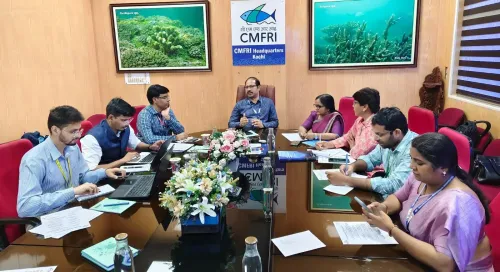
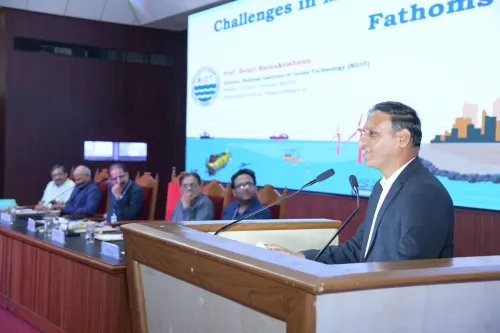
Srinivasa Kumar , Union Secretary, Ministry of Earth Sciences, addressed the valedictory session of a three-day international symposium at CMFRI, Kochi on 6 November .
He highlighted the Deep Ocean Mission , Prithvi Vigyan programme, Mission Mausam , and the Blue Economy framework as key government initiatives for coastal and climate resilience.
The symposium adopted the Kochi Declaration , calling for a multinational ocean observation system and free, open access to marine data.
The declaration was handed over to Kumar for policy-level action .
The event featured 250 scientific presentations and drew more than 300 delegates from 30 countries .
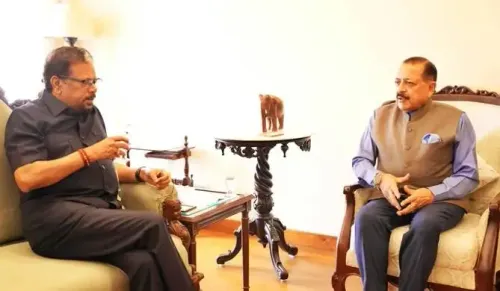
Dr T. Srinivasa Kumar, Union Secretary of the Ministry of Earth Sciences, on Friday, 6 November called for scientific research and technological advances to directly benefit coastal and marginalised communities hit hardest by climate change. He was speaking at the valedictory session of a three-day international symposium on fisheries and remote sensing held at the ICAR-Central Marine Fisheries Research Institute (CMFRI) in Kochi.
Key Government Initiatives Highlighted
Addressing delegates from across the world, Kumar outlined several flagship programmes the Centre has launched to translate research into on-ground solutions. The Deep Ocean Mission, he said, focuses on exploring the deep sea, developing indigenous technologies, and strengthening ocean observation infrastructure.
The Prithvi Vigyan programme, he noted, integrates research across the atmosphere, oceans, cryosphere, and solid Earth to improve weather, climate, ocean, and disaster-related services. Meanwhile, Mission Mausam aims to make India a weather-ready and climate-smart nation by bolstering observation networks, weather modelling, high-performance computing, and Artificial Intelligence (AI)-based forecasting — with a specific focus on accurate warnings for monsoons, cyclones, and extreme weather events.
Blue Economy and Coastal Livelihoods
Kumar also elaborated on the government's Blue Economy framework, which seeks to ensure that ocean research and observation services support sustainable fisheries, coastal livelihoods, and marine conservation without compromising ocean health. He said the framework was designed to bring measurable benefits to fishing communities along India's coastline, who face disproportionate exposure to climate-driven disruptions.
Kochi Declaration Adopted
The symposium concluded with the adoption of the Kochi Declaration, which calls for a coordinated international effort to monitor changing ocean conditions and protect marine ecosystems. The declaration proposed an integrated multinational ocean observation system and advocated for free, open, and timely access to marine data to strengthen climate resilience and sustainable management of ocean resources.
It also called for treating ocean data as a shared global resource and ensuring the preservation of historical datasets. The declaration was formally handed over to Kumar for consideration and policy-level action.
Scale and Participation
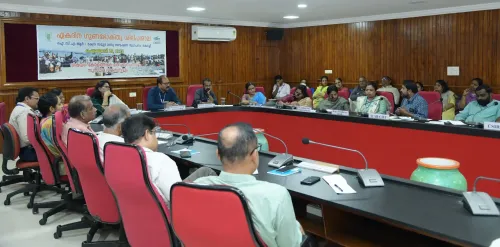
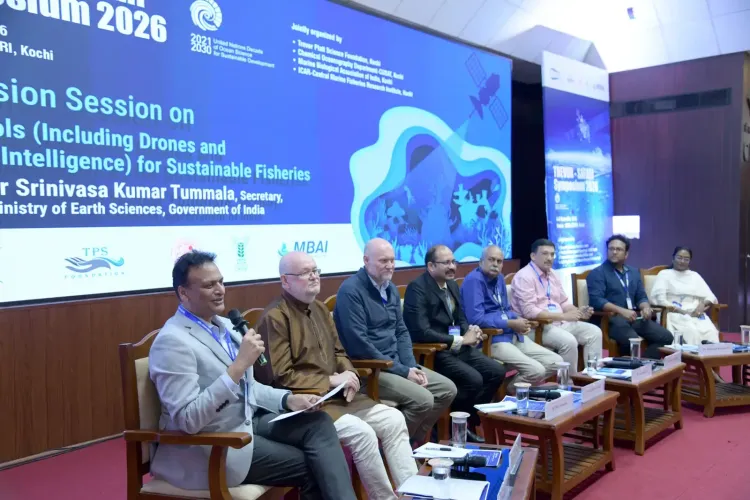
The three-day symposium was jointly organised by the Trevor Platt Science Foundation, CUSAT's Department of Chemical Oceanography, CMFRI, and the Marine Biological Association of India. The event featured around 250 scientific presentations and brought together more than 300 delegates from 30 countries. Kumar also moderated a panel discussion on emerging technologies — including drones and AI — for sustainable fisheries management.
The symposium's outcome, including the Kochi Declaration, is now expected to inform policy deliberations at the Ministry of Earth Sciences in the weeks ahead.
Point of View
Warnings, food security — rather than pure research metrics. That is a welcome shift, but the gap between intent and delivery remains wide for India's nearly 4 million fishing households. Mission Mausam and Deep Ocean Mission are well-resourced, but coastal fisherfolk still report receiving cyclone warnings too late or in formats they cannot act on. The Kochi Declaration's call for open marine data is globally significant, yet India's own data-sharing culture across ministries has historically been siloed. Whether the declaration moves from symbolic handover to actionable policy will depend on institutional follow-through that past symposium outputs have rarely produced.
NationPress
6 Nov 2026
Frequently Asked Questions
What did Earth Sciences Secretary Dr T. Srinivasa Kumar say at the Kochi symposium?
Dr T. Srinivasa Kumar said the government is committed to turning scientific research into practical solutions that benefit coastal and marginalised communities facing climate change. He highlighted the Deep Ocean Mission, Prithvi Vigyan, Mission Mausam, and the Blue Economy framework as central pillars of this effort.
What is the Kochi Declaration?
The Kochi Declaration is a resolution adopted at the conclusion of the three-day international symposium on fisheries and remote sensing held at CMFRI, Kochi. It calls for a coordinated multinational ocean observation system, free and open access to marine data, and the preservation of historical ocean datasets to strengthen climate resilience globally.
What is Mission Mausam?
Mission Mausam is a government initiative aimed at making India a weather-ready and climate-smart nation. It focuses on strengthening observation networks, weather modelling, high-performance computing, and AI-based forecasting to deliver more accurate warnings about monsoons, cyclones, and extreme weather events.
Who organised the fisheries and remote sensing symposium in Kochi?
The symposium was jointly organised by the Trevor Platt Science Foundation, CUSAT's Department of Chemical Oceanography, ICAR-CMFRI, and the Marine Biological Association of India. It drew over 300 delegates from 30 countries and featured around 250 scientific presentations.
What is the Deep Ocean Mission?
The Deep Ocean Mission is a Centre-funded programme focused on exploring the deep sea, developing indigenous technologies, and strengthening India's ocean observation services. It is one of the flagship initiatives under the Ministry of Earth Sciences highlighted at the Kochi symposium.