Why Do Doctors Support the Supreme Court's Ban on Stem Cell Therapy for Autism?
Synopsis
In a significant move, doctors have praised the Supreme Court's ban on stem cell therapy for autism. This ruling emphasizes the absence of scientific evidence supporting the treatment, aiming to protect patients from unproven therapies that exploit vulnerable families.
Key Takeaways
Supreme Court's ruling prohibits stem cell therapy for autism.
Doctors emphasized the lack of scientific evidence supporting the treatment.
Many private labs exploit patients financially.
Stem cell therapy should only be used in approved clinical trials .
Experts call for further research on stem cells in autism treatment.
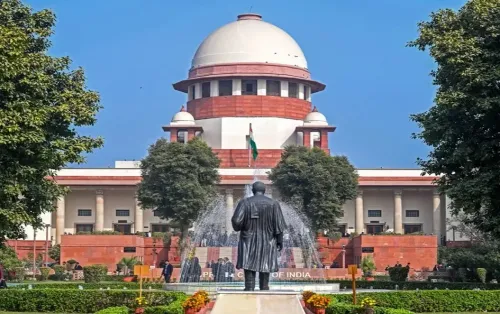
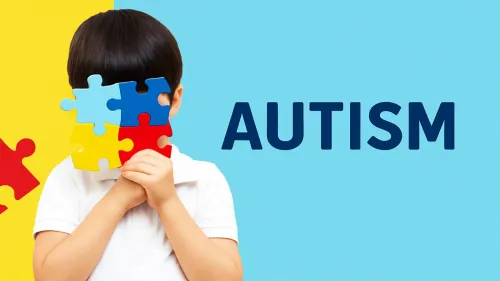
New Delhi, Jan 31 (NationPress) Physicians expressed their approval for the Supreme Court's ruling prohibiting the application of stem cell therapy in treating autism, a neurodevelopmental disorder that impacts communication, social skills, and behavior.
A panel comprising Justice JB Pardiwala and Justice R Mahadevan remarked that stem cell therapy lacks “scientific validation and has not been acknowledged as a legitimate medical procedure supported by empirical data.”
The ruling stated that “any application of stem cells in patients outside an authorized clinical trial is deemed unethical and categorized as malpractice.”
Healthcare professionals welcomed this decision, highlighting that numerous private laboratories are profiting from patients by promising treatments for autism without any scientific basis.
“This is undoubtedly a significant step forward because there is no substantiated evidence for the effectiveness of stem cell therapy in treating autism or any neurological condition at this time,” stated Dr. Manjari Tripathi, Head of the Neurology Department at AIIMS Delhi, in an interview with IANS.
“Many individuals in India, along with private laboratories, are marketing stem cell treatments for autism and other disorders such as cerebral palsy, charging patients between Rs 6 and 20 lakh. Numerous families have incurred financial losses with no enhancements in their conditions. Thus, the Supreme Court's decision is accurate and should have occurred sooner,” she added.
Importantly, the Ethics and Medical Registration Board (EMRB) of the National Medical Commission (NMC) had formed a Committee on Stem Cell Use in Autism Spectrum Disorder (ASD) as of December 2022.
It indicated that none of the prevailing international guidelines endorse stem cell therapy as a treatment for ASD and emphasized that such therapy is not advocated in clinical settings.
Furthermore, the Court noted that patients cannot claim an unproven therapy “as a matter of right.”
It highlighted that “patients may operate under a therapeutic misconception, expecting results from an unproven treatment akin to those anticipated from standard medical care. Continuing treatment while patients are under this misconception constitutes a significant breach of medical ethics,” the Court remarked.
“The majority of stem cell therapies are unregulated in India and are advertised without substantiation, often through deceptive promotions. While these conditions have no cure, many individuals are misled by these companies,” Tripathi remarked.
Nonetheless, the apex Court mentioned that advanced therapy, which shows potential in various medical areas, may still be authorized for regulated clinical research trials, allowing patients to engage in approved clinical trials.
Dr. Shefali Gulati, a pediatric neurologist at AIIMS, referenced a recent ICMR report that “definitively found no proven advantage for clinically significant responses in autism spectrum disorder through stem cell therapy.”
Given the limited evidence available for clinical application, it should only be utilized in a clinical trial context and not in standard practice, Gulati communicated to IANS.
“We are conducting a trial where we are exploring stem cells in mice diagnosed with autism. We are focusing on exosomes derived from mesenchymal stem cells in the autism mouse model. Although research is encouraged, the therapy should not be applied in clinical practice due to insufficient evidence,” she asserted.
The expert urged for further research to “establish evidence concerning the efficacy and safety of stem cells in ASD.”
Point of View
It's essential to highlight the ethical implications of using unproven therapies. The Supreme Court's ruling serves as a protective measure for patients, emphasizing the need for evidence-based practices in medicine. This decision aligns with our commitment to uphold the highest medical standards and protect public health.
NationPress
20 Sept 2026
Frequently Asked Questions
Why did the Supreme Court ban stem cell therapy for autism?
The Supreme Court banned stem cell therapy for autism due to its lack of scientific support and recognition as a valid medical practice.
What do doctors think about the ban?
Doctors overwhelmingly support the ban, citing that many private labs exploit patients with unproven treatments.
Are there any approved uses for stem cells?
While stem cells have potential in certain medical fields, their use in treating autism remains unapproved and should only occur in clinical trials.
What are the financial implications for families seeking stem cell therapy?
Families have reported spending between Rs 6 and 20 lakh on ineffective treatments, leading to significant financial losses.
What is the call to action from experts?
Experts are urging for more research to establish the efficacy and safety of stem cells in treating autism spectrum disorder.