Hyundai India to launch first mass-market EV from Chennai plant in 2025
Synopsis
Hyundai Motor India is stepping beyond premium EVs — its first mass-market electric vehicle rolls out of Chennai this year, backed by Tamil Nadu's first battery sub-assembly plant and a two-to-three-year charging infrastructure push. This is Hyundai's most direct challenge yet to Tata Motors' grip on India's affordable EV segment.
Key Takeaways
Hyundai Motor India (HMIL) will launch two new models from its Chennai plant in 2025 , including its first mass-market dedicated EV.
Tamil Nadu has been designated HMIL's flagship EV hub for India , with investments in manufacturing, localisation, and charging infrastructure planned over the next two to three years .
HMIL has set up Tamil Nadu's first battery sub-assembly plant for EV powertrains at the Chennai facility.
The company has exported over 3.9 million vehicles from Tamil Nadu to more than 150 countries .
A joint skill development initiative with the Tamil Nadu government is scheduled to begin in December 2027 .
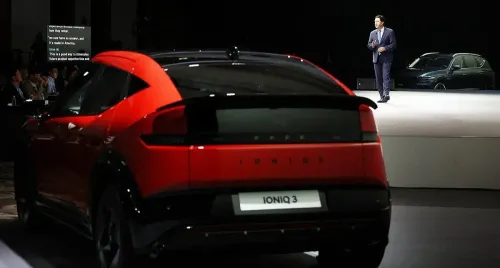
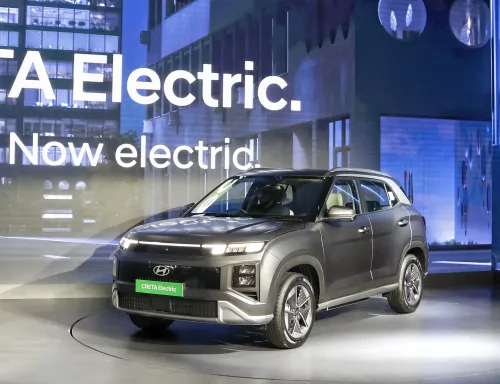
Hyundai Motor India Limited (HMIL) on Thursday announced plans to roll out two new vehicle models from its Chennai manufacturing facility this year, including its first mass-market dedicated electric vehicle — a milestone the company says will accelerate EV adoption across India and deepen localisation of key components.
Key Developments
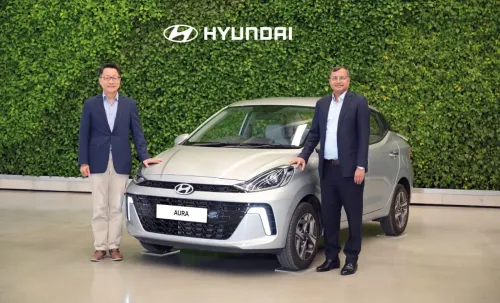
HMIL Managing Director and CEO Tarun Garg confirmed that both new models will be manufactured at the Chennai plant, with the mass-market EV marking a deliberate shift from premium-only electric offerings toward broader affordability. Garg said the move represents 'a significant step towards accelerating electric vehicle adoption and building a stronger EV ecosystem in India.'
The announcement was made alongside a joint unveiling by HMIL and the Tamil Nadu government of a skill development collaboration aimed at preparing a future-ready automotive workforce. That initiative is scheduled to begin operations in December 2027.
Tamil Nadu as Hyundai's EV Hub
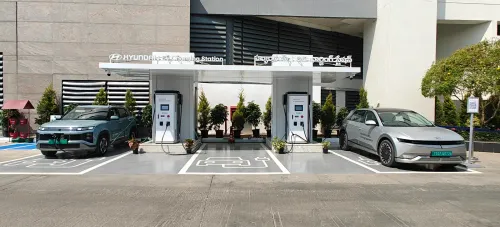
The company stated its commitment to positioning Tamil Nadu as its 'flagship EV hub for India,' backed by investments in manufacturing capabilities, localisation of power electronics and critical powertrain components, and expansion of charging infrastructure across major cities and highway corridors over the next two to three years.
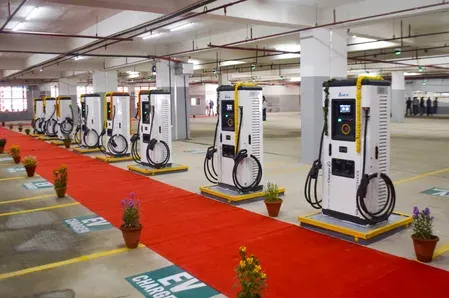
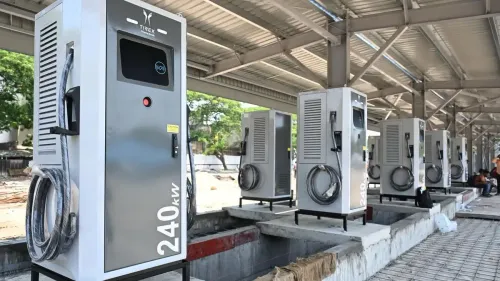
Notably, HMIL has already established Tamil Nadu's first battery sub-assembly plant for EV powertrains at the Chennai facility — a foundational step in its localisation strategy. A strategically distributed network of high-capacity chargers is also planned across key urban and transit corridors to support affordable EV uptake.
Manufacturing Footprint and Export Scale
The Chennai plant is no peripheral facility — HMIL has exported over 3.9 million vehicles manufactured in Tamil Nadu to more than 150 countries, underscoring the state's centrality in its global production network. The new EV push builds on that foundation, now directing manufacturing capacity inward toward India's fast-growing domestic EV market.
What This Means for India's EV Landscape
This comes amid intensifying competition in India's mass-market EV segment, where Tata Motors has held a dominant position and new entrants are aggressively pricing models to capture first-time EV buyers. Hyundai's entry into this price band — backed by local battery assembly and component sourcing — could meaningfully shift competitive dynamics.
The workforce development collaboration with the Tamil Nadu government adds a policy dimension: it signals that EV manufacturing expansion in the state is being treated as an employment and skilling opportunity, not just a production decision. With the skill programme set to launch in December 2027, the timeline aligns with Hyundai's broader two-to-three-year infrastructure rollout horizon.
Point of View
And Hyundai's entry, backed by local battery assembly rather than imported packs, changes the cost equation. The Tamil Nadu skill development tie-up is also worth watching: it suggests Hyundai is trying to lock in state government support as a long-term manufacturing partner, not just a tax-incentive recipient. The real test will be the price point of the mass-market model — if it undercuts or matches Tata's Nexon EV range, it could trigger the kind of competitive pricing pressure that accelerates mainstream EV adoption faster than any subsidy scheme has managed so far.
NationPress
21 Oct 2026
Frequently Asked Questions
What is Hyundai Motor India's first mass-market EV?
Hyundai Motor India has announced its first mass-market dedicated electric vehicle, to be launched from its Chennai manufacturing facility within 2025. The company has not yet disclosed the model name or pricing publicly.
Why is Tamil Nadu central to Hyundai's EV plans in India?
Tamil Nadu hosts Hyundai's primary Indian manufacturing plant, which has produced over 3.9 million export vehicles. The state also houses HMIL's battery sub-assembly plant for EV powertrains — the first of its kind in Tamil Nadu — making it the natural base for the company's EV localisation strategy.
What is the Hyundai-Tamil Nadu skill development initiative?
Hyundai Motor India and the Tamil Nadu government jointly unveiled a skill development collaboration focused on building a workforce aligned with evolving automotive and EV technologies. The programme is scheduled to begin operations in December 2027.
How will Hyundai expand EV charging infrastructure in India?
HMIL plans to develop a network of high-capacity chargers across key urban centres and highway transit corridors over the next two to three years, as part of its broader push to support affordable EV adoption nationwide.
How does this affect competition in India's EV market?
Hyundai's entry into the mass-market EV segment directly challenges Tata Motors, which has dominated affordable electric vehicle sales in India. With local battery assembly already in place, Hyundai is positioned to compete on cost, potentially accelerating price competition across the segment.