India broadband subscribers hit 1,101.21 million in August: TRAI data
Synopsis
India's broadband base crossed 1.1 billion subscribers in August 2026, growing at 0.61 per cent month-on-month per TRAI data. The headline figure masks a widening urban-rural divide — wireline tele-density is 8.34 per cent in cities versus just 0.58 per cent in villages. TRAI's newly launched Digital Connectivity Rating Platform could be a game-changer, turning connectivity quality into a publicly searchable metric for homes and offices.
Key Takeaways
India's broadband subscriber base reached 1,101.21 million at end of August 2026 , growing 0.61 per cent month-on-month.
Active wireless subscribers stood at 1,207.59 million ; 15.83 million MNP requests were filed in August.
Wireline subscribers grew to 48.45 million , up 0.44 million from July, with a monthly growth rate of 0.93 per cent .
Urban wireline tele-density was 8.34 per cent against a rural figure of 0.58 per cent , highlighting a persistent connectivity gap.
BSNL , MTNL , and APSFL together held 16.05 per cent of the wireline market at end of August.
TRAI launched its Digital Connectivity Rating (DCR) Platform to make property-level connectivity ratings publicly searchable.
India's broadband subscriber base rose to 1,101.21 million at the end of August 2026, up from 1,094.48 million in July, registering a monthly growth rate of 0.61 per cent, according to data released by the Telecom Regulatory Authority of India (TRAI). The figures underscore the continued expansion of digital connectivity across the country even as urban saturation begins to test incremental growth.
Wireless and Mobile Number Portability Trends
Active wireless (mobile) subscribers — measured at the date of peak Visitor Location Register (VLR) — stood at 1,207.59 million in August. During the same month, 15.83 million subscribers submitted requests for Mobile Number Portability (MNP), reflecting ongoing churn and competitive pressure among telecom operators.
Wireline Segment Sees Steady Gains
The wireline subscriber base expanded from 48.01 million at the end of July 2026 to 48.45 million at the end of August 2026, a net addition of 0.44 million subscribers and a monthly growth rate of 0.93 per cent — marginally outpacing broadband's growth rate for the month. Overall wireline tele-density in India edged up from 3.36 per cent in July to 3.39 per cent in August. The urban-rural divide in wireline penetration, however, remains stark: urban wireline tele-density stood at 8.34 per cent against just 0.58 per cent in rural areas at the end of August.
Market Share and Urban-Rural Split
Urban subscribers accounted for 89.08 per cent of the total wireline base, while rural subscribers held the remaining 10.92 per cent. Public-sector access service providers — BSNL, MTNL, and APSFL — together commanded 16.05 per cent of the wireline market at the end of August, with private operators dominating the remainder. This comes amid an ongoing revival push for BSNL, which has received substantial government capital infusion in recent years.
TRAI Launches Digital Connectivity Rating Platform
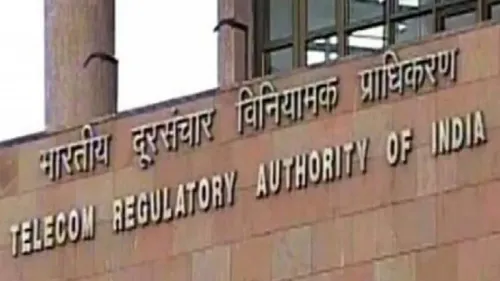
In a parallel development, TRAI last week launched the Digital Connectivity Rating (DCR) Platform, designed to give consumers visibility into the digital connectivity ratings of residential and commercial properties. The platform includes a public interface for viewing rated properties and a mobile app for testing connectivity. Anil Kumar Lahoti, Chairman of TRAI, said: 'By making ratings publicly searchable and verify the certificates, the platform will empower consumers with credible and comparable information. It will help them make more informed choices about homes and offices with strong and reliable connectivity, supporting smoother calls, downloads and access to online services.' The DCR initiative is notable as it shifts connectivity quality from an invisible feature to a measurable, searchable metric — potentially influencing real estate and office-space decisions at scale.
What the Numbers Signal
India's broadband base crossing the 1.1 billion mark reflects the cumulative impact of affordable data tariffs, improved rural infrastructure under schemes such as BharatNet, and the proliferation of low-cost smartphones. Notably, the broadband growth rate of 0.61 per cent month-on-month, while positive, signals a maturing market where meaningful gains increasingly depend on quality upgrades rather than new subscriber additions. The next frontier, analysts have argued, is last-mile rural connectivity — an area where the urban-rural wireline gap of more than 7.76 percentage points remains a critical challenge. TRAI's DCR Platform, if widely adopted, could accelerate accountability in that push.
Point of View
A figure that barely moves despite years of BharatNet investment and policy targets. TRAI's Digital Connectivity Rating Platform is an imaginative intervention — making connectivity quality visible could create market incentives where mandates have struggled. The question is adoption: without builders, landlords, and real-estate aggregators embedding DCR scores into listings, the platform risks becoming another database that consumers never discover.
NationPress
29 Sept 2026
Frequently Asked Questions
How many broadband subscribers does India have as of August 2026?
India had 1,101.21 million broadband subscribers at the end of August 2026, up from 1,094.48 million in July, according to TRAI data. The monthly growth rate was 0.61 per cent.
What is TRAI's Digital Connectivity Rating (DCR) Platform?
The DCR Platform is a newly launched TRAI initiative that rates residential and commercial properties on their digital connectivity quality and makes those ratings publicly searchable. It includes a mobile app for testing connectivity and aims to help consumers make informed choices about homes and offices.
How is India's wireline telecom sector performing?
India's wireline subscriber base grew to 48.45 million at the end of August 2026, adding 0.44 million net subscribers from July at a monthly growth rate of 0.93 per cent. Overall wireline tele-density rose marginally from 3.36 per cent to 3.39 per cent over the same period.
What is the urban-rural gap in wireline connectivity in India?
As of August 2026, urban wireline tele-density stood at 8.34 per cent while rural wireline tele-density was just 0.58 per cent. Urban subscribers accounted for 89.08 per cent of the total wireline base against 10.92 per cent for rural subscribers.
What is the market share of PSU telecom providers in India's wireline segment?
Public-sector access service providers — BSNL, MTNL, and APSFL — together held 16.05 per cent of India's wireline market at the end of August 2026, with private operators accounting for the rest.