India, Mali mark World Cotton Day at UN, eye stronger value chains
Synopsis
At the UN in New York, India and Mali jointly marked World Cotton Day by laying out a shared agenda: stronger value chains, better market access for smallholders, and deeper South-South cooperation. With Tamil Nadu's knitwear hubs and West Bengal's Kantha craft cited alongside Mali's processing gaps, the event signals India's intent to export both its textile expertise and its diplomatic capital in the global cotton economy.
Key Takeaways
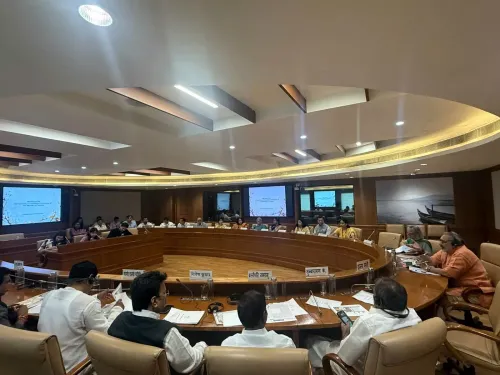
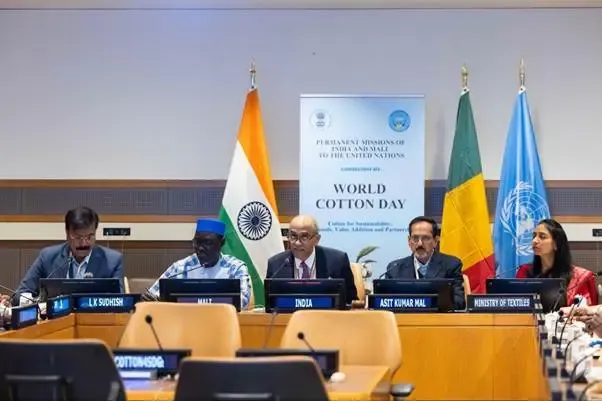
The Permanent Missions of India and Mali co-organised a World Cotton Day event at the UN Headquarters, New York on 9 October 2026 .
Ambassador Harish Parvathaneni outlined four priorities : producers' livelihoods, value addition and market access, sustainability, and technology partnerships.
Ambassador Issa Konfourou flagged Mali's limited processing capacity, high input costs, and trade-distorting subsidies as key structural barriers.
MP Asit Kumar Mal cited Kantha embroidery in Bolpur, West Bengal as a model for craft-led value addition and women's livelihoods.
MP LK Sudhish highlighted Tamil Nadu's knitwear industry and the PM MITRA integrated textile park initiative.
Discussions emphasised South-South and triangular cooperation to help cotton-producing nations retain greater value from their output.
India and Mali jointly organised a high-level event at the United Nations Headquarters in New York on 9 October 2026 to commemorate World Cotton Day, bringing together parliamentarians, member-state representatives, and international organisations to chart a course for strengthening global cotton value chains. According to an official statement from India's Ministry of Textiles, discussions focused on supporting smallholders and artisans, improving processing capacity and market access, and deepening international partnerships.
Key Priorities Raised at the UN Event
Ambassador Harish Parvathaneni, Permanent Representative of India to the United Nations, opened by invoking Mahatma Gandhi's historic association of cotton and the spinning wheel with self-reliance and India's freedom struggle. He outlined four core priorities: supporting producers' livelihoods, expanding value addition and market access, promoting sustainability, and strengthening technology and international partnerships. Parvathaneni also stressed the need for affordable inputs and finance, dedicated support for smaller enterprises, and South-South and triangular cooperation to help cotton-producing nations retain greater value from their output.
Mali's Challenges and Call for Partnerships
Ambassador Issa Konfourou, Permanent Representative of Mali to the United Nations, highlighted cotton's centrality to Mali's economy and rural livelihoods. He pointed to persistent headwinds — including limited domestic processing capacity, high input costs, restricted market access, and trade-distorting subsidies in major producing countries — as structural barriers. Outlining Mali's domestic push to expand processing and generate employment, Konfourou welcomed mutually beneficial partnerships and formally acknowledged India as a key partner in this effort.
India's Parliamentary Voices: Craft, Knitwear and Infrastructure
Asit Kumar Mal, Member of Parliament, drew on the lived experience of Kantha embroidery in Bolpur, West Bengal, to illustrate how traditional craftsmanship adds measurable value to cotton while supporting women's livelihoods and promoting resource efficiency. He underscored the importance of fair remuneration, affordable credit, design support, and direct market linkages for artisans.
LK Sudhish, Member of Parliament, spotlighted Tamil Nadu's established strength in cotton knitwear and garment manufacturing, citing the role of smaller enterprises, shared infrastructure, and a skilled workforce. He referenced the integrated textile park being developed under the PM MITRA initiative and flagged advances in wastewater recovery and reuse in textile processing as models worth replicating.
Broader Context: Cotton, SDGs and South-South Cooperation
The event reinforced India's positioning as a bridge between cotton-producing developing nations and global markets. Cotton supports the livelihoods of millions of smallholder farmers and artisans across Asia and Africa, and its role in advancing the Sustainable Development Goals (SDGs) — particularly on decent work, gender equity, and sustainable production — was a central theme. Notably, this is part of a broader diplomatic effort by New Delhi to align its textile sector ambitions with multilateral frameworks and South-South cooperation. With the PM MITRA textile parks under development domestically, India is positioning itself to move up the value chain while extending that expertise to partners like Mali.
Point of View
An agenda that dovetails neatly with its domestic PM MITRA push. The challenge, however, is execution: South-South cooperation rhetoric has historically outpaced delivery, and Mali's structural barriers — trade-distorting subsidies from wealthier nations chief among them — are not resolved by partnership optics alone. What the cotton sector actually needs is binding market-access commitments, not just bilateral goodwill.
NationPress
9 Oct 2026
Frequently Asked Questions
What is World Cotton Day and why is it observed at the UN?
World Cotton Day, observed on 7 October each year, is a United Nations-recognised event that highlights cotton's economic and social importance, particularly for developing nations. It serves as a platform for member states, international organisations, and industry stakeholders to discuss challenges and opportunities in the global cotton sector, including market access, sustainability, and smallholder support.
Why did India and Mali jointly organise the World Cotton Day event?
India and Mali co-organised the event to underscore their shared interest in strengthening cotton value chains and advancing South-South cooperation. Mali is one of Africa's largest cotton producers but faces limited domestic processing capacity, while India brings textile manufacturing expertise and a large domestic market — making the partnership mutually complementary.
What is the PM MITRA initiative mentioned at the event?
PM MITRA — Prime Minister Mega Integrated Textile Region and Apparel — is a Government of India initiative to develop large-scale integrated textile parks that bring spinning, weaving, processing, dyeing, and garment manufacturing under one location. MP LK Sudhish referenced it as a model for shared infrastructure in Tamil Nadu's cotton knitwear and garment sector.
Who represented India at the World Cotton Day event at the UN?
India was represented by Ambassador Harish Parvathaneni, Permanent Representative of India to the United Nations, along with Members of Parliament Asit Kumar Mal and LK Sudhish, who shared perspectives from West Bengal's Kantha embroidery tradition and Tamil Nadu's knitwear manufacturing sector respectively.
What are the main challenges facing cotton-producing countries like Mali?
Ambassador Issa Konfourou of Mali identified limited domestic processing capacity, high input costs, restricted market access, and trade-distorting subsidies by major cotton-producing countries as the key structural barriers. These challenges prevent countries like Mali from retaining greater value from their raw cotton output, keeping them locked into primary commodity exports.