India's AI talent pool set to drive global innovation: Summer Davos experts
Synopsis
At Summer Davos 2025, global tech founders singled out India's young, skilled workforce as a defining asset for the next wave of AI-led innovation — from AI-powered waste management in cities to accelerating scientific R&D. With over 1,700 leaders gathered under the theme 'Innovating at Scale', the forum underscored that India's demographic edge could translate into global AI leadership — if backed by the right investment.
Key Takeaways
Experts at the WEF Summer Davos on 25 June identified India's young skilled workforce as its biggest strength in the global AI ecosystem.
Vivek Vyas , Co-Founder of Intuitive AI , showcased an AI-powered smart waste management system for high-footfall public spaces.
Hermann Tribukait , CEO of Atinary Technologies Inc. , said AI is accelerating R&D and can drive breakthroughs in medicine and clean energy.
The Summer Davos conference ran from 23–25 June , gathering over 1,700 leaders under the theme 'Innovating at Scale' .
Experts stressed that AI development must remain focused on benefiting humanity , with targeted investment key to India's global contribution.
India's large and youthful skilled workforce positions the country to become a significant force in the global artificial intelligence (AI) ecosystem, experts said on Thursday, 25 June at the sidelines of the World Economic Forum's (WEF) Annual Meeting of the New Champions — widely known as Summer Davos. From smart waste management to accelerated scientific research, AI is increasingly being deployed to solve real-world challenges at scale.
AI-Powered Cities and Sustainable Solutions
Vivek Vyas, Co-Founder of Intuitive AI, a Canada-based company, highlighted how AI is being used to make urban environments cleaner and more sustainable. The company has developed an AI-enabled smart waste management system designed for deployment in high-footfall public spaces such as airports, railway stations, and shopping malls.
Vyas described India's economic momentum and its workforce as core strengths. 'India has a tremendous economy and is already performing well. The country's young, skilled and intelligent workforce is its biggest strength,' he said.
Accelerating Scientific Research Through AI
Dr. Hermann Tribukait, Co-Founder and CEO of Atinary Technologies Inc., pointed to AI's transformative role in research and development. 'AI is transforming scientific research by accelerating R&D and helping scientists discover solutions faster,' Tribukait said.
He noted that faster innovation can drive breakthroughs in critical sectors including medicine and clean energy — areas that directly improve quality of life. Tribukait stressed that the development of AI must remain anchored in human benefit. 'Science and AI should be developed with the goal of benefiting humanity,' he said.
India's Innovation Ecosystem in Focus
Tribukait also praised India's growing innovation ecosystem, noting the country's strong base of engineers, scientists, and young innovators. 'With the right investment in AI-driven research, India can contribute significantly to global scientific progress,' he added.
This comes amid a broader global conversation about which nations are best positioned to lead the next wave of AI-driven growth. India's demographic advantage — with one of the world's largest pools of STEM graduates — is increasingly cited by international technology leaders as a structural asset.
About Summer Davos 2025
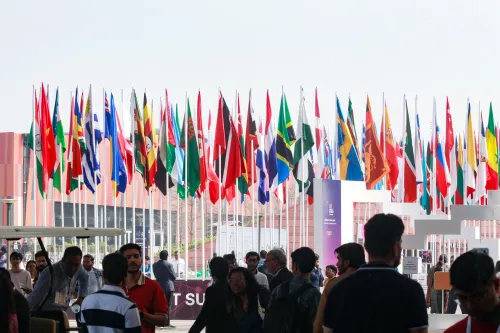
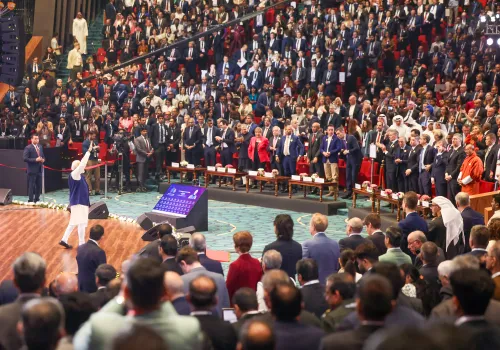
The WEF Annual Meeting of the New Champions ran from 23 to 25 June, concluding on Thursday. The three-day conference brought together over 1,700 leaders from business, government, and academia to discuss global economics and innovation under the theme 'Innovating at Scale'. The gathering serves as a key platform for emerging-economy voices alongside established global players.
As AI investment accelerates worldwide, the consensus from Summer Davos suggests India's next challenge is channelling its talent advantage into sustained, investment-backed innovation — a transition that could define its role in the global technology order over the coming decade.
Point of View
Yet its share of globally impactful AI research and home-grown AI product companies remains disproportionately small relative to its STEM output. The 'right investment' that both speakers called for is precisely what has been missing: India's public R&D spend as a percentage of GDP has lagged peer economies for years. Without closing that gap, the country risks being a talent exporter rather than an AI innovator.
NationPress
25 Jun 2026
Frequently Asked Questions
What did experts say about India's role in AI at Summer Davos 2025?
Experts at the WEF Annual Meeting of the New Champions on 25 June said India's large, young, and skilled workforce positions it to play a significant role in the global AI ecosystem. They called for targeted investment in AI-driven research to convert this talent advantage into global scientific impact.
What is Intuitive AI's smart waste management solution?
Intuitive AI, a Canada-based company co-founded by Vivek Vyas, has developed an AI-powered waste management system that processes and disposes of waste in an environmentally responsible manner. It is designed for deployment in high-footfall public spaces such as airports, railway stations, and shopping malls.
How is AI accelerating scientific research, according to Atinary Technologies?
Dr. Hermann Tribukait, CEO of Atinary Technologies Inc., said AI is helping scientists accelerate R&D and discover solutions more efficiently. He noted this can drive breakthroughs in critical areas such as medicine and clean energy, ultimately improving quality of life.
What was the theme of Summer Davos 2025 and who attended?
The WEF Annual Meeting of the New Champions, held from 23 to 25 June, ran under the theme 'Innovating at Scale'. Over 1,700 leaders from business, government, and academia participated in discussions on global economics and innovation.
Why is India considered a strong candidate to lead AI innovation?
India is considered a strong candidate due to its vast pool of young, skilled engineers, scientists, and innovators — one of the largest STEM graduate bases in the world. Experts argue that with the right investment in AI-driven research, India can contribute significantly to global scientific and technological progress.