Jaishankar keynotes Jeju Forum, calls for reformed multilateralism
Synopsis
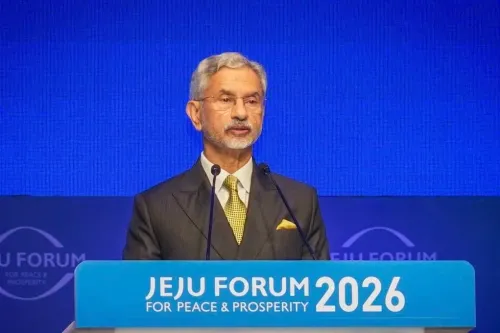
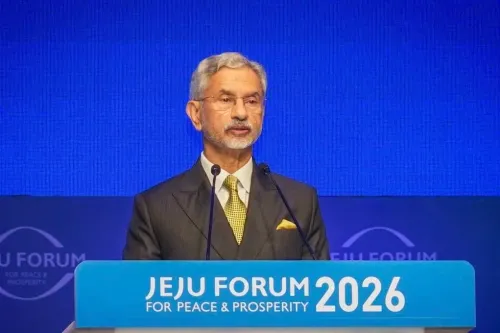
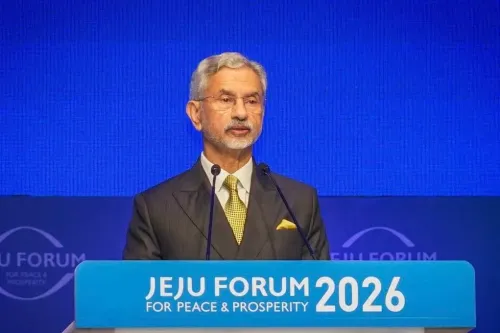
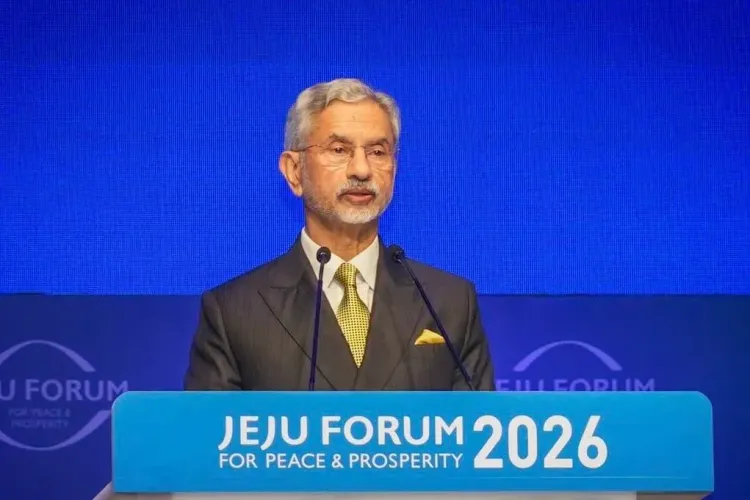
External Affairs Minister Dr. S. Jaishankar keynoted the Jeju Forum for Peace and Prosperity 2026 in South Korea on 25 June, laying out a five-point framework for reinventing global cooperation through reformed multilateralism, supply-chain de-risking and greater Global South empowerment.
Key Takeaways
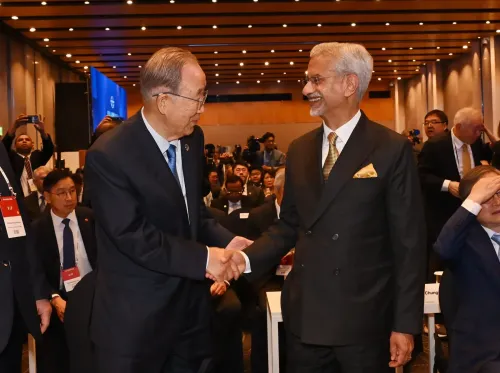
Jaishankar delivered the keynote address at the Jeju Forum for Peace and Prosperity 2026 in Jeju, South Korea on 25 June 2026 .
He described the world as undergoing a 'complex rebalancing' that is simultaneously economic, political and cultural.
The minister outlined five imperatives : resilient supply chains, new bilateral understandings, upholding international law, empowering the Global South , and delivering global public goods.
He called for all five to be expressed through ' reformed multilateralism .' The address aligns with India's sustained post- 2020 diplomatic push for supply-chain diversification and multilateral institutional reform.
India-South Korea cooperation on critical technologies and resilient supply chains is expected to be a key follow-up area.
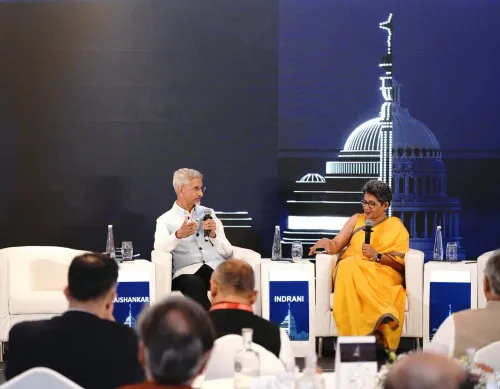
Union External Affairs Minister Dr. S. Jaishankar delivered the keynote address at the Jeju Forum for Peace and Prosperity 2026 in Jeju, South Korea, on Thursday, 25 June 2026, outlining India's vision for reinventing global cooperation amid what he described as a 'complex rebalancing' of the world order.
Context
Speaking at the annual international forum hosted on Jeju Island, Dr. Jaishankar identified a central tension shaping contemporary geopolitics: while economic interdependence, connectivity and a global workplace have drawn nations closer, the leveraging of production, commerce and technology rivalry is simultaneously generating new fault lines. The minister stated that the world is undergoing a shift that is simultaneously 'economic, political and cultural.'
His address centred on five imperatives for navigating this fragmentation — strengthening resilience and redundancy in international supply chains, forging new bilateral and multilateral understandings, collectively upholding international law, enhancing capacities for the Global South, and providing global public goods through shared endeavours. He concluded that all of these must find expression in 'reformed multilateralism.'
Policy Backdrop
The address is consistent with a policy posture New Delhi has sustained across major multilateral platforms since at least 2020. During India's G20 Presidency in 2023, the government placed inclusive multilateralism and amplifying the voice of Global South nations at the centre of its agenda, producing the New Delhi Declaration that was adopted by consensus.
India has similarly pressed at successive UN General Assembly sessions for expansion of the UN Security Council and an overhaul of global governance architecture to reflect contemporary power realities. Dr. Jaishankar, who served as Foreign Secretary and as Indian Ambassador to the United States, China and Singapore before assuming the External Affairs portfolio in 2019, has been the principal voice articulating this framework internationally.
The Jeju Forum itself is an established track-1.5 dialogue platform that brings together government officials, academics and civil society from across the Indo-Pacific to deliberate on security, governance and economic cooperation. South Korea is an increasingly significant partner for India in critical technologies, semiconductor supply chains and Indo-Pacific strategic alignment.
Stakeholders and Impact
The five-point framework Dr. Jaishankar outlined has direct relevance for Global South economies that have found themselves squeezed between US-China technology and trade competition. Supply-chain diversification — a recurring theme in India's external economic diplomacy — offers these nations an alternative architecture that reduces dependence on any single dominant supplier.
For South Korea, the keynote signals India's interest in deepening agenda-specific cooperation in areas where the two countries' strategic interests converge, including resilient semiconductor and critical-mineral supply chains. The bilateral relationship has gathered momentum through frameworks such as the India-Korea Comprehensive Economic Partnership Agreement and growing defence-technology exchanges.
Multilateral institutions — including the UN, WTO and development finance bodies — are implicitly called upon to reform their structures if they are to remain relevant arbiters of the rules-based order that India continues to champion.
What's Next
Observers will watch for concrete India-South Korea follow-through on critical technology and supply-chain cooperation in the coming months. Dr. Jaishankar's framing at Jeju is also likely to reappear in India's interventions at the next UN General Assembly session and at forthcoming G20 and Quad meetings, where New Delhi is expected to continue pressing for institutional reform and greater Global South representation. The minister's call for 'reformed multilateralism' sets a clear benchmark against which India's diplomatic activity in the second half of 2026 will be measured.
Point of View
Agenda-specific cooperation, Global South voice — into the emerging post-unipolar order. By framing 'reformed multilateralism' as the necessary vessel for these norms, India positions itself as a rule-shaper rather than a rule-taker, a distinction that carries weight with both middle powers and Global South blocs. The choice of South Korea as the venue for this messaging is also deliberate: Seoul is a critical-technology partner whose alignment matters as US-China decoupling accelerates. Taken together, the address continues a pattern of India using every available forum to build the coalition of the willing it will need if institutional reform at the UN and beyond is ever to materialise.
NationPress
25 Jun 2026
Frequently Asked Questions
What did Jaishankar say at the Jeju Forum 2026?
Dr. S. Jaishankar delivered the keynote address at the Jeju Forum for Peace and Prosperity 2026 in South Korea, outlining five priorities for reinventing global cooperation: resilient supply chains, new multilateral understandings, upholding international law, empowering the Global South, and delivering global public goods — all to be achieved through reformed multilateralism.
What is the Jeju Forum for Peace and Prosperity?
The Jeju Forum for Peace and Prosperity is an annual international dialogue platform hosted on Jeju Island, South Korea, that brings together government officials, academics and civil society to discuss regional security, economic cooperation and global governance.
What is India's position on multilateral reform?
India has consistently called for reformed multilateralism, including expansion of the UN Security Council and updated global governance rules, a position Dr. Jaishankar has articulated at the UN General Assembly, the G20 and now the Jeju Forum.
Why is India-South Korea cooperation significant?
India and South Korea share growing interests in critical technology, semiconductor and supply-chain resilience, and Indo-Pacific strategic alignment, making South Korea a key partner as New Delhi pursues economic de-risking from US-China trade and technology tensions.
What does 'de-risking' mean in India's foreign policy context?
In India's foreign policy usage, de-risking refers to strengthening resilience and redundancy in international supply chains so that no single country or bloc can exert undue leverage — a theme Dr. Jaishankar has repeatedly stressed since India's G20 Presidency in 2023.