India's $13 billion semiconductor push targets chip self-reliance by 2035
Synopsis
India is betting $13 billion on a second semiconductor mission phase to end its 90–95% chip import dependence — with Tata-Powerchip targeting first wafer output in December, 85,000 engineers already trained ahead of schedule, and a $200 billion domestic demand clock ticking toward 2035. The gap between design strength and fab-floor capability is the make-or-break variable.
Key Takeaways
India plans to invest $13 billion in the second phase of its national semiconductor mission.
The country currently imports 90–95% of its semiconductors, according to a NITI Aayog report; domestic demand is projected to exceed $200 billion by 2035 .
The Centre has approved 12 semiconductor projects across six states ; Micron , Kaynes Semicon , and CG Semi have begun commercial production in 2024 .
Tata Electronics and Powerchip are targeting first chip output from Dholera, Gujarat in December ; Tata has also signed an $11 billion MoU with ASML .
85,000 semiconductor engineers have been trained in four years , against an original ten-year target; programmes now run at 355 universities .
The Centre is subsidising up to 50% of semiconductor manufacturing project costs to attract investment.
India is preparing to deploy $13 billion in the second phase of its national semiconductor mission, aiming to build a full-spectrum domestic chip ecosystem spanning design, manufacturing, assembly, and testing. The drive is fuelled by a strategic imperative: the country currently imports between 90 and 95 per cent of its semiconductors, according to a NITI Aayog report, while domestic demand is projected to exceed $200 billion by 2035.
Projects on the Ground
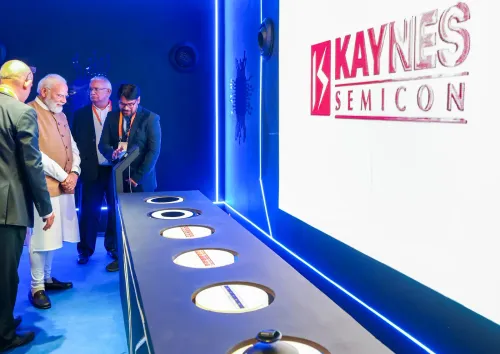
The Centre has already approved 12 semiconductor projects across six states, with companies including Micron, Kaynes Semicon, and CG Semi beginning commercial production this year. The initial output is concentrated in assembly, testing, and packaging rather than advanced wafer fabrication — reflecting where India's industrial readiness currently stands.
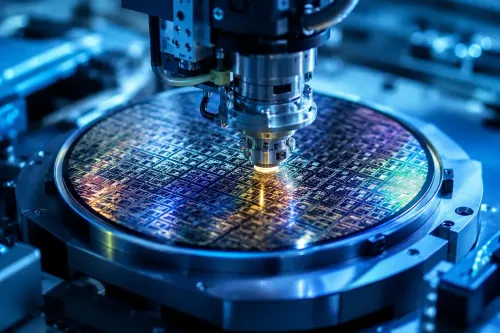
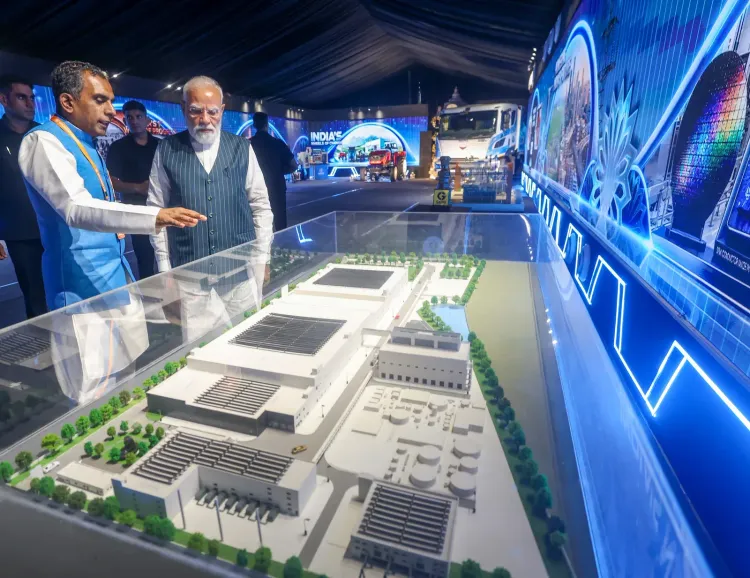
The most closely watched project is a joint venture between Tata Electronics and Taiwan's Powerchip Semiconductor at Dholera, Gujarat, which is targeting its first chip output in December. Separately, Tata has signed an $11 billion memorandum of understanding with Dutch lithography giant ASML for advanced chipmaking equipment, with applications spanning the automotive and artificial intelligence sectors.
The Talent Equation
India's most durable competitive edge in semiconductors lies in its large base of chip-design engineers — a pool built over decades through its IT services industry. However, the country faces a more acute shortage of fab-floor operators and process engineers capable of managing wafer production and converting raw silicon into functioning chips.
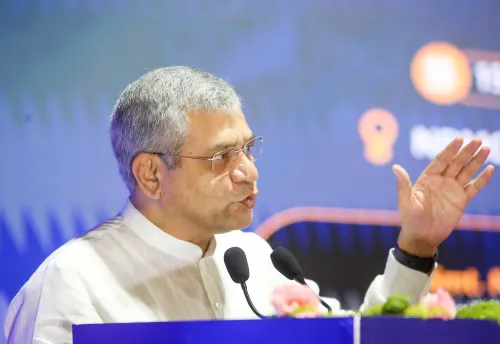
The government is moving to close that gap. Union Minister Ashwini Vaishnaw has stated that India aims to develop 100,000 semiconductor engineers, and notably, 85,000 have already been trained within four years — against an original target that had projected the same milestone would take ten years. Semiconductor design programmes are now offered at 355 universities, including institutions in smaller cities and towns, broadening the talent pipeline beyond traditional tech hubs.
This comes amid a global context that favours India's ambitions: the worldwide semiconductor industry is projected to face a shortage of approximately 1 million workers by 2032, according to industry estimates, potentially handing India a structural workforce advantage if its training programmes scale effectively.
Financial Incentives and State Support
To attract private and foreign investment, the Centre is offering subsidies covering up to 50 per cent of semiconductor manufacturing project costs. State governments are providing additional financial support, creating a layered incentive structure designed to reduce the capital risk for chipmakers considering India as a production base.
This is the second phase of the India Semiconductor Mission, building on the first phase which laid the regulatory and institutional groundwork. The scale of the current commitment — $13 billion — signals a significant escalation in ambition.
The Bigger Strategic Picture
Analysts note that India's semiconductor strategy is effectively an attempt to move beyond the 'Make in India' framing toward what policymakers are calling 'Engineer in India' — positioning the country's engineering workforce as the foundational asset for a complete chip ecosystem rather than merely an assembly destination. The critical test, however, will be whether design-side talent can be complemented by the manufacturing skills, process infrastructure, technology access, and industrial supply networks that competitive chip production demands. India's success in bridging that gap will determine whether the $13 billion investment translates into genuine strategic autonomy or remains concentrated in the lower-value tiers of the global semiconductor supply chain.
Point of View
But the structural gap between design prowess and fab-floor capability is the fault line that $13 billion alone cannot close. The country has world-class chip architects and almost no experienced wafer-production workforce — a mismatch that subsidies can attract investment around, but cannot resolve overnight. The 85,000-engineers milestone is genuinely ahead of schedule, yet the global shortage of 1 million semiconductor workers by 2032 means every major chipmaking nation is running the same talent race simultaneously. India's window is real; whether it converts a design-services legacy into a full-stack manufacturing identity before geopolitical tailwinds shift is the question that will define the mission's legacy.
NationPress
24 Oct 2026
Frequently Asked Questions
What is India's $13 billion semiconductor mission?
It is the second phase of India's national semiconductor mission, committing $13 billion to build a domestic chip ecosystem covering design, manufacturing, assembly, and testing. The goal is to reduce India's 90–95% dependence on imported semiconductors as domestic demand is forecast to reach $200 billion by 2035.
Which semiconductor projects are already under way in India?
The Centre has approved 12 semiconductor projects across six states. Micron, Kaynes Semicon, and CG Semi have begun commercial production, primarily in assembly, testing, and packaging. The Tata Electronics–Powerchip joint venture in Dholera, Gujarat, is targeting its first chip output in December.
What is India's semiconductor engineer training target?
Union Minister Ashwini Vaishnaw has stated that India aims to develop 100,000 semiconductor engineers. As of the latest data, 85,000 have already been trained within four years — a pace that outstrips the original ten-year timeline for the same milestone.
What financial incentives is the government offering chipmakers?
The Central government is offering subsidies of up to 50% of semiconductor manufacturing project costs, with additional financial support available from state governments, creating a layered incentive structure to reduce capital risk for investors.
What is the biggest challenge facing India's semiconductor ambitions?
India's primary challenge is a shortage of fab-floor operators and process engineers — the skilled workers needed to manage wafer production and convert raw silicon into chips. While the country has a strong chip-design talent base, bridging the gap to full-scale wafer fabrication requires manufacturing skills and infrastructure that are still being developed.