Is Female Representation in STEM Increasing in India? Yet Workforce Participation Remains Low

Synopsis
Despite India's impressive strides in gender equality within STEM education, a new report reveals that women's workforce participation remains significantly low. The report discusses systemic challenges and the need for policies to bridge the gender gap in STEM careers. Key government initiatives and corporate support are highlighted as crucial for fostering inclusivity.
Key Takeaways
India leads in female STEM education compared to many developed nations.
Systemic challenges exist that hinder women's workforce participation.
Government initiatives play a crucial role in promoting female enrollment in STEM.
Corporate support is essential for bridging the gender gap in STEM careers.
Addressing unconscious bias and workplace culture is critical for women's advancement in STEM.
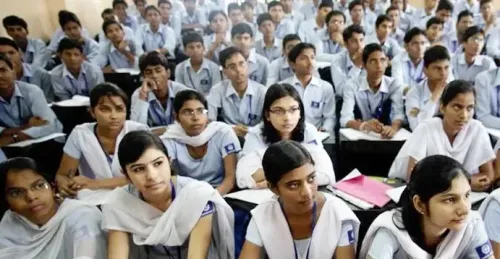
New Delhi, Jan 22 (NationPress) While India has surpassed numerous developed nations in achieving gender equality in Science, Technology, Engineering, and Mathematics (STEM) education, the low participation of women in the workforce is still a significant issue, as noted in a recent report.
The report by EY India emphasizes the progressive policies and industry interventions that have facilitated the enhancement of women's presence in STEM fields.
Nevertheless, it points out the systemic challenges that continue to hinder the increase of women in the workforce, particularly in leadership roles. The report advocates for a comprehensive approach to address the gender gap.
Highlighting education as the foundation for women's advancement in STEM, the report cites critical government initiatives like Beti Bachao, Beti Padhao, Vigyan Jyoti, and the Pragati Scholarship as instrumental in boosting female enrollment in STEM programs.
“India’s National Education Policy (NEP) 2020 has further highlighted skill-based learning and inclusivity, establishing a groundwork for a more diverse and competitive workforce. Numerous corporations have also promoted female enrollment in STEM through dedicated scholarships within their CSR initiatives to encourage more women to enroll in STEM courses,” stated Aashish Kasad, National Leader - Chemicals and Agriculture sector, EY India.
“Consequently, India now surpasses global averages in female STEM graduates. However, there remains a pronounced gap between education and employment, with many women failing to transition into STEM careers,” she added.
Kasad attributed the disparity in STEM participation to “unconscious bias and workplace culture, where women face unequal pay, limited leadership opportunities, work-life balance challenges, a lack of mentorship and networking, and restricted access to essential career progression support.”
The report referenced the 2024 LinkedIn dataset, revealing that women comprised 41.2% of the overall workforce, with industries such as retail/e-commerce, healthcare, pharma, and IT leading in the hiring of STEM-qualified women. It indicated a positive trajectory toward reducing gender disparities in these sectors.
The report highlighted that many corporate-led initiatives are now providing resources that offer career support and mentorship programs, assisting women in navigating challenges in STEM careers and achieving their professional aspirations.
“Enhancing gender diversity in STEM can unlock tremendous potential for innovation and economic growth in the country,” Kasad remarked.
She emphasized that cultivating an inclusive environment, promoting mentorship, and challenging societal stereotypes are crucial for increasing the representation of women in STEM careers in India.
Kasad called for “ongoing efforts in policymaking, corporate leadership, and societal transformation” to shape a brighter future for women in STEM careers.
Point of View
The findings of this report underscore the significant progress India has made in STEM education for women. However, the persistent disparity in workforce participation raises critical questions about systemic barriers. It is essential for policymakers and corporate leaders to prioritize initiatives that empower women in the workplace, ensuring their contributions are recognized and valued.
NationPress
28 Sept 2026
Frequently Asked Questions
What is the current female representation in STEM education in India?
India has surpassed many developed countries in female representation in STEM education, with a notable increase in female graduates.
Why is women's workforce participation in STEM still low?
Despite high educational attainment, women face systemic challenges such as unconscious bias, unequal pay, and limited leadership opportunities.
What initiatives are helping women in STEM in India?
Government initiatives like Beti Bachao, Beti Padhao, and corporate CSR programs are crucial in increasing female enrollment in STEM fields.
How does the National Education Policy impact women in STEM?
The National Education Policy 2020 emphasizes skill-based learning, promoting inclusivity and diversity in the workforce.
What can be done to improve gender diversity in STEM?
Encouraging mentorship, challenging societal stereotypes, and enforcing policies that support women in the workplace are vital steps.