India's economic transformation: Beyond the manufacturing yardstick
Synopsis
The Economist said India missed its manufacturing moment. The data says the story is more complicated. Electronics output has grown sixfold in a decade, defence exports hit a record ₹38,424 crore, FDI inflows surged 44%, and the worker-population ratio jumped nearly 12 percentage points. India's transformation may not mirror China's — but it is not standing still either.
Key Takeaways
The Economist 's October 2026 assessment argued India has failed structural transformation; geopolitical analyst Vivek Y.
Kelkar contests that conclusion with production data.
India's Annual Survey of Industries 2024–25 recorded manufacturing GVA growth of 9.59% and an addition of more than 14 lakh workers , bringing sectoral employment to approximately 2.10 crore .
Electronics production rose from ₹1.9 lakh crore (2014–15) to ₹11.3 lakh crore (2024–25) ; exports grew from ₹38,000 crore to ₹3.27 lakh crore .
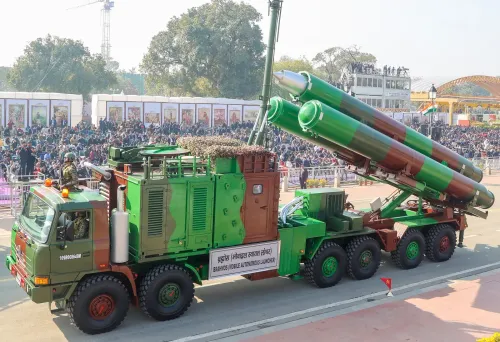
Defence production reached a record ₹1.78 lakh crore in FY2025–26 — nearly four times the 2013–14 level — with exports rising 62.66% year-on-year to ₹38,424 crore .
India's FDI inflows rose 44% to approximately $39 billion in 2025 , even as global developing-economy FDI grew just 2% .
The worker-population ratio (aged 15+) climbed from 46.8% (2017–18) to 58.2% (2023–24) ; unemployment fell from 6% to 3.2% .
India's economic transformation under Prime Minister Narendra Modi is more expansive than a narrow manufacturing lens suggests, according to an analysis by researcher and geopolitical analyst Vivek Y. Kelkar. The argument challenges a prominent critique published by The Economist in October 2026, which assessed Modi's 25 years in public office and argued that India has grown rapidly but failed to achieve the structural transformation necessary to become a major manufacturing economy.
Why the China Comparison Falls Short
The Economist's comparison of India with China's Fujian province — particularly around the movement of workers out of agriculture — has drawn sharp pushback. Critics of the comparison argue it sets an inappropriate benchmark: placing an Indian state operating within a federal, democratic framework alongside a Chinese province that benefited from an authoritarian, state-directed export-industrialisation model.
Admittedly, India's manufacturing share of GDP remains around 16 per cent, and labour mobility out of agriculture has been slower than in several East Asian economies. But the conclusion that industrial transformation has 'barely begun' is difficult to reconcile with recent production data, according to Kelkar's analysis.
Key Production and Employment Data
The Annual Survey of Industries for 2024–25 recorded manufacturing gross value-added growth of 9.59 per cent, employment growth of 7.19 per cent, and an increase of more than 14 lakh workers in manufacturing. Total employment in the sector reached approximately 2.10 crore.
India's 10-year Gross Fixed Capital Formation (GFCF) average stands at approximately 29 per cent — broadly comparable to South Korea's 31 per cent, Vietnam's 28 per cent, and above Japan's 25 per cent.
Electronics production surged from ₹1.9 lakh crore in 2014–15 to ₹11.3 lakh crore in 2024–25, while electronics exports jumped from ₹38,000 crore to ₹3.27 lakh crore over the same period. Mobile manufacturing has expanded considerably, reportedly creating an estimated 25 lakh jobs over the decade. The challenge ahead, analysts note, is to deepen domestic component manufacturing, reduce import dependence, and move up the value chain beyond assembly.
Labour Market: A More Nuanced Picture
The Periodic Labour Force Survey shows the worker-population ratio for those aged 15 and above rose from 46.8 per cent in 2017–18 to 58.2 per cent in 2023–24, while the unemployment rate declined from 6 per cent to 3.2 per cent. Female workforce participation has also increased over the period.
These indicators do not obscure persistent concerns around youth unemployment, underemployment, and the prevalence of informal and low-productivity work. But they complicate any characterisation of India's growth as simply jobless, according to the analysis.
Infrastructure, FDI, and Defence Manufacturing
The expansion of national highways, airports, railway connectivity, and digital payment systems has reshaped the economic geography of the country. The Unified Payments Interface (UPI) has reduced transaction costs and widened access to formal financial services, forming a significant part of India's digital public infrastructure.
On foreign investment, UNCTAD's World Investment Report 2026 recorded a 6 per cent increase in global FDI to $1.6 trillion in 2025. While investment into developed economies rose 11 per cent and into developing economies by just 2 per cent, India's inflows rose 44 per cent to approximately $39 billion — meaningful growth, though analysts note India's global share must grow substantially to materially boost manufacturing.
Defence manufacturing has added another dimension to the transformation. India's defence production reached a record ₹1.78 lakh crore in FY2025–26, nearly four times its 2013–14 level. Defence exports rose to ₹38,424 crore, an increase of 62.66 per cent over the previous year, with the private sector accounting for approximately 45 per cent of exports. Missiles, naval systems, ammunition, radar, electronics, and aerospace production are contributing to a broader industrial ecosystem with capabilities in precision engineering and software.
India's Strategic Industrial Pivot
The growing India-Japan relationship is highlighted as particularly significant — moving beyond infrastructure financing toward defence technology, economic security, and industrial cooperation in semiconductors, rare-earth processing, telecommunications, and naval engineering. This, analysts argue, reflects how economic partnerships are increasingly intertwined with security considerations as both countries seek more resilient supply chains amid intensifying US–China rivalry.
As geopolitical competition, trade weaponisation, and supply-chain vulnerabilities reshape corporate investment decisions globally, India's opportunity lies in becoming a vital production and technology partner as companies diversify their manufacturing networks. Regulatory predictability and supplier ecosystem depth remain essential conditions for capturing that opportunity.
Point of View
And whether the country is building the productive and institutional depth to occupy a larger global role. The data on electronics, defence, and FDI suggest genuine momentum, but India's manufacturing share has stubbornly stayed near 16–17% of GDP for over a decade, which means the base is widening without the structural shift in labour absorption that defined East Asian miracles. The real policy challenge — deepening domestic component manufacturing and moving up the value chain — remains only partially addressed, and no amount of aggregate data should obscure that unfinished agenda.
NationPress
11 Nov 2026
Frequently Asked Questions
What did The Economist say about India's manufacturing transformation?
In an October 2026 assessment of Prime Minister Narendra Modi's 25 years in public office, The Economist argued that India has grown rapidly but failed to achieve the structural transformation necessary to become a major manufacturing economy. It drew comparisons with China's Fujian province, particularly around the pace at which workers have moved out of agriculture.
How has India's electronics sector grown over the past decade?
India's electronics production rose from ₹1.9 lakh crore in 2014–15 to ₹11.3 lakh crore in 2024–25, while electronics exports expanded from ₹38,000 crore to ₹3.27 lakh crore over the same period. Mobile manufacturing has reportedly created an estimated 25 lakh jobs across the decade.
What is India's defence manufacturing record in FY2025–26?
India's defence production reached a record ₹1.78 lakh crore in FY2025–26, nearly four times the 2013–14 level. Defence exports rose to ₹38,424 crore — a year-on-year increase of 62.66% — with the private sector accounting for approximately 45% of those exports.
How did India's FDI inflows compare globally in 2025?
According to UNCTAD's World Investment Report 2026, India's FDI inflows rose 44% to approximately $39 billion in 2025, against a backdrop where global developing-economy FDI grew just 2%. While meaningful, analysts note India's share of global investment must grow substantially to materially boost its manufacturing base.
Is India's growth model genuinely jobless, as critics claim?
The data presents a more complex picture. The Periodic Labour Force Survey shows the worker-population ratio for those aged 15 and above rose from 46.8% in 2017–18 to 58.2% in 2023–24, while the unemployment rate fell from 6% to 3.2%. Concerns around youth unemployment, underemployment, and informal work persist, but the evidence does not support a straightforward 'jobless growth' characterisation.