KOSPI sell-side sidecar triggered as South Korea stocks plunge 7 July
Synopsis
A blowout Samsung Electronics earnings beat — 89.4 trillion won in Q2 operating profit, 6.2% above forecasts — paradoxically sent the KOSPI into a sell-side sidecar, halting program trading for five minutes. The 'sell the news' rout dragged Samsung down 7.4% and Hanwha Ocean a staggering 23% after it missed Canada's submarine contract. It is a stark reminder that in momentum-driven markets, good news can be the worst trigger.
Key Takeaways
The Korea Exchange (KRX) activated a sell-side sidecar for the KOSPI on 7 July , suspending program trading for five minutes at around 10:23 am .
Samsung Electronics reported Q2 operating profit of 89.4 trillion won (US$58.4 billion) , beating forecasts by 6.2 percent , but fell 7.4 percent on profit-taking.
The KOSPI opened down 1.6 percent at 7,920.48 and fell as low as 7,568.59 intraday.
Hanwha Ocean plunged 23 percent after a South Korean consortium failed to win Canada's multibillion-dollar submarine procurement contract .
Foreign investors sold a net 1.74 trillion won ; retail buyers absorbed 1.81 trillion won .
SK hynix fell 6.4 percent ahead of its planned US$29 billion US listing later in the week.
South Korea's benchmark Korea Composite Stock Price Index (KOSPI) triggered a sell-side sidecar on Tuesday, 7 July, forcing a five-minute suspension of program trading at around 10:23 am local time, after the index came under intense selling pressure. The circuit-breaker mechanism was activated by the Korea Exchange (KRX) as the index shed sharply from the open.
What Triggered the Sell-Off
The immediate catalyst was a preliminary second-quarter earnings release from Samsung Electronics, which paradoxically sparked a sharp decline despite a headline beat. The chipmaker estimated its operating profit for the April–June 2025 period at 89.4 trillion won (approximately US$58.4 billion) — exceeding the average market forecast by 6.2 percent, according to financial data provider Yonhap Infomax. Excluding provisions for employee bonuses, quarterly operating profit is estimated to have reached around 100 trillion won.
Rather than lifting sentiment, the strong result prompted widespread profit-taking across the technology sector, which had run up ahead of the earnings announcement. This 'sell the news' dynamic is a recurring pattern in heavily tech-weighted Asian indices following outsized earnings beats.
Scale of the Decline
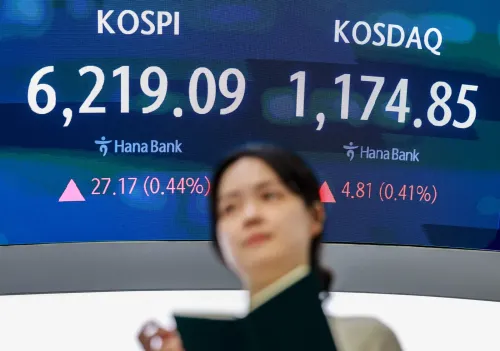
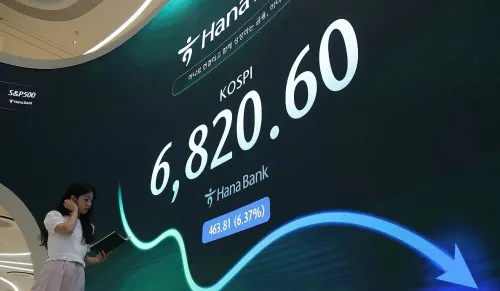
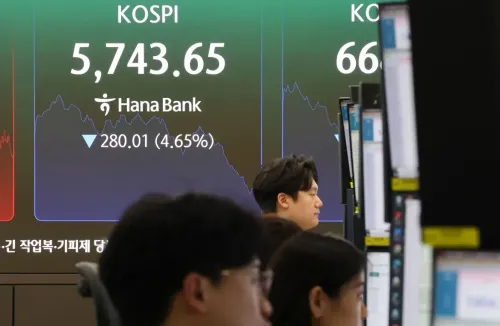
The KOSPI opened down 1.6 percent at 7,920.48 before sliding as low as 7,568.59 during the session — a significant intraday swing. The move came against the grain of overnight Wall Street gains, where the Dow Jones Industrial Average rose 0.29 percent and the tech-heavy Nasdaq advanced 1.12 percent.
Institutional investors and foreign funds were net sellers, offloading 97.3 billion won (US$64 million) and 1.74 trillion won respectively. Retail investors absorbed much of that supply, buying a net 1.81 trillion won.
Biggest Losers on the Board
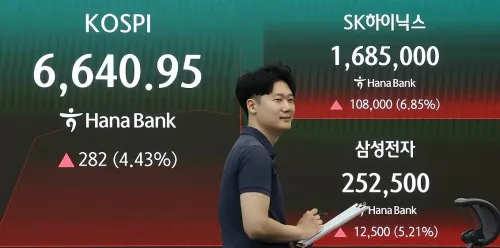
Samsung Electronics fell 7.4 percent, the steepest drop among blue-chips. Rival chip giant SK hynix declined 6.4 percent, with selling pressure amplified ahead of its planned US$29 billion listing in the United States later in the week. Top automaker Hyundai Motor dropped 5.9 percent, while defence firm Hanwha Aerospace shed 4 percent.
The session's sharpest single-stock fall belonged to Hanwha Ocean, which plunged 23 percent after a South Korean consortium that includes the shipbuilder failed to win Canada's multibillion-dollar submarine procurement contract. The loss is a significant commercial setback for the company's international defence ambitions.
Pockets of Strength
Not all stocks were caught in the downdraft. Cosmetics maker Amorepacific gained 2.9 percent, and leading refiner SK Innovation climbed 3.9 percent, suggesting selective rotation into consumer and energy names. The Korean won was trading at 1,527.40 won per US dollar as of 11:20 am, up a marginal 2.6 won from the previous session, indicating limited currency contagion from the equity rout.
What to Watch Next
Markets will closely track SK hynix's US listing later this week, which could set the tone for Korean tech valuations globally. Any further foreign fund outflows — combined with a weak global risk backdrop — could extend the pressure on the KOSPI. The activation of the sidecar mechanism underscores how quickly sentiment can reverse in a market where a single earnings release from a dominant bellwether can override broader macro tailwinds.
Point of View
Not add to it. With SK hynix's US listing imminent and Hanwha Ocean absorbing a major contract loss, the session raises a pointed question about whether Korean equities' recent run has outpaced the underlying earnings cycle.
NationPress
5 Oct 2026
Frequently Asked Questions
What is a sell-side sidecar and why was it triggered on the KOSPI?
A sell-side sidecar is a circuit-breaker mechanism that temporarily suspends program trading when a market index falls sharply, to prevent automated selling from accelerating a decline. The KRX triggered it for the KOSPI on 7 July after the index dropped steeply, halting program trades for five minutes at around 10:23 am.
Why did Samsung Electronics shares fall despite a strong earnings beat?
Samsung Electronics fell 7.4 percent in a classic 'sell the news' reaction — investors who had bought ahead of the result locked in profits once the numbers were confirmed. The chipmaker's Q2 operating profit of 89.4 trillion won beat forecasts by 6.2 percent, but the pre-announcement rally had already reflected much of that upside.
Why did Hanwha Ocean plunge 23 percent?
Hanwha Ocean dropped 23 percent after a South Korean consortium that includes the shipbuilder was not awarded Canada's multibillion-dollar submarine procurement contract. The loss removed a major expected revenue catalyst and triggered a sharp re-rating of the stock.
How did the KOSPI move compare to Wall Street's overnight performance?
The KOSPI's sharp decline bucked positive overnight cues from Wall Street, where the Dow Jones Industrial Average rose 0.29 percent and the Nasdaq gained 1.12 percent. The divergence highlights how domestic profit-taking and company-specific news overrode global risk-on sentiment.
What is the significance of SK hynix's planned US listing this week?
SK hynix is planning a US$29 billion listing in the United States later this week, one of the largest by a Korean company. The stock fell 6.4 percent on 7 July, suggesting investors are repositioning ahead of the listing, which could influence Korean tech valuations and cross-border capital flows.