PM Modi inaugurates India's first LED Dome Planetarium in Mysuru, Karnataka
Synopsis
India now has its first LED Dome planetarium — and it is a genuine technology leap. COSMOS-Mysuru's 15-metre dome, built from 6,150 panels housing 4.2 crore individual LEDs, can be controlled in real time, leaving conventional projector-based facilities behind. PM Modi's inauguration visit, complete with a Sky Theatre show and a session with space scientists, underscores the Centre's intent to make this more than a regional science centre.
Key Takeaways
PM Narendra Modi inaugurated COSMOS-Mysuru Planetarium on 13 November 2026 in Mysuru, Karnataka .
It is India's first LED Dome planetarium , built by the Indian Institute of Astrophysics (IIA) .
The dome spans 15 metres and comprises around 6,150 panels with 4.2 crore individual LEDs , controllable in real time.
Shows will be screened in Kannada , English , and Hindi ; the centre also includes exhibition halls, a museum, lecture hall, and training centre.
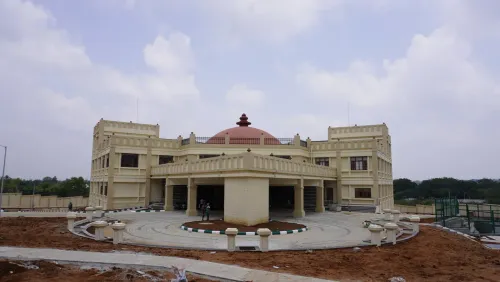
The facility is located on the University of Mysore campus at the foothills of Chamundi Hills .
Finance Minister Nirmala Sitharaman , Governor Sudha Yadav , and CM D.K.
Shivakumar attended the inauguration.
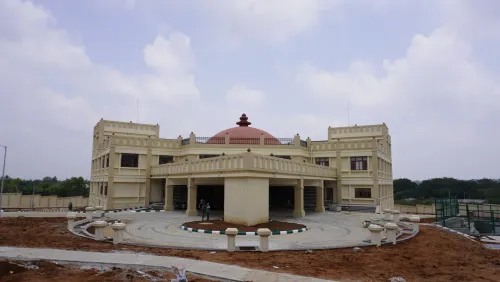
Prime Minister Narendra Modi on 13 November 2026 inaugurated COSMOS-Mysuru Planetarium in Mysuru, Karnataka — India's first LED Dome planetarium — marking a landmark moment in the country's astronomy education and science outreach infrastructure. The facility, built by the Indian Institute of Astrophysics (IIA), is located on the University of Mysore campus at the foothills of Chamundi Hills.
A Technology First for India
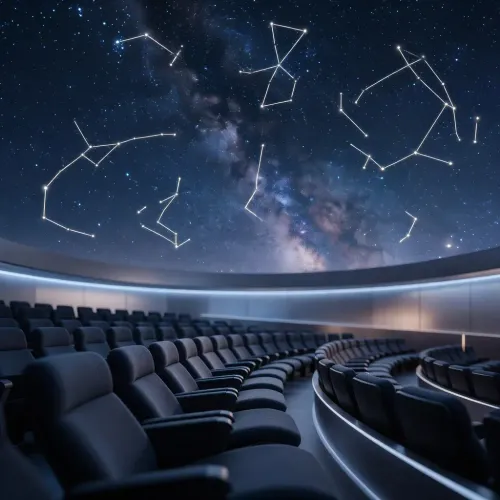
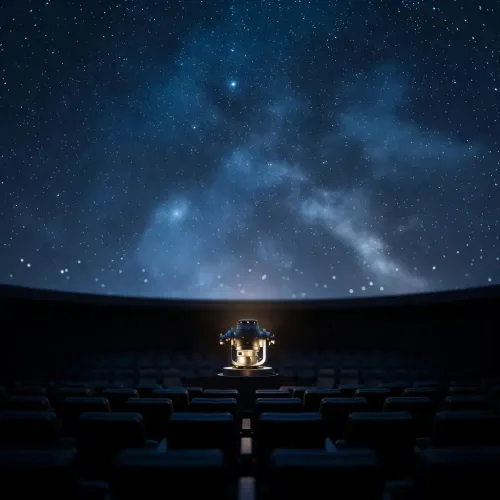
Unlike conventional planetariums that rely on projectors casting images onto a passive dome, COSMOS-Mysuru deploys a 15-metre tilted dome comprising approximately 6,150 panels embedded with 4.2 crore individual LEDs. These panels can be controlled in real time, delivering an immersive visual experience that opens substantially new possibilities for astronomy education and public engagement. The design represents a generational leap over legacy projection-based systems still in use at most Indian planetariums.
What Happened at the Inauguration
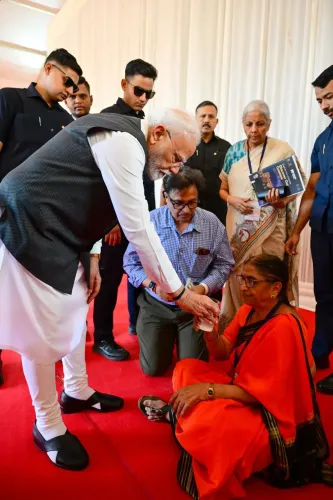
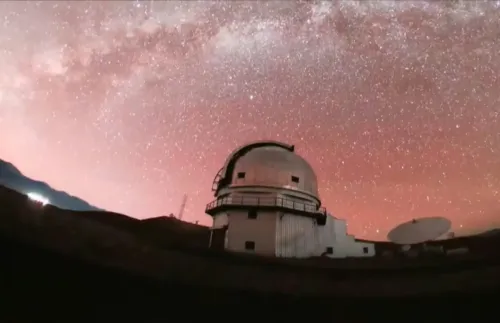
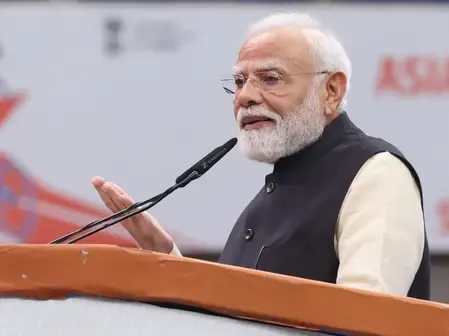
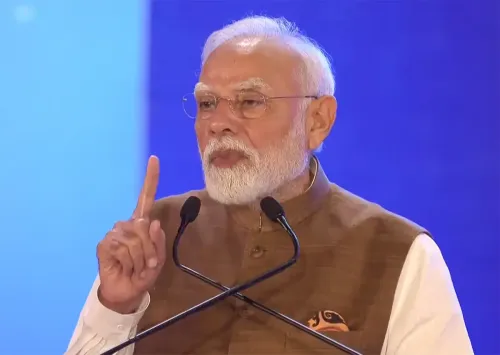
Prime Minister Modi cut the ribbon at the entrance before being taken on a guided tour by Union Finance Minister Nirmala Sitharaman, who briefed him on the facility's features and capabilities. Modi subsequently visited the Sky Theatre, where he watched a show alongside dignitaries. He also held an interaction with experts, astronomers, and space scientists, including those from Ladakh. Also present were Karnataka Governor Sudha Yadav, Chief Minister D.K. Shivakumar, and Mysuru-Kodagu BJP MP Yaduveer Krishnadatta Chamaraja Wadiyar.
What COSMOS-Mysuru Offers
The Sky Theatre will screen professionally produced astronomy programmes as well as an in-house film examining the historical connection between Mysuru and astronomy. Shows will be available in Kannada, English, and Hindi, ensuring broad linguistic accessibility. Beyond the theatre, the centre will house exhibition halls, a museum featuring astronomy models and artefacts, a lecture hall, a training centre, and interactive outdoor exhibits — positioning it as a comprehensive science education hub.
Role Within IIA's Broader Mission
COSMOS-Mysuru is designed to complement the Indian Institute of Astrophysics' active research portfolio, which includes the operation of multi-wavelength telescope facilities across India and in space, development of future astronomical infrastructure, and national-level outreach programmes. Officials describe it as a bridge between cutting-edge astrophysics research and public scientific literacy — a gap that India's existing planetarium network has long struggled to close.
Significance for Science Outreach
India currently operates roughly two dozen planetariums across the country, most of which were built decades ago and rely on analogue or early digital projection systems. COSMOS-Mysuru's LED dome architecture sets a new benchmark that, according to officials, could inform future upgrades at other facilities. Notably, the choice of Mysuru — a city with deep historical ties to astronomy — adds a symbolic dimension to what is also a purely technological milestone. The inauguration signals a renewed Centre-level emphasis on science communication infrastructure as part of India's broader push to deepen public engagement with its growing space programme.
Point of View
Not an incremental upgrade, and the IIA's decision to anchor it on a university campus rather than in a metro is strategically sound for student access. The harder question is replicability: a single flagship rarely transforms a network. Whether the Centre follows through with comparable investments at other regional centres will determine whether this is a turning point or a one-off prestige project.
NationPress
14 Nov 2026
Frequently Asked Questions
What is COSMOS-Mysuru Planetarium?
COSMOS-Mysuru is India's first LED Dome planetarium, inaugurated on 13 November 2026 in Mysuru, Karnataka. Built by the Indian Institute of Astrophysics, it features a 15-metre tilted dome with approximately 6,150 panels housing 4.2 crore individual LEDs that can be controlled in real time.
How is COSMOS-Mysuru different from other planetariums in India?
Unlike conventional planetariums that use projectors to display images on a passive dome, COSMOS-Mysuru uses real-time-controllable LED panels, enabling a far more immersive and dynamic visual experience. This makes it technologically distinct from the analogue or early digital systems used at most of India's existing facilities.
Where is COSMOS-Mysuru located?
The facility is situated on the University of Mysore campus at the foothills of Chamundi Hills in Mysuru, Karnataka. Its university campus location is intended to maximise student and academic access.
What facilities does COSMOS-Mysuru offer visitors?
Visitors can access the Sky Theatre, which screens astronomy programmes in Kannada, English, and Hindi, along with an in-house film on Mysuru's astronomical history. The centre also houses exhibition halls, a museum with astronomy models and artefacts, a lecture hall, a training centre, and interactive outdoor exhibits.
Who was present at the inauguration of COSMOS-Mysuru?
Prime Minister Narendra Modi inaugurated the facility, with Union Finance Minister Nirmala Sitharaman, Karnataka Governor Sudha Yadav, Chief Minister D.K. Shivakumar, and Mysuru-Kodagu BJP MP Yaduveer Krishnadatta Chamaraja Wadiyar among the dignitaries present. Modi also interacted with astronomers and space scientists, including those from Ladakh.