Why Did NASA Delay the Artemis II Moon Mission to March?
Synopsis
NASA has announced a new launch window for the Artemis II mission to the Moon due to a hydrogen leak detected during a recent fuelling test. The mission aims to send astronauts on a historic journey around the Moon, marking a significant milestone for space exploration. Read on to discover the challenges and future plans for Artemis II.
Key Takeaways
NASA delays Artemis II mission to March due to hydrogen leak.
Initial launch date was set for February 6, later shifted to February 8.
The wet dress rehearsal successfully loaded cryogenic propellants.
Engineers faced challenges but met many objectives during testing.
Second rehearsal planned for March before launch.
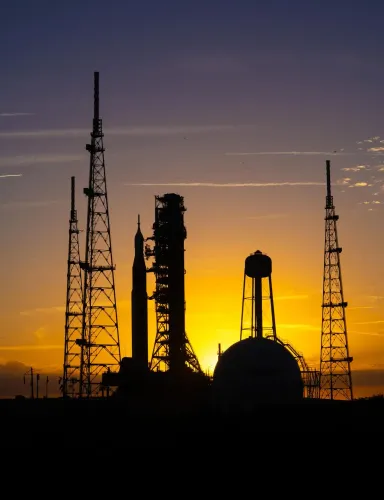
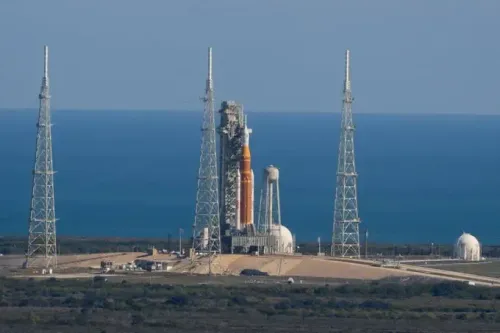
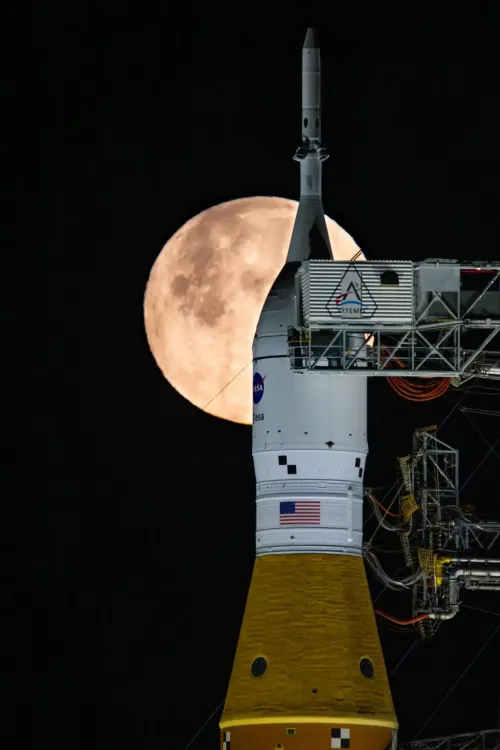
New Delhi, Feb 3 (NationPress) NASA has decided to delay the groundbreaking Artemis II mission to the Moon until March, following the discovery of a hydrogen leak during a vital fuelling test.
The mission, which aims to send a crew of four astronauts on a lunar orbit from the Kennedy Space Center in Florida, was originally scheduled for February 6. It was then pushed back to February 8 due to adverse cold weather conditions affecting the Florida area.
“With the conclusion of the wet dress rehearsal today, we are shifting away from the February launch window and are now aiming for March for the earliest possible launch of Artemis II,” stated NASA Administrator Jared Isaacman in a social media update.
“Our commitment to safety is paramount for our astronauts, personnel, systems, and the public. We will only proceed with the launch when we are fully prepared for this historic endeavor,” he emphasized.
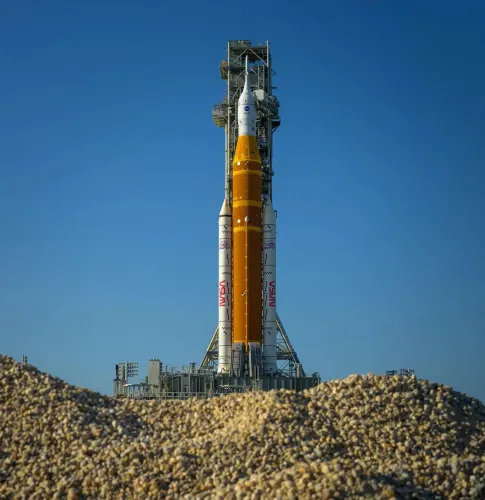
The two-day testing at Kennedy Space Center in Florida commenced on January 31 and successfully filled the Space Launch System (SLS) rocket's tanks with cryogenic propellants.
However, the test was halted early on Tuesday due to a liquid hydrogen leak at the tail service mast umbilical interface, which had shown elevated levels of liquid hydrogen earlier during the countdown.
Engineers dedicated several hours to troubleshooting the issue but were ultimately unsuccessful.
“The team conducted a preliminary run of terminal countdown operations during the test, reaching approximately five minutes left in the countdown, before the ground launch sequencer automatically halted the countdown due to a spike in the liquid hydrogen leak rate,” NASA noted in a blog update.
Furthermore, “a valve related to the Orion crew module hatch pressurization, which had recently been replaced, needed retorquing, leading to extended closeout operations,” the statement continued, acknowledging that despite facing challenges, a number of planned objectives were achieved.
A second wet dress rehearsal is anticipated in March, prior to the new launch date.
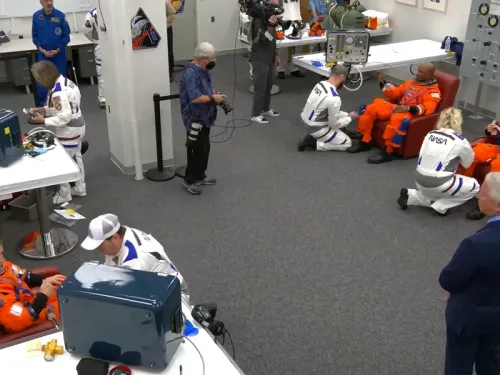
In the meantime, the Artemis II astronauts will be released from quarantine, which they began on January 21 in Houston. They will re-enter quarantine about two weeks before the next anticipated launch opportunity, according to NASA.
This 10-day mission will pave the way for Artemis III, scheduled for 2027, when humans will land on the lunar South Pole for the first time and establish a sustained presence there.
The Artemis II crew comprises NASA’s commander Reid Wiseman, pilot Victor Glover, and mission specialists Christina Koch and Jeremy Hansen from the Canadian Space Agency (CSA).
Point of View
I recognize the importance of the Artemis II mission in advancing our understanding of space and technology. This delay underscores the rigorous safety protocols that NASA follows, ensuring that the mission's success is prioritized without compromising the safety of the astronauts involved. Our commitment is to bring you the latest updates on this significant endeavor.
NationPress
5 Oct 2026
Frequently Asked Questions
What caused the delay of the Artemis II mission?
The Artemis II mission was postponed due to a hydrogen leak detected during a key fuelling test at Kennedy Space Center.
When is the new launch date for Artemis II?
NASA is now targeting March as the earliest possible launch date for the Artemis II mission.
What is the purpose of the Artemis II mission?
The mission aims to send a crew of astronauts on a journey around the Moon, paving the way for future lunar exploration.
Who are the astronauts participating in Artemis II?
The Artemis II crew includes commander Reid Wiseman, pilot Victor Glover, mission specialists Christina Koch, and Jeremy Hansen from the Canadian Space Agency.
What is the significance of the Artemis II mission?
Artemis II is a critical step toward returning humans to the Moon and establishing a sustainable presence there, leading to future missions like Artemis III.