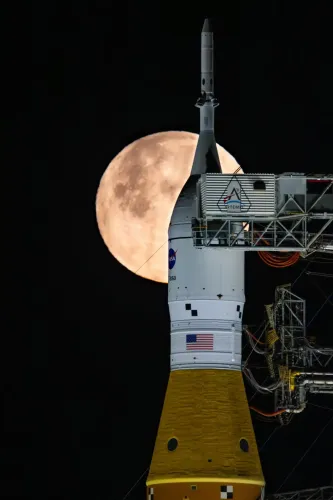
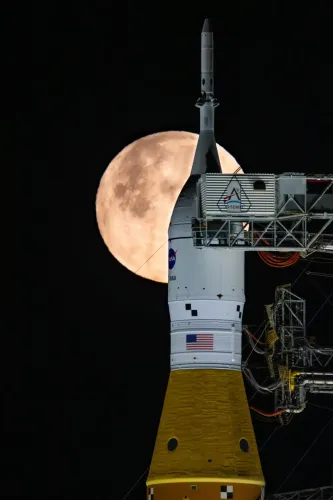
Has Cold Weather Postponed NASA's Artemis II Moon Mission to February 8?
Synopsis
NASA's Artemis II mission to the Moon, initially scheduled for February 6, has been rescheduled to February 8 due to adverse weather conditions in Florida. This launch is crucial for testing the Orion spacecraft ahead of future missions aimed at establishing a human presence on the lunar South Pole.
Key Takeaways
The Artemis II mission's launch has been postponed to February 8 due to adverse weather conditions.
Engineers are monitoring the situation closely to ensure safety and success.
This mission is a precursor to future lunar explorations and aims to set the foundation for sustainable human presence on the Moon.
New Delhi, Jan 31 (NationPress) Due to frigid weather conditions and gusty winds sweeping through Florida, NASA has updated its launch target for the Artemis II mission to the Moon to February 8.
The original plan was to send a crew of four astronauts on a lunar orbit mission from Kennedy Space Center in Florida on February 6.
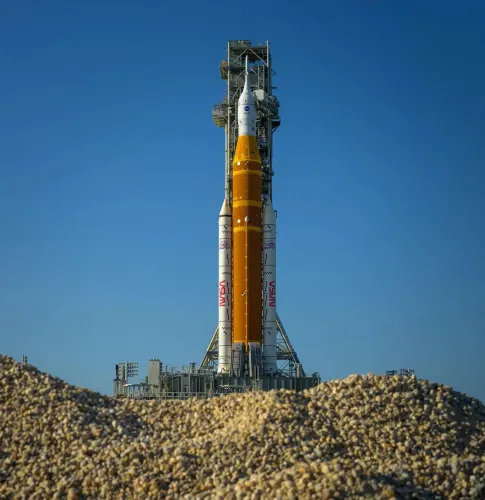
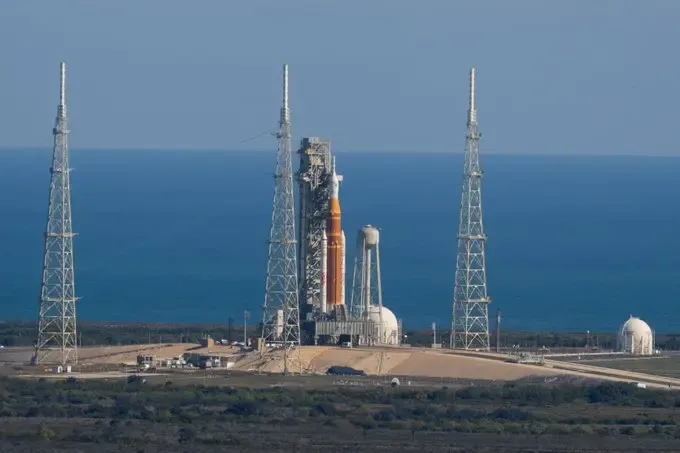
In a statement shared on the social media platform X, NASA noted, “In light of the weather, we now plan to commence fueling our Artemis II Moon rocket on Monday, Feb. 2, at Kennedy Space Center in Florida. Consequently, the earliest launch date is now set for Sunday, Feb. 8. A final launch date will be determined after reviewing the results from the wet dress rehearsal.”
NASA further explained, “In recent days, engineers have been diligently tracking weather conditions as cold air and winds impact Florida. Managers have evaluated hardware capabilities against the anticipated forecast, factoring in the unusual arctic outbreak affecting the region, and opted to revise the timeline.”
Despite these changes, preparations at the launch pad are ongoing for the wet dress rehearsal. Adjusting the timeline for this test is crucial, as the forecasted weather this weekend could breach launch conditions.
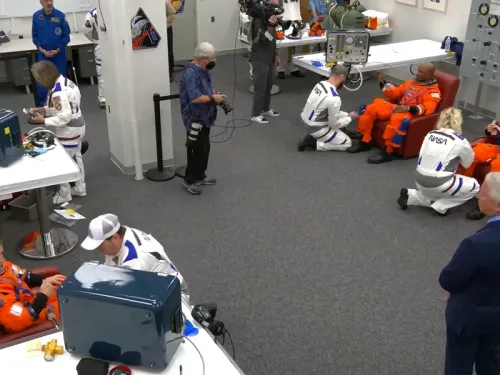
While the Artemis II crew is in quarantine in Houston, engineers have ensured that the Orion spacecraft is powered and its heaters are adjusted for colder temperatures, according to NASA.
Purges, which are essential for maintaining optimal environmental conditions for spacecraft components, including the booster aft skirts, have also been configured for the colder weather.
The 10-day mission is a precursor to Artemis III, set for 2027, which aims to land humans on the lunar South Pole for the first time and establish a sustainable presence there.
This mission marks a significant milestone, occurring 50 years after the Apollo 17 mission in December 1972, which was humanity's first landing on the Moon.
The Artemis II crew consists of NASA commander Reid Wiseman, pilot Victor Glover, mission specialists Christina Koch, and Jeremy Hansen from the Canadian Space Agency (CSA).
With Artemis II, NASA aims to rigorously evaluate its Orion spacecraft and deep-space exploration systems under real conditions, although the spacecraft will not land on the lunar surface.
Point of View
The delay of the Artemis II mission highlights the challenges faced by space agencies in adapting to unexpected weather conditions. The decision made by NASA underscores their commitment to ensuring safety and success in space exploration, reflecting a proactive approach in the realm of modern aerospace.
NationPress
18 Oct 2026
Frequently Asked Questions
Why was the Artemis II mission rescheduled?
The mission was rescheduled due to cold weather and high winds in Florida, which posed challenges to the launch conditions.
What is the new launch date for Artemis II?
The new target launch date for the Artemis II mission is February 8.
What is the purpose of the Artemis II mission?
The Artemis II mission aims to test NASA's Orion spacecraft and deep-space exploration systems in preparation for future lunar missions.
Who are the crew members of Artemis II?
The crew includes NASA commander Reid Wiseman, pilot Victor Glover, mission specialists Christina Koch, and Jeremy Hansen from the Canadian Space Agency.
What historical significance does Artemis II hold?
Artemis II marks a significant milestone 50 years after the Apollo 17 mission, which was humanity's last crewed landing on the Moon.