Nvidia Partners Japan's Top Banks to Build AI Factories

Synopsis
Nvidia has announced partnerships with four major Japanese banks — Mizuho, SMFG, Rakuten Bank, and MUFG NICOS — to build production-scale AI factories using its Nemotron open models and Agent Toolkit, marking a decisive shift from AI evaluation to full infrastructure deployment in Japan's financial sector.
Key Takeaways
Nvidia is partnering with Mizuho , SMFG , Rakuten Bank , and MUFG NICOS to build AI factories in Japan's banking sector.
The deployments will use Nvidia Nemotron open models and the Nvidia Agent Toolkit , released in 2024 for domain-specific enterprise use.
Japan's Big Three megabanks — MUFG , Mizuho , and SMFG — are all represented, alongside digital lender Rakuten Bank .
The move signals a shift from multi-year AI evaluation phases to production-scale infrastructure investment across Japan's financial sector.
Japan's Financial Services Agency has actively promoted digital transformation in banking since the early 2020s , creating a conducive regulatory environment.
The partnership reinforces growing US-Japan private-sector cooperation in AI and semiconductors amid global supply-chain realignments.
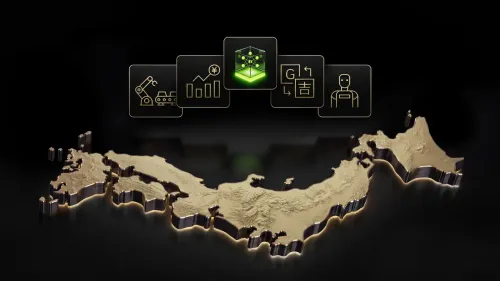
Chip giant Nvidia announced on Wednesday, 15 July 2026 that it is actively partnering with four of Japan's largest financial institutions to construct what it calls 'AI factories' — production-scale artificial intelligence infrastructure built on its own open models and developer toolkits.
The company named Mizuho Financial Group, Sumitomo Mitsui Financial Group (SMFG), Rakuten Bank, and MUFG NICOS — the credit-card arm of Mitsubishi UFJ Financial Group — as partners in the initiative. The deployments will use Nvidia Nemotron open models and the Nvidia Agent Toolkit.
Context
Nvidia's post frames the announcement as the culmination of a multi-year evaluation phase: 'Japan's biggest banks spent the last few years evaluating AI. Now they're building the infrastructure for it.' The language signals a decisive pivot from proof-of-concept pilots to full-scale, production-ready AI systems inside some of the world's most systemically important financial institutions.
The four named institutions together represent a substantial share of Japan's banking assets. MUFG is Japan's largest bank by assets, while Mizuho and SMFG round out the country's 'Big Three' megabanks. Rakuten Bank, a digital-native lender owned by the Rakuten Group conglomerate, brings a fintech dimension to the partnership.
Policy Backdrop
Japan's Financial Services Agency began issuing active guidelines on fintech and digital transformation for banks in the early 2020s, encouraging institutions to modernise core operations. That regulatory posture created a permissive environment for banks to experiment with and ultimately adopt AI at scale.
Nvidia released its Nemotron family of open models and enterprise AI toolkits in 2024, specifically designed to support domain-specific deployments in industries such as finance, healthcare, and manufacturing. The Agent Toolkit allows enterprises to build autonomous AI agents capable of executing complex, multi-step workflows without continuous human intervention.
Stakeholders and Impact
For Japan's financial sector, the shift from AI evaluation to AI infrastructure represents a significant capital commitment. Banks are expected to deploy these systems across functions such as customer service automation, fraud detection, credit-risk modelling, and back-office processing — areas where speed and accuracy carry direct commercial and regulatory consequences.
The partnership also underscores deepening US-Japan private-sector cooperation in advanced technology at a moment when semiconductor supply chains and AI governance are prominent topics in bilateral diplomatic discussions. Nvidia's role as the dominant provider of GPU-based AI computing gives it an outsized position in shaping how global financial institutions build their AI stacks.
For Rakuten Bank in particular, the collaboration could accelerate its ambition to differentiate itself from legacy lenders through technology-led financial services, a strategic priority for the broader Rakuten Group.
What's Next
Industry observers will watch whether other Japanese regional and digital banks announce similar infrastructure partnerships in the months ahead, and whether the Financial Services Agency issues fresh guidance on responsible AI use in credit decisions and customer-facing applications. Nvidia's move into Japan's banking sector may also prompt rival chip and AI-platform providers to accelerate their own outreach to financial institutions across Asia.
The broader pattern — US technology companies providing the foundational AI infrastructure while local financial institutions supply domain expertise and regulatory relationships — is likely to define how AI factories take shape across the global banking sector through the remainder of this decade.
Point of View
Not a routine product update — it signals that the AI infrastructure race in global finance has entered a consolidation phase where platform lock-in begins. For Japan, whose banks have historically been cautious technology adopters, the pivot to production AI infrastructure is a structural shift with long-term implications for employment, credit markets, and regulatory oversight. The choice of open models via Nemotron is strategically significant: it lowers the barrier to adoption while keeping banks tethered to Nvidia's broader hardware and software ecosystem. Geopolitically, the deepening of US-Japan AI infrastructure ties in the private sector mirrors and reinforces the two governments' stated priorities around trusted technology supply chains.
NationPress
16 Jul 2026
Frequently Asked Questions
Which Japanese banks are partnering with Nvidia for AI?
Mizuho Financial Group , Sumitomo Mitsui Financial Group (SMFG) , Rakuten Bank , and MUFG NICOS are the four Japanese financial institutions partnering with Nvidia to build AI factories.
What is an Nvidia AI factory?
An Nvidia 'AI factory' refers to a production-scale artificial intelligence infrastructure built on Nvidia's GPU hardware, open models such as Nemotron , and software toolkits like the Agent Toolkit , designed to run AI workloads at enterprise scale continuously.
What is Nvidia Nemotron and how is it used in banking?
Nvidia Nemotron is a family of open AI models released in 2024 for domain-specific enterprise deployments. In banking, such models can power applications including fraud detection, customer service automation, credit-risk analysis, and back-office processing.
Why are Japanese banks investing in AI infrastructure now?
Japan's major banks spent several years evaluating AI in pilot programmes. Regulatory encouragement from Japan's Financial Services Agency since the early 2020s , combined with the maturation of enterprise AI platforms, has enabled the shift to full production infrastructure investment.
What is the Nvidia Agent Toolkit?
The Nvidia Agent Toolkit is a developer framework that allows enterprises to build autonomous AI agents capable of executing complex, multi-step tasks. It is part of Nvidia's broader suite of enterprise AI software tools available alongside its open model families.