Israel-Lebanon Rome talks: pilot zones withdrawal plan moves forward

Synopsis
Six rounds of US-mediated talks and a Washington framework later, Israel and Lebanon are inching toward a concrete test: handing two pilot zones in southern Lebanon to the Lebanese army. The real question is whether Hezbollah disarmament — the most politically explosive condition Israel has set — can keep pace with troop withdrawals, or whether it becomes the fault line that unravels the deal.
Key Takeaways
Israel and Lebanon completed their sixth round of US-mediated talks in Rome on 16 July .
Both sides agreed on a withdrawal mechanism for the first two 'pilot zones' in southern Lebanon, transferring control to the Lebanese Armed Forces (LAF) .
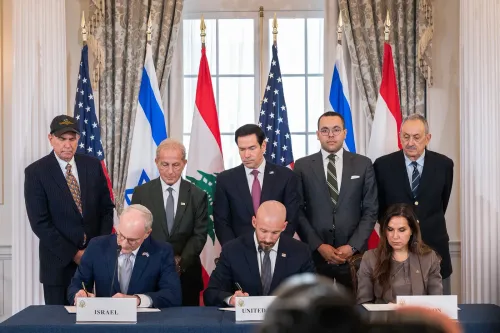
The talks built on a framework agreement reached in Washington on 26 June .
Israel's full withdrawal remains conditional on the LAF establishing lasting control and progress on Hezbollah disarmament.
The date for the next round of negotiations has not yet been determined.
Italian Foreign Minister Antonio Tajani said hosting the talks reflects Italy's role in promoting Middle East peace.
Israel and Lebanon concluded their sixth round of US-mediated negotiations in Rome on 16 July, making measurable progress toward launching a pilot project that would transfer control of parts of southern Lebanon from Israeli forces to the Lebanese Armed Forces (LAF), according to Italian media reports. The two sides agreed to continue talks at a later date, with a new round yet to be scheduled.
Key Developments from Rome
According to reports citing sources close to the negotiations, Israel and Lebanon have agreed on a mechanism for the withdrawal of Israeli forces from the first two designated 'pilot zones' in southern Lebanon. The talks, held at the US Embassy in Rome, built on a framework agreement reached in Washington on 26 June.
The parties reportedly clarified the sequence and conditions governing Israeli troop withdrawal, the deployment of the LAF, the disarmament of Hezbollah, and the verification of the Lebanese state's effective control over the areas in question.
Why the Pilot Zones Were Chosen
Sources indicated that Israel is expected to proceed with withdrawal from the first two pilot zones because those designated areas are considered to pose no direct security threat to Israel. The pilot project is designed to test the Lebanese army's capacity to take control of territory, dismantle military infrastructure, and prevent Hezbollah from re-establishing a foothold — before the mechanism is extended to other parts of southern Lebanon.
Notably, this phased approach reflects a deliberate caution on Israel's part: a full withdrawal, Israeli sources stressed, remains conditional on the LAF demonstrating lasting control and tangible progress on Hezbollah's disarmament.
Competing Priorities at the Table
The negotiations reflect a fundamental tension between the two sides' core objectives. Lebanon is seeking to restore state sovereignty in the south while avoiding internal political instability — a delicate balance given Hezbollah's deep entrenchment in Lebanese society. Israel, meanwhile, insists on verifiable security guarantees to ensure that areas vacated by its forces do not revert to Hezbollah's control.
Both sides reportedly acknowledge that the overall process will take considerable time, underscoring the complexity of translating the Washington framework into ground-level implementation.
Italy's Role and Regional Stakes
Italian Deputy Prime Minister and Foreign Minister Antonio Tajani stated that hosting the talks reflects Italy's commitment to supporting peace and stability in the Middle East. Rome has emerged as a key venue for these negotiations, having now hosted multiple rounds since the Washington framework was established.
The sixth round follows a previous meeting in Washington in late June. The date for the next round has not yet been determined, leaving the timeline for any actual withdrawal open-ended.
What Comes Next
The immediate focus will be on whether Israel proceeds with withdrawal from the first two pilot zones as expected. If the LAF demonstrates effective control in those areas, the framework could be extended incrementally across southern Lebanon. Analysts will be watching whether Hezbollah's disarmament — the most politically fraught element — advances in parallel or remains a sticking point that stalls the broader process.
Point of View
And Hezbollah will not disarm under Israeli pressure. By starting with two zones deemed non-threatening, both sides buy time without conceding their core positions. The real stress test comes when the framework moves toward areas where Hezbollah's presence is denser and Lebanon's internal politics make LAF deployment more contested. The Washington framework gave this process a diplomatic scaffold; Rome is where the load-bearing walls are being tested.
NationPress
16 Jul 2026
Frequently Asked Questions
What were the Israel-Lebanon Rome talks about?
The talks, the sixth round of US-mediated negotiations held at the US Embassy in Rome on 16 July, focused on implementing a framework agreement reached in Washington on 26 June. The two sides discussed the withdrawal of Israeli forces from designated 'pilot zones' in southern Lebanon and the deployment of the Lebanese Armed Forces to those areas.
What are the 'pilot zones' in southern Lebanon?
The pilot zones are specific areas in southern Lebanon from which Israeli forces would withdraw first, transferring control to the Lebanese Armed Forces. They were selected because they are considered to pose no direct security threat to Israel, allowing both sides to test the handover mechanism before expanding it to other parts of the south.
What conditions has Israel set for a full withdrawal from Lebanon?
Israel has stated that a full withdrawal is conditional on the Lebanese army demonstrating lasting control over vacated territory and making verifiable progress on Hezbollah's disarmament. Without those guarantees, Israel insists the areas could revert to Hezbollah's control.
What is Lebanon's position in these negotiations?
Lebanon is seeking to restore state sovereignty over its southern territory while avoiding internal instability — a complex balance given Hezbollah's political and military presence. Beirut wants a phased Israeli withdrawal but must manage domestic pressures that constrain how aggressively it can pursue Hezbollah disarmament.
When will the next round of talks take place?
The date for the next round of negotiations has not yet been determined, according to reports from sources close to the talks. Both sides agreed to continue negotiations at a later date after concluding the Rome round on 16 July.