Israel, Lebanon agree to US-brokered ceasefire, vow to disarm Hizballah
Synopsis
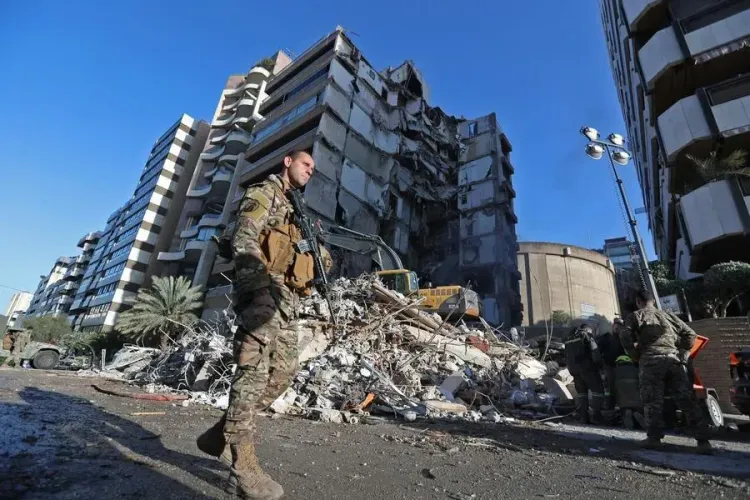
After two days of US-brokered talks in Washington, Israel and Lebanon have agreed to a ceasefire — but only if Hizballah fully evacuates the South Litani Sector. The deal pivots on a bold experiment: pilot zones where the Lebanese Armed Forces, not non-state actors, hold exclusive control. Next round of talks begins the week of 22 June.
Key Takeaways
Israel and Lebanon agreed to a US-brokered ceasefire after talks on 2 and 3 June at the State Department.
The ceasefire is contingent on a complete cessation of Hizballah fire and evacuation from the South Litani Sector .
Both sides will create pilot zones under exclusive Lebanese Armed Forces control.
The joint statement condemned Iran's regional attacks and support for proxies.
Political and security negotiations resume the week of 22 June .
Israeli Ambassador Yechiel Leiter credited Presidents Trump and Aoun , and PM Netanyahu .
Israel and Lebanon have agreed to implement a ceasefire after two days of US-brokered negotiations in Washington, with both sides committing to advance security arrangements aimed at preventing the return of armed non-state groups in southern Lebanon. The breakthrough, announced on 3 June, emerged from the fourth high-level trilateral meeting between representatives of the United States, Israel and Lebanon at the State Department on 2 and 3 June.
What the deal commits to
According to a joint statement issued by the three governments, the ceasefire is “contingent on a complete cessation of Hizballah fire and the evacuation of all Hizballah operatives from the South Litani Sector.” The parties also agreed to fast-track the creation of pilot zones where the Lebanese Armed Forces would exercise exclusive control to the exclusion of all non-state actors.
Announcing the outcome, State Department Counsellor Dan Holler said, “As a result of US-led negotiations, Israel and Lebanon agreed to the implementation of a ceasefire.” He added that the two sides would “swiftly advance the creation of pilot zones” under US guidance.
Security framework and sovereignty
The delegations built on talks held at the Pentagon on 29 May, framing a security architecture intended to safeguard the sovereignty and territorial integrity of both countries. The framework explicitly includes “the dismantlement of non-state armed groups and the prevention of their re-emergence.”
All three governments affirmed that the future relationship between Israel and Lebanon must be determined by the two sovereign governments alone, rejecting attempts by “any state or non-state actor to hold Lebanon's future hostage.” Israel and Lebanon also reaffirmed that they had “no hostile intent toward one another.”
The Iran factor
A significant portion of the discussions focused on regional security. The joint statement said all parties condemned “Iran's attacks on countries in the region, and ongoing activities that undermine stability throughout the Middle East,” including support for proxies. The United States reiterated Secretary of State Marco Rubio's position from 2 June that “Hizballah is not just an enemy of Israel and an enemy of America, but an enemy of Lebanon.”
Israel reiterated that its security could only be guaranteed through “the disarmament of Hizballah and the dismantlement of its infrastructure throughout Lebanon.” Beirut, in turn, stressed “the principles of territorial integrity and full state sovereignty,” and committed to building up the Lebanese Armed Forces with US support.
The political reception
Israeli Ambassador Yechiel Leiter credited the leadership behind the breakthrough. “This achievement would not have been possible without the leadership of President Trump, Prime Minister Netanyahu, and President Aoun, and we are thankful for their leadership,” he said.
What happens next
The two sides agreed to reconvene political and security negotiations during the week of 22 June, with Washington continuing to facilitate communication in the interim. The deal follows months of heightened tensions along the Israel-Lebanon border and broader instability involving Iran-backed groups across the Middle East. Whether the ceasefire holds will hinge on verifiable Hizballah withdrawal from the South Litani Sector — a benchmark previous arrangements have struggled to enforce.
Point of View
But the enforcement question is identical: who actually moves Hizballah out of the South Litani Sector. Pilot zones under exclusive Lebanese Armed Forces control are a useful diagnostic — if Beirut can hold even one, the framework has teeth; if not, this becomes another paper ceasefire. The trilateral framing also marks a shift: Washington is no longer brokering at arm's length but underwriting Lebanese state capacity directly, which Tehran will read as escalation.
NationPress
19 Sept 2026
Frequently Asked Questions
What did Israel and Lebanon agree to in the Washington talks?
Israel and Lebanon agreed to implement a ceasefire and to advance a security framework aimed at preventing the return of armed non-state groups in southern Lebanon. The agreement was reached at the fourth trilateral US-Israel-Lebanon meeting on 2 and 3 June at the State Department.
What are the conditions for the ceasefire to hold?
The ceasefire is contingent on a complete cessation of Hizballah fire and the evacuation of all Hizballah operatives from the South Litani Sector. The two sides also agreed to create pilot zones where the Lebanese Armed Forces will exercise exclusive control.
What role is the United States playing?
The United States brokered the talks and will continue mediating between Israel and Lebanon, while also supporting the Lebanese Armed Forces to assert authority across Lebanese territory. Secretary of State Marco Rubio reiterated on 2 June that Hizballah is an enemy of Lebanon itself.
When will the next round of talks take place?
Political and security negotiations are scheduled to resume during the week of 22 June. Washington will continue facilitating communication between the two sides in the interim.
How does this deal address Iran's regional role?
The joint statement explicitly condemned Iran's attacks on countries in the region and its support for proxies that undermine Middle East stability. The security framework includes the dismantlement of non-state armed groups and prevention of their re-emergence.