White House Reminds: Every Democrat Voted Against GOP Tax Cuts
Synopsis
The White House has reignited America's sharpest tax-policy battle, reminding voters that every Democrat opposed the 2017 Tax Cuts and Jobs Act while framing any expiration of its provisions as a multi-trillion-dollar tax hike on Americans.
Key Takeaways
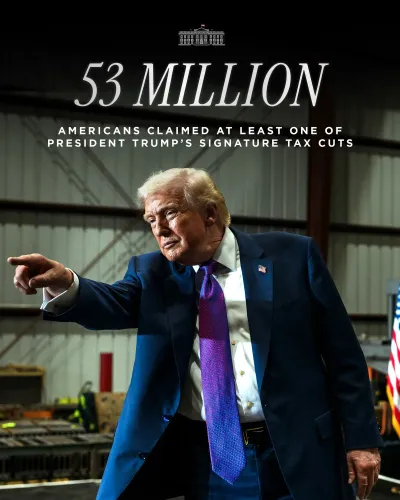
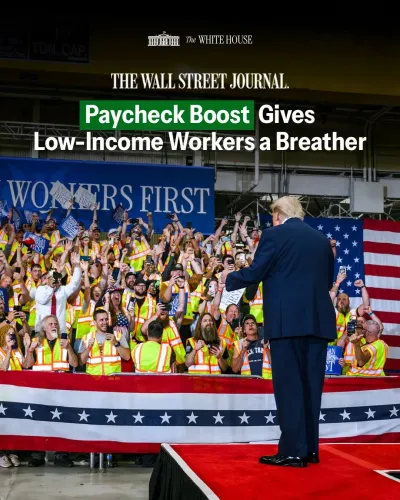
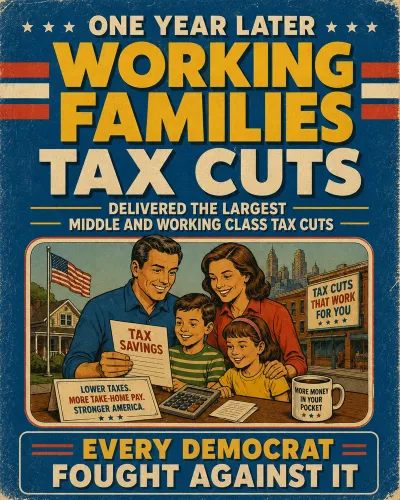
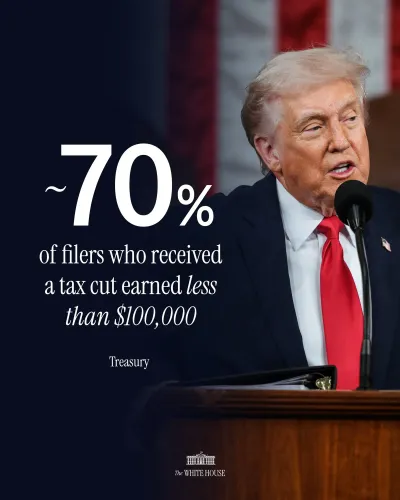
The White House posted on November 3, 2026 , calling the 2017 Republican legislation the largest tax cuts in US history.
The Tax Cuts and Jobs Act (TCJA) , enacted in December 2017 , cut the corporate tax rate from 35% to 21% and lowered individual rates across brackets.
Not a single Democrat in Congress voted for the TCJA when Republicans controlled both chambers.
Several individual tax provisions in the TCJA are set to expire after 2025 , which Republicans frame as an automatic tax hike if not extended.
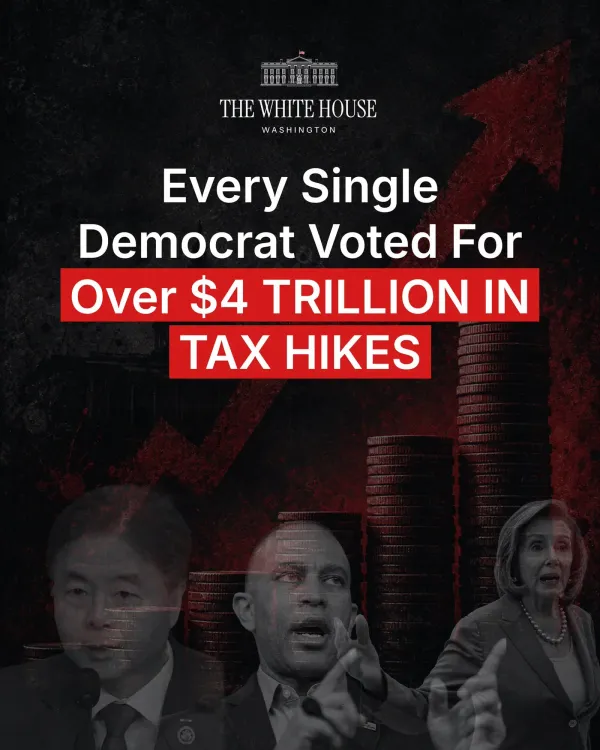
The White House post frames Democratic opposition as enabling a 'multi-trillion-dollar tax hike' on American taxpayers.
Congressional budget reconciliation efforts to extend TCJA provisions remain a live and consequential debate.
The partisan fault line over American tax policy crackled back into public view on Tuesday, November 3, 2026, as The White House fired a pointed reminder at the Democratic Party — framing the landmark 2017 Republican tax legislation as the largest tax cuts in American history and casting Democratic opposition as a vote to enable a 'multi-trillion-dollar tax hike' on the country.
The 2017 Tax Cuts Republicans Want You to Remember
The legislation at the centre of this resurfaced salvo is the Tax Cuts and Jobs Act (TCJA), signed into law in December 2017 — the most sweeping overhaul of the US federal tax code since 1986. The TCJA slashed the corporate tax rate from 35% to 21% and reduced individual income tax rates across multiple brackets, delivering significant savings to both businesses and millions of households.
Republicans shepherded the legislation through a Congress they controlled at the time. Not a single Democrat in either chamber voted for it — a fact The White House is now amplifying with fresh urgency.
Why 'Tax Hike' Is the Phrase Republicans Are Betting On
The White House's framing leans on a structural feature baked into the original law: several of the TCJA's individual tax provisions were written with expiration dates, set to sunset after 2025. Republicans argue that allowing those provisions to lapse — without new legislation to extend them — is functionally equivalent to a tax increase on working Americans. The post's reference to a 'multi-trillion-dollar tax hike' reflects that framing, though the precise figure and its current legislative context are tied to ongoing congressional negotiations that remain fluid.
Democrats have historically countered that the TCJA disproportionately benefited corporations and the wealthiest taxpayers, and that any revenue recaptured through expiration or reform is not a 'hike' but a correction. That counter-argument, however, is conspicuously absent from the White House's messaging — by design.
The Political Calculus Behind the 'Reminder'
The timing matters. With congressional budget reconciliation and tax-extension debates continuing to shape the legislative calendar, the White House is planting a simple, binary story in the public mind: Republicans cut your taxes, Democrats want to raise them. It is a message road-tested across election cycles, and it is being deployed again with the institutional weight of the Executive Office behind it.
For US taxpayers and corporations watching the fate of the TCJA's expiring provisions, the coming months will be decisive. The White House post is less a news announcement than an opening argument — and the other side has not yet had its rebuttal.
Point of View
' the administration signals it is not announcing new policy but rehearsing an argument it intends to win in the court of public opinion. The move fits a broader Republican playbook in which tax cuts are cast as permanent moral achievements and their expiration as Democratic aggression — a frame that sidesteps the distributional debate about who benefited most. With TCJA provisions set to expire, the coming months will test whether this narrative holds against Democratic counter-messaging on economic equity.
NationPress
3 Nov 2026
Frequently Asked Questions
What is the Tax Cuts and Jobs Act (TCJA)?
The Tax Cuts and Jobs Act is a landmark US federal tax law enacted in December 2017 under a Republican-controlled Congress. It was the most significant overhaul of the US tax code since 1986, cutting the corporate tax rate from 35% to 21% and reducing individual income tax rates across multiple brackets.
Did any Democrats vote for the 2017 Republican tax cuts?
No. Not a single Democrat in the US House or Senate voted in favour of the Tax Cuts and Jobs Act when it passed in December 2017. The legislation passed entirely along party lines with Republican support.
Why is the White House calling it a 'multi-trillion-dollar tax hike'?
Several provisions of the TCJA — particularly those affecting individual income tax rates — were written to expire after 2025. Republicans argue that allowing these provisions to lapse without new legislation to extend them is the equivalent of a massive tax increase. The White House post uses this framing to attack Democratic opposition.
What happens when TCJA tax provisions expire after 2025?
If Congress does not act to extend the expiring provisions, individual income tax rates would revert to pre-2017 levels, effectively raising taxes for millions of American households. Congressional budget reconciliation negotiations are ongoing to determine the fate of these provisions.
Why is the White House posting about tax cuts now in 2026?
The post appears to be part of ongoing political messaging around congressional tax debates. With TCJA provisions expiring and budget reconciliation efforts active, the White House is using its official communications platform to reinforce a partisan frame: Republicans cut taxes, Democrats blocked relief.